Category: Time /productivity

  • Types of Meta Learning

    Types of Meta Learning

    Any meta learning system should include the following elements.

    • The system in place must be combined with a subsystem.
    • Experience can be gathered by exploiting meta intelligence from previous learning sessions or different domains.
    • The learning habits must be dynamically selected.
    • Here are some common approaches.
    • Using (cyclic) networks with external or internal memory.
    • Learning effective distance metrics.
    • Explicitly optimising model parameters for fast learning.

    Model-Based

    Model-Based meta learning systems update their parameters with speed, with only a couple of training techniques. This point can be reached by its own internal structure or by being controlled by different meta learner systems.

    Memory-Augmented Neural Networks

    Any Memory-Augmented Neural Network, otherwise known as MANN are known for their ability to process new information rapidly and thus being able to become accustomed to any new task after a small number of examples.

    Meta Networks

    Meta Networks learn meta level intelligence that covers a wide range of tasks and shifts in their inductive biases through fast parameterization for speedy generalization.

    Metric Based

    Metric Based meta learning mostly comes down to an idea similar to nearest neighbors algorithms, its weight is generated through a kernel function. The intelligence it aims to obtain is that of metric or distance function over objects. The idea of a good metric is problem-dependent, and there should be an established relationship between its inputs in the work space which will facilitate the problem solving.

    Convolutional Siamese Neural Network

    Siamese Neural Network can be constructed of two of the same networks whose output is trained and joined. The aim is to learn how they compliment each other between their input data samples. The networks are the same, have the same weight and the same network parameters.

    Matching Networks

    These networks learn networks that conducts small labeled support sets and any unlabelled copy or example, which eliminates the need to fine-tune or adapt to any new class types.

    Relation Network

    This network is solely trained from scratch. During the meta learning phase, this network learns to learn deep distance metric and then compares small numbers of images through episodes that are designed to simulate a fast moving setting.

    Prototypical Networks

    Prototypical networks learn how metric space, depending on its classification, can perform after computing the distances to prototype in representations of each class. This imitates a similar yet simpler inductive bias that produces more satisfied results through limited data regime.

    Optimisation Based

    This type of meta learning’s aim is to adjust the optimization algorithm so that the model can excel at learning when provided with very few examples.

    LSTM Meta Learner

    LSTM based meta learner attempts to pinpoint the exact optimization algorithm that is used to teach other learner neural network classifiers in the fast shot regime. This allows the network to learn the appropriate parameter updates specifically designed for the time when a certain set of updates will be made.

    Temporal Discreteness.

    MAML, which is short for Model-Agnostic Meta-Learning is more of a general type of optimization algorithm, which is compatible with any type of system that gains its knowledge from gradient descent.

  • Learning How to Learn

    Learning How to Learn

    Meta-learning, mostly known as a ‘branch of metacognition’ or ‘machine learning’ is focused on one’s learning process. It aims to fill the gap between the learning process of a person to that of a machine by using the science of systematically observing how machine learning approaches perform under a wide range of learning tasks. It then learns from the results to ultimately learn new tasks faster than previously thought possible.

    The outcome is expected to be an excellent meta-learning model with the ability to adapt and fit well when confronted with new tasks and new environments that were not presented during their training.

    The prime reason meta-learning is also known as learning to learn is because the learning sessions commonly take place in the machine’s testing phase with reduced exposure to any new type of task parameters.

    When it comes to advantages, here are some examples.

    Less data is required to train the machines.

    This means that the methods used help create a more versatile framework that can transfer information from one context to an entirely different one. This reduces the amount of data you would need in the new context to solve any problems you may endure.

    Speed.

    Meta-learning has ways and methods that help the creation of custom made models which can then perform better at a higher speed.

    Scalable.

    Meta-learning models help to increase the level of scalability that AI applications have by using automatic processes and improving algorithms.

    The models can be agile and adaptable when confronted with environmental changes such as Reinforcement learning.

  • Is Camping a good idea for Digital Nomads?

    Is Camping a good idea for Digital Nomads?

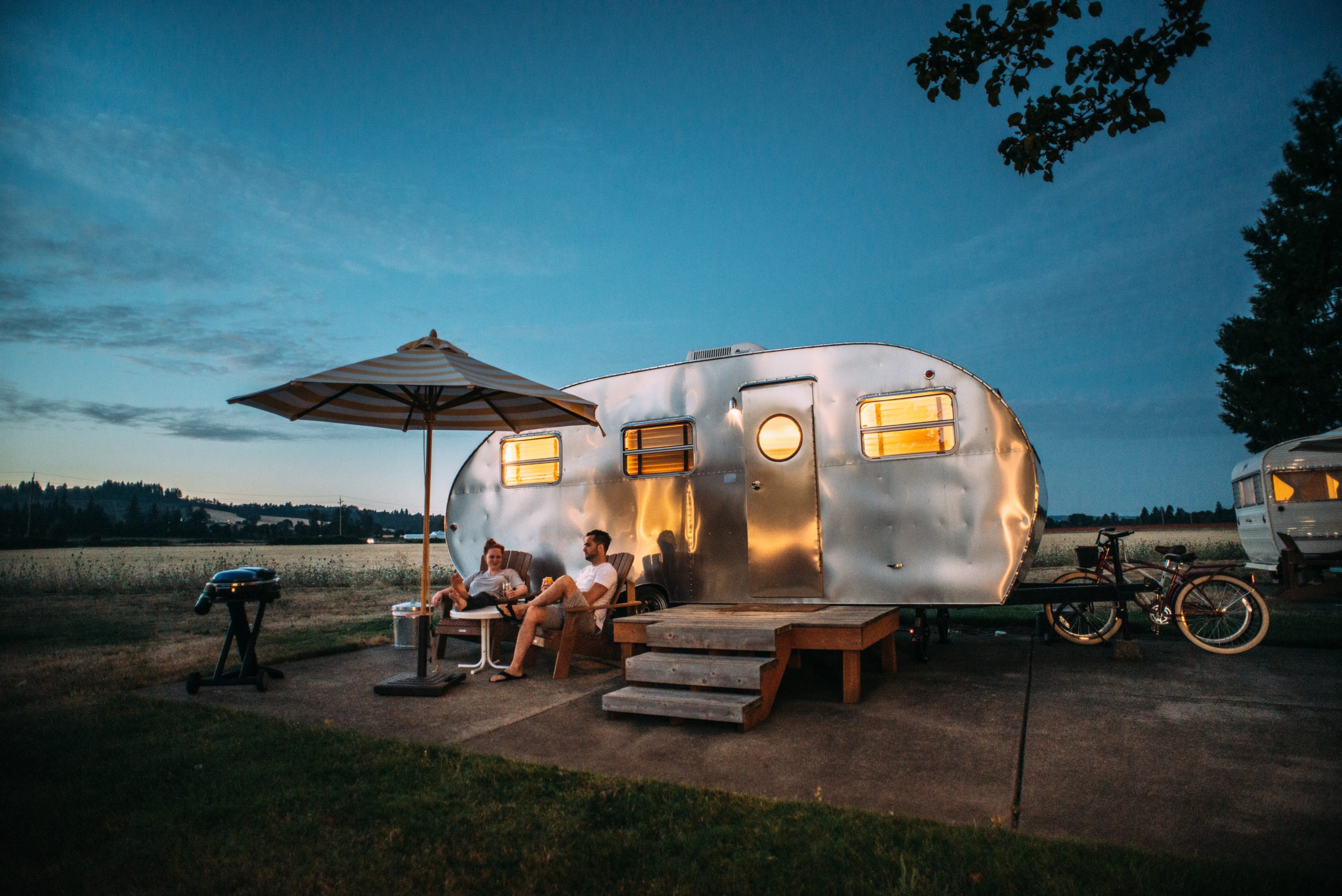
    While Digital Nomads often travel frequently and are usually living in a new place before they have the chance to fully settle in, camping can make this experience easier. When you are camping you will likely realize that you only need the bare essentials, as all of your home comforts are not available to you anymore. There are alternative ways of gaining access to things like internet connection and hot showers.

    Whether you decide to camp in a campsite or at your own will in the wilderness, you will find that other than the warm months of summer, you won’t be seeing any holidaymakers or families doing the same thing as you. Camping instead of renting out several living spaces is much more cost-friendly and easier to accommodate to your set dates. Many campsites have Google fiber, are pet friendly, and are accessible to just about anybody.

    This will require that you gain some comfort with being outdoors and in touch with nature, as you will be living in it for the time being. Some campsites do have shared showers and bathrooms, which depending on your perspective are good or bad. Social distancing has never been as easy as when you are living on a campsite and should be quite simple for you to keep your space to yourself.

    To live this lifestyle you will need camping equipment, such as a tent, sleeping bags, blankets, portable lights, a backpack that can carry all your essentials, and cooking equipment suited for camping. You will need any type of technology you take with you to have a long-lasting battery life as this will mean fewer stops to charge them.

    Camping can also have its downsides such as not being sheltered from the bad weather, back or neck pain due to sleeping in bad positions, not having your own kitchen or bathroom, relying on solar chargers or internet cafes for electricity, or having nature sounds in the background of your conference calls. You could also work from a hammock or from a beach lounger, this is a very comfortable way to work but also one that is bad for your posture.

    A mobile hotspot and portable power are vital things to have with you if you are a Digital Nomad thinking of camping full time. A mobile hotspot will give you internet whenever and wherever you need it, and having your own portable power system can last you as long as you need it to so you don’t have to work against the clock.

  • What you need to know about Anxiety

    What you need to know about Anxiety

    Much like any type of mental or physical condition, there are certain symptoms and effects that determine each one. Here are the most common ones that are associated with Anxiety and how to act on them.

    1. Your rational brain:

    Whenever you feel like you are going to be overcome with anxiety, that’s when your amygdala is going to react by sending chemicals to the front lobe of your head, which is made up by your rational brain, and shut it down completely.

    2.Anxiety and the future:

    Anxiety can come in different forms -generalised anxiety, panic attacks, phobias, obsessive compulsive disorder- that are accompanied by different symptoms -worry, somatic symptoms, knots in your stomach, restlessness- and they are usually centred around concerns involving the future.

    3. Rational or Irrational:

    Rational Anxiety comes from real issues -the thought of an upcoming job interview, your partner not answering your calls about picking up your kids- and it is usually deemed as a perfectly normal reaction. Irrational Anxiety is… irrational. It tends to look more like -the interview will go badly, you will never get the job, in fact you will never get any job meaning you will inevitably end up being homeless.

    4. The importance of Anxiety:

    It can be harder to set your priorities when you are suffering from Anxiety. Something as mundane as deciding what to wear to the supermarket can seem as important as your upcoming job interview. This is where it becomes easy to feel overwhelmed, with thoughts like -so much to do, and so little time.

    5. Listening to your Anxiety:

    If you are anxious about attending a social event where you don’t know anybody and your anxious mind is telling you to stay home, listening to those thoughts and acting on them will make you feel more calm. Sometimes it is better to listen to your Anxiety in order for it to go away, but if it becomes a habit this reinforces anxiety circuits that live in your brain.

    6. Limit the things you listen to:

    Although acting on what goes through your mind in the middle of an Anxiety crisis is what makes the anxiousness go away, this will become something that you start to rely on more and more. If you don’t attend the social event, further down the line you won’t be going out at all. Every experience you have with Anxiety will feed into that cycle until your world becomes too small for you to breathe in.

    7. Personality traits feed into Anxiety:

    Many people that are prone to Anxiety can often be critical of themselves, internalise their emotions, become uncomfortable around strong emotions and will go the extra mile in order to avoid conflict. What accompanies Anxiety is a ‘put everybody else’s needs before your own’ coping style.

    8. Anxiety covers other emotions:

    Anxiety can become so strong in some people’s minds that it becomes difficult for them to discern any feelings except Anxiety. Anger, sadness, disappointment, hurt, etc., can all translate into and be seen as Anxiety.

    Anxiety is about having a deep fear of the world and what it contains. Some people fear other people, animals or not having control over their future. Differentiate Rational from Irrational Anxiety, track your anxiousness so you can stop it before it gets out of hand, ask yourself what it is that you are feeling besides Anxiety and establish your own priorities and boundaries. This will enlarge your world rather than diminishing it, and it will build up your self-confidence and self-esteem which will in turn, change your perspective on negative and positive thoughts.

  • The Importance of Thinking

    The Importance of Thinking

    The importance of how much thought we give our actions often goes unnoticed. But without our minds subconsciously processing thoughts, we wouldn’t get anything done. In order to maintain productivity in your day to day life, you must engage in a routine that will allow you to increase your creativity.

    Create a Plan.

    This is the first step towards distributing your time efficiently. This will make it easier for you to engage in important tasks, and it will also give you the time of rest that is equally important.
    Being productive is all about letting go of the things that aren’t working and starting fresh. While plans can me modified and are not set in stone, it does not reduce the importance of having a starting point.

    Breaking Habits.

    In order to establish productivity, cut out any habits that stop you from being so. A good way to budget your time on certain activities is to distribute your time and set alarms so you don’t lose track of your scheduled time frame.

    Stick to your Plan.

    You have to force yourself to keep up with the plan that you’ve created for yourself. Remind yourself that you are doing this to increase productivity, which will take you one step closer to where you want to be.

    Look back on your Plan.

    If you’ve been sticking to your planned routine but you still feel like you’re not getting the results you were expecting, that’s completely fine! Planning doesn’t always mean success. Determine what works for you and what doesn’t, then you can cut out anything that isn’t working for you or simply modify it to cater to your personal needs.

    Planning to increase productivity doesn’t guarantee your success overnight, but it does prevent poor performance and stops us from going in head first to a task that we know nothing about or do not have the time for. Giving yourself a routine will incre

  • 10 Things That Are Better Today Than They’ll Be In The Future

    10 Things That Are Better Today Than They’ll Be In The Future

    When we think of the future, we always have the tendency to consider what will improve in our lives and the world. However, when you think about it, there are many things that we take for granted today that are not likely to improve in the future. Today we’re going to share with you ten things that are better today than they’ll be in the future.

    1. Cost of Living

    As a result of the recent pandemic, it’s almost certain that taxes around the world will continue to increase. Our cost of living rises year after year, and this is one area that’s highly unlikely to be better in the future. Make the most of the lower cost of living and invest well now to set yourself up for the years ahead.

    2. The Weather

    Over the past decade, we’ve all become aware of the impact of climate change on our world. As the air temperature rises, expect more rainfall around the world, which may also be more intense. Changes in wind patterns may result in more natural disasters and damage to the world around us.

    3. Privacy

    As we all spend more and more of our lives online today, whether that’s for personal or work reasons, concerns surrounding privacy are continuing to increase. Expect data to be more readily available in the future, so be careful with your digital reputation starting now.

    4. The Natural Environment

    Working hand-in-hand with the weather and climate change, it’s likely that our natural environment will change dramatically in the upcoming years. Expect beautiful destinations in the world to no longer exist and overcrowding to destroy some of the more deserted travel destinations.

    5. Cheaper Outsourcing

    If you use outsourcing within your business currently, this is likely to increase in price in the future. Individuals around the world are noticing the benefits of working online and freelancing, which begins to push up the price of outsourcing.

    6. Opportunities to Live Overseas Cheaply

    Whether you already travel overseas regularly or are hoping to take advantage of working from home in the future, now is the time to travel. With more people working remotely, this will begin to push the cost of living and renting an apartment in popular digital nomad locations such as Medellin and Tbilisi much higher in upcoming years.

    7. Work-life Balance

    The last year has been a struggle for many of us as far as work-life balance. With the increasing reliance on technology for our jobs, this is likely to only get worse. Companies are expecting employees to be plugged in 24 hours a day, which will take its toll on our mental and physical health.

    8. Investing Opportunities

    People are slowly beginning to understand the benefits of investing, which is increasing the number of advertisements for this around the world. Investing is likely to become far more competitive and less lucrative in the future due to the increase in its popularity.

    9. Ease of Relocating

    Relocating today, whether within your home country or further abroad, can be reasonably simple, depending on your situation. With challenges such as Brexit and the tightening of immigration laws around the world, this freedom of movement is likely to be reduced in the future.

    10. Launching a New Business

    With so many individuals finding themselves unemployed last year, people have taken this free time to launch new businesses. Depending on the industry you are planning to launch into, now is the best time to consider your next business venture. With hundreds of businesses launching each day, it’s only becoming more challenging to stand out from your competitors.

    We hope these ten things that are better today than they will be in the future have given you something to think about. What do you think is better today than it will be tomorrow? It’s certainly an interesting topic to consider and one that can help us make the most of the present-day and appreciate everything we have at this moment in time.