Online privacy, also known as internet privacy or digital privacy, refers to how much of your personal, financial and browsing information remains private when you’re online.
Online security is not a subject to take for granted in this tech-savvy 21st century. Everyone is busy downloading or uploading data on the internet, exposing themselves to various cybercriminal attacks. By clicking on any suspicious link or visiting a disguised site, you could lose a chunk of data you have worked all your career life to generate.
As businesses remain vigilant about cybersecurity issues, people are finding interest in the many ways they can safeguard their data while operating on the digital space. With that in mind, this article can help you stay anonymous online while keeping your data secure.
This has become a growing worry, with browsing history and personal data all potentially at risk when online. Staying one step ahead, people usually set up a virtual private network (VPN) that gives you online privacy and anonymity by creating a private network from a public internet connection. VPNs mask your internet protocol (IP) address so your online actions are virtually untraceable.
But one thing people do not realize is that a VPN won’t protect you from any type of spyware or malicious data people might come in contact with during their interactions online. Most of the spyware attacks are actual reverse shell connections, where a malicious piece of data executes a command that will connect your device to the attacker.
More on how reverse shell connection works in this video.
If you want to stay ahead of spyware and surveillance technology, you should consider some reliable reverse shell reversing options. Practically, there are 2 common ways people are using to stay safe from spyware attacks.
One idea is to set up a Virtual Machine on your device, which pretty much means that you’ll be setting up a complete OS that will run on top of your operating system, that will run in a virtual sandbox and restore to its defaults for each new session.
This can be also done on any PC running Linux if you decide to install one of the many privacy-focused distributions like ParrotOS, Kali, MOFO Linux, Tails, Qubes OS or others. These distributions have a built-in feature often referred to as Amnesia, which means that your device always starts from the same clean state and everything you do disappears automatically when you shut down the device.
But that means it’s somewhat difficult to install and run any software on these distributions, as you have to be skilled enough to include your personal files and software in the installation so it won’t get deleted when you shut down your device.
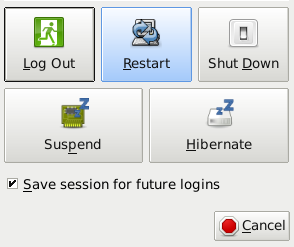
As of recent, all XFCE desktop builds such as Manjaro, Fedora, Debian, Mint, etc., contain a feature that, when turned on, will immediately clear and wipe all data from the current user session and render it permanently gone. This feature can be activated in settings and you will be prompted if you want to save this session for future logins on your shut down screen.
Most Linux Distros can be configured to automatically wipe the Bash History on session end, and this will also remove most spyware, malware and shell connections to then return to the original OS version it started with. In case you need to update software or save some files you trust, you can do this by booting up your device, running a software update, and rebooting it to save the session for any future logins. This will create an updated XFCE reference and run its most recent updated version for all your apps.
In sessions where you would have been exposed to online threats just end your session with a reboot without saving this session for future logins, and that will destroy all your data, cache, and any history created during your session. Data can be exported to a trusted point or cloud as long as you always install new software after a safe restart to a trusted session.
When it comes to phones, running DeGoogled Android can seem like the ultimate privacy solution, however, this will only solve Google tracking woes, and they can become impractical as most of the apps you would be using would rely on Google Play services to run. With some dependency patches, apps will most likely be able to run without Google Play services and instead, rely on other services like Amazon, Huawei or any other companies that have created and released an independent app store.
The e/ project is the most popular among the DeGoogled options that provide current Android versions with the stock Android apps and zero bloatware. However, e/ still runs an Android version that is severely susceptible to spyware attacks much like the one that affected Pegasus or an independent shell hack attack.
And lastly, since PostMarketOS was released, there is a real Linux distribution available for phones and more than 200 devices are supported by this time. It is easy to set up and to use on your phone as the installation process requires configuring your device to accept custom ROM images. It can be flashed to nearly any device with the TWRP recovery and the TWRP setup for all devices is highly documented.
Using PostMarketOS is currently suitable for more tech-savvy users and users that have more experience with Linux in general. In terms of privacy, PostMarketOS can be configured to wipe all user and session data on each reboot. You can also run your favorite Android Apps inside the Anbox Virtual Machine, thus making it extremely difficult for spyware that you are attacked with, in your android VM to roll over to your actual OS on the device.
There are a ton of devices popping up on the market that come with Linux installed off the shelf. My favorite are the Pine64 community projects called the Pinebook Pro, a $200 laptop that is powered by an old smartphone chip on a Raspberry Pi-like board, and its handheld sibling the PinePhone. These devices offer subpar performance but their main perks are privacy rather than performance.
The Librem 5 is another smartphone that comes with a Linux distro out of the box and its most important feature is the privacy bolstered with the hardware kill switches for network, camera, mic, radio, GPS etc.
System76 also sells rebranded Clevo Laptops and Desktop units that have a custom Linux distro on them that encourages gaming.
Privacy protects our information we do not want to be shared publicly such as health or personal finances. Privacy helps protect our physical safety in cases where social media breached real-time location data privacy. Personal data is used to make very important decisions in our lives.
A common conception that involves books is that, if it’s good, it can take you to another time or place. Whether the story is set in the past, present, or future, authors of fiction create their own societies, laws, technologies, and social and political circumstances. Given the number of books that have been written throughout history, it is inevitable that some of them contain events or inventions that didn’t exist at the time the author wrote the book. Here are some examples of books that actually predicted the future:
The Parable Series:
Although the writer Octavia E. Butler passed away before she could complete the third book in the trilogy, she created a dystopian universe in Parable of the Sower (1993) and Parable of the Talents (1998) that contained the uprising of a populist demagogue. When published, the books were well received, but it is more recently that they have gathered another type of attention due to the distinct similarities between the society created by Butler and the one we live in today, such as global warming, powerful corporations, and social inequality. Yet, the strangest prediction came in Parable of the Talents, that featured a conservative preacher who runs for president using the slogan ‘Make America Great Again’.
1984:
The dystopian novel written by George Orwell anticipated so many aspects of the future that it has become one of the most talked about books when it comes to circumstances in which technology makes any attempt to control features of society. The term ‘Big Brother’ that refers to the abuse of government power, involving surveillance specifically, came from the book. There are two specific examples from the book that come too close to current technological aspects that we possess today are firstly the ‘telescreen’, which is basically a large television put to use to track people’s personal lives and one that is able to identify anybody simply based on facial expressions and heart rate. Secondly, the ‘Versificator’ is a machine that can produce music or literature in a very similar way that current artificial intelligence technology does today.
The Machine Stops:
In this 1909 book written by E.M Forster, the writer created a future where society live and work solely from their own rooms, withholding all forms of communication with each other through electronic devices. The characters from the book can be seen creating and sustaining their ‘friendships’ completely through electronic communications, which eventually leads them to become somewhat phobic about leaving their rooms or meeting people face-to-face. Specially in 2020, most of the world’s population was forced to adapt to working from their homes and only communicating with their loved ones through electronic means.
Fahrenheit 451:
Although when the book was published in 1953, television was already America’s go to source for entertainment. Most of what was shown on television at the time consisted of mysteries, scripted comedies, news programs, and game shows, however, in the book Bradbury includes the idea of what we now know as ‘Reality TV’. Adding that it is more interesting to see how humans would react to technology more than the technology itself. He predicted how society would become more and more reliant on their television, even more so when compared to their home lives and their personal relationships.
A Song for a New Day:
Sarah Pinsker’s book was published in September, 2019–and it was even written two maybe three years beforehand–and it takes place in a society that has to learn to live with a large number of domestic terrorism and a dangerous global pandemic. This causes the government to outlaw any gatherings beyond a certain amount of people and how this affected the livelihood of people who relied on social gatherings to make money.
The Wreck of the Titan:
This book was written by Morgan Robertson and was originally published with the title ‘Futility’ in 1898. The story is based on an enormous ship containing thousands of passengers, that are eventually killed when the ship, named The Titan, hits an iceberg and sinks in the freezing waters of the Atlantic Ocean. The Titan was said to be the ‘largest ship of its time’ and was also described as being low on lifeboats–just like the Titanic was.
It is difficult to know whether these books served as inspiration for some of the events that later unfolded in our society or if these are just major coincidences that will forever make us question the world we live in today.
Most people can admit that a large portion of the technology that drives today’s society comes from fundamental discoveries of Physics. It is the science associated with matter, energy, motion and force. Things such as computers, telecommunicators, transistors, microchips, lasers and nuclear powers are among the many layers of Physics that are so pervasive to this day. Here are some important aspects in Physics and their meanings:
Laws of Motion: Based on Isaac Newton’s laws of motion, there are three laws that define the relationship that lives between the motion of an object and the forces that enable that motion.
Energy: Energy consists of quantitative property and that property is transferred to an object so it can then perform its task. What is interesting about Energy is that according to the law of conservation of energy, it can be converted in form, but it can not be created nor destroyed.
Atoms and Molecules: Atomic and Molecular Physics focus on matter-matter and light-matter interactions. An atom is a small particle of any chemical element that may or may not exist independently. Molecules are a group of atoms that are bonded together.
Particles in Motion: Essentially, particles are objects that are in motion, which means they have kinetic energy. The faster the particle moves, the more kinetic energy it will have. Kinetic energy comes from heat, the faster the particle moves around in a substance, the hotter it will become.
Electromagnetism: This branch of Physics focuses on the electromagnetic force that happens between electrically charged particles. The electromagnetic force is part of one of the four fundamental forces and includes electromagnetic fields such as electric fields, magnetic fields and light.
Quantum Mechanics: This theory in Physics is fundamental and focuses on providing a description of any physical property in nature using a scale of atoms and subatomic particles. It gives an explanation of the nature and behavior of matter and energy on an atomic and subatomic level.
Physics can be appreciated in many different ways and offers a wide variety of types of information. Studies can range from focusing on objects of any size using quantum mechanics to the entire universe using general relativity.
Genomics refers to the study of the human genome, therapeutics refers to the treatment of diseases that is based on the administration of medicines that aim at reducing these diseases or preventing them from occurring altogether while longevity refers to the lifespan a person has before their demise.
There is a correlation between the three with concepts regarding the human genome being used to produce drugs that target various stages of the genetic cycle and ensuring that life is prolonged amongst people suffering from fatal diseases. In the past, genomic studies have been used in research projects that enabled the discovery of drugs and synthetic manufacture of some such as insulin that has enabled the treatment of people suffering from diabetes mellitus (Mandal, 2019). Synthetic insulin has been crucial in prolonging the lives of diabetics and bettering their health conditions.
This paper pays close attention to genomics, its use in therapeutics, and its influence on longevity in the future. We strongly believe that the fast adoption of Genomics and accessibility to testings will make genomics testing the new normal in the future to clinical disease diagnosis and prognosis.
In the recent past, human beings have begun viewing aging as a disease (Diam, 2020). They have shifted from the past view of this phenomenon as an inevitable natural condition that cannot be evaded.
There have been significant efforts by genomic scientists to understand this phenomenon and perhaps enable them to reverse it. Huge support has emerged for proponents of such ideas who have received enormous financial and resource funding to enable them to carry out their work efficiently (Green et al., 2020).
Scientists advocating for this view have carried out gene sequencing studies to understand the role of genes and human DNA in the aging process. These scientists recon that should they find the genes involved in aging, they can develop medicines that harbor the actions of these genes, ensuring that the body continues to thrive, evading the destruction phenomenon of aging that climaxes at death (TMF, 2020).
A breakthrough is surely on the horizon for these scientists. In a few years, scientists will discover the genes responsible for aging. They will develop appropriate sequencing measures that will enable them to manufacture drugs that arrest the aging genes. Arresting the actions of the genes responsible for aging will ensure this phenomenon is kept at bay and people do not age, preventing death. Longevity in life will also be achieved.
The current state of relating genomics to longevity looks promising. Glycan tests are becoming ever more available, accessible and accurate. These tests can play a vital part in determining people’s biological age over their chronological age.
The impact of various diseases on the human body genes has been given proposed as a reason for aging. These diseases significantly harm the human genome interfering with various genes.
The affected genes act as triggers for the cells to slow down the replication process. Decreased replacement of worn-out cells as a result of decreased genetic stimulation leads to saturation of the body with old cells(Franck, 2019). The phenomenon of aging is therefore well and truly underway.
Genomics aims at providing preventive medicines that target the genes that are responsible for slowing down cell replication after infection. Others seek to provide prevention medicines that prevent almost all diseases from occurring in the first place, rendering the planet disease-free. This initiative is bound to ensure the rate of cell replication remains constant throughout life (Chinese Academy of Sciences, 2021). Such efforts are bound to contribute to longevity. With the triggers to reduced cell division reduced and the switches eliminated, longevity is bound to be achieved and the human is bound to live longer.
This will ensure that humans have more control over the lives they lead and how their lives come to a halt. This is only possible if genomics continues advancing at the current or faster rate.
Diseases such as cancer have been the hallmark of global medicine for a while now. Cancer is caused by the rapid and uncontrollable division of abnormal cells of the body. These compete with the normal cells for oxygen and nutrients. When the normal cells are starved of the requirements, they become weak and die. This is how cancer leads to death. Cancer also has a high mortality rate wiping out huge chunks of the global population (Baer, 2020).
Cancers occur due to a glitch in the cell division cycle. This is potentially an error in the instructing of the body. This error occurs in the genomic sectors of the body. Genomics targets to identify the glitches that occur in the genes during each cancer and come up with specific medicine that deals with that error in the genome. In a few years, genomics will be capable of producing drugs for each cancer that tackle the errors occurring in the cell division machinery (Modern Healthcare, 2019).
These drugs will aid with the eradication of these cancers in their entirety. Elimination will boost lifespan and ensure longevity, aiding in the achievement of this human vision.
In conclusion, the genome project is the future of healthcare and medicine worldwide. There have been tremendous steps made in ensuring that the genome is understood adequately and appropriate inventions made along that line.
The ones mentioned are sufficient examples of what human ingenuity coupled with immaculate resilience has been able to achieve. There is a need for more focus to be lent to the study of genes in detail and the development of drugs from these studies to tackle various diseases.
This support should be in the form of sufficient budgetary allocation by various institutions. Resources should also be set aside in the form of personnel and infrastructure to enable the achievement of this noble initiative. There is also a need to ensure that people are availed with this information to ensure their optimist and participation.
Green, E. D., Gunter, C., Biesecker, L. G., Di Francesco, V., Easter, C. L., Feingold, E. A., Felsenfeld, A. L., Kaufman, D. J., Ostrander, E. A., Pavan, W. J., Phillippy, A. M., Wise, A. L., Dayal, J. G., Kish, B. J., Mandich, A., Wellington, C. R., Wetterstrand, K. A., Bates, S. A., Leja, D., & Vasquez, S. (2020). Strategic vision for improving human health at The Forefront of Genomics. Nature, 586(7831), 683–692. https://doi.org/10.1038/s41586-020-2817-4
(Note: For anyone who is worrying about what to do regarding Coronavirus in the United States, I urge you to visit: https://www.cdc.gov/coronavirus/2019-ncov/index.html). If you are outside the US, feel free to consult your country’s Coronavirus guidelines. If you have Coronavirus, please consult your doctor for advice. I do not offer any sort of medical advice/legal; information posted here is purely opinion and not representative of my team or JavaScriptLA and sponsors. That all out of the way, back to the blog post:
What does coding have to do with Coronavirus? I guess I’ll explain my thoughts.
First off, just writing more so to blog on the current events that are happening right now. Despite the fact that this group is more so about JavaScript and programming, I think as a community leader, it’s also important to blog on major event that impacts everyone part of this group.
I am like you all, just watching the situation unfold. I don’t know necessarily how all this will play out, but I think it’s best everyone try to remain as calm and vigilant as possible.
Just like in programming, when you find an error — you are expected to think out all the steps logically that produced it, and then try to go through each step until you find the path that went wrong and ultimately correct it. I believe that same kind of thinking will help you survive this pandemic.
You can solve problems best in computer programming by being calm and collected. It’s definitely easy to get frustrated at the computer when things go wrong and curse the machine for making your life miserable. But to me, getting mad and cursing don’t really help — ultimately after your entire tirade, the problem is still there, still waiting for you to come to your senses and solve it. As I’ve mentioned before (when I was learning to program in my previous post), through experience, problems don’t care about your feelings.
Have you ever played any survival type video game? Have you noticed that the main character is usually calm and collected? No matter how gory the situation gets, the main character MUST go on. I was playing Call of Duty World War II the other day, and the first scene is a re-enactment of D-Day. You and your comrades in battle are on your way to fight the Germans in the Battle of Normandy, only to suddenly have half your team killed before even reaching shore. As you look at your friends now dead, some of them limbless, your commander instructs you that you MUST follow the mission and get to the wall, so you can help the others take down the barriers to fight the Germans.
In seeing that re-enactment, I thought, wow, if that was me– how would I react? Especially if I was with all my friends and saw them die one by one? It’s so impressive that these people who fought these wars carried on, and WON the war.
War is hell for sure, and I’m not advocating it at all. I’m not even suggesting that we have one nor try to start preparing for one. But that said, it’s VERY naive to think you can just be at peace at all times. You must train yourself to be a rationale thinker at the very least, no matter how crazy you feel emotionally in your head.
So that leads me to my next point of discussion, which is to use your brain as best as possible. Though people are panicking around you and clearing out grocery stores, you must look at even that as a potential “bug”.
If you saw your computer having a kernel panic, how would you react to it? Most of you would just restart the machine. However, if you look closer sometimes you can read the error that caused the kernel panic in the diagnostic report; and find that it was a singular program causing the bad behavior. If you stop that program, the computer resumes to normal. Maybe it’s not that simple, perhaps it’s something worse; but the process remains the same, you’d just look through all your logs until you find the offending bug and then stop it.
Applying this to people clearing out grocery stores, stop and think. What happens if you add to the panic? Well, lol, you’re going to cause others to also panic around you. Suppose you also start clearing out grocery stores and then post pictures to social media. Others will see that and start doing what you did, and hence you have people standing in a line outside Costco that stretches 1/4 of a mile long (JUST TO GET IN).
When are stores that sell TP, hand sanitizers, etc going to limit the number of those items purchased per person? Or is that happening already? These hoarder types are making things MUCH worse. Please think of others and be kind during this trying time.
What if you choose not to panic buy, but only buy what you need?What if you choose not to post to social media? Well you are one less person adding to the hysteria, and perhaps your circle of friends on social media will feel bored there aren’t enough pandemic posts, log off and go back to living their lives regularly.
Just like in an algorithm, things can be exponential, factorial, linear, constant, etc depending on how we “program” (set) our lives. If you act in ways that affect your surroundings in a way that causes exponential danger, you ARE THE BUG. Stop yourself, and think.
Programs can be factorial, exponential, linear, logarithmic, constant, etc. (Stack Overflow)
It also helps to think rationally about the information you consume on the internet (as well in real life). Suppose you see a video of people dying in the streets, with blood coming out of their lungs? Suppose you see crows flying everywhere in the sky, looking like a plot out of a bad Hollywood B horror movie? Suppose some guy on your favorite Youtube channel told you that you need to start buying more guns and supplies, and be ready to take down your neighbors lest they might try to kill you. How would you react? Do you react with terror? If you did, how would that affect your “world” around you?
Are you starting to get the picture here? Does this all make sense?
My point is — you ARE very much in control of your own LIFE program (despite what others might tell you or want you to believe — fear is a great way to sell; so recognize that). To me, as a coder especially, you are gifted with tools and a way of thinking that works already for the computer world and would work GREAT for your real world when applied. Use your developer tools to help you debug your life better; and you will live better. Adjust the way you consume information too; just like a computer needs a good program, you need good information to help you make better decisions. If you don’t have it, start finding ways to have it in your life. Then help others as well.
But, Vijay, you’re not panicking enough! The virus is coming and already killed 1000s of people!
Again, where? Who? What can you do about it? Think?
Suppose you are right in your panic, and I should be more riled up. Everyone is dying around you, and I notice my neighbors are also coughing up blood. Do we die too? Perhaps nothing can save us.
***** END SPOILER ****
Okay, if you read this far, I’m assuming you saw the clip and / or don’t care about spoilers.
So yeah, my point is that you have to remain vigilant even in the face of death. You can’t just give up and die. What will you do if you have family? What kind of legacy will you leave for them? Would it be better to die or use your brain in a way that can save others? Again, imagine what would our society be like today if people who fought in wars just gave up?
My point here is that just because a situation is bad doesn’t mean it’s the end of the world. Again, think logically, rationally, and of course ethically. You still have time– how much time do you have before you die? Unknown, no matter if a virus exists or not.
So do something with your time now — to me I see this pandemic as a chance to really THINK properly about your life and how you want to spend it. Will you contribute something of value?
Plenty of people are without food/water right now. How can you use your brain to help them? How can you you use your coding skills? Can you hack to help? Can you contribute to an open source project to help others? What if you are still a junior, and barely know how to code “Hello World”? Can you still help? Sure — maybe help someone else more senior by taking on the coding that feels monotonous to them — aka CSS/HTML.
Help your family member learn math/algorithms so they can act in ways that don’t exponentially make the world around them WORSE. Even if you are a junior, you can still control how you digest information coming in from the web / media around you. You can still help find BETTER information for those who need it. You don’t need to know JavaScript to do that.
You can also exercise compassion towards others. Together as a society, UNITED, we can overcome a lot more than every man, woman, child for themselves. So use that sort of thinking to help you and your own family solve much more complicated problems. If we all start acting selfish, we will only cause more problems that lead to more exponential like disasters. In fact, part of what you are seeing now in the media is exacerbated by media and bad actors who want to profit. Why doesn’t anyone report good news? Because — it doesn’t sell. If you exercise compassion, things get boring and people go back to living their very normal lives without fear. Isn’t that a great thing? Don’t you want to have normalcy in your life, so you can focus on things that matter instead — like enjoying programming, hanging out with family/friends, having fun, going and visiting cool places?
Doesn’t it suck that airports around the world have closed down, and people are less trusting of each other? Doesn’t it suck that we can’t go outside and enjoy the good things we used to a few months back without concern? Would decisions you make from now forward be to better society or will you just keep making decisions that harm yourself and others?
Hmm Vijay, if I start helping others — would that benefit me? Would my peers/family members respect me more, perhaps remember that I helped them out in times of a crisis? I think you know the answer.
Would that old lady in the Costco line feel a little more safe/trustful of people if I helped her also have toilet paper instead of hoarding it for myself?
My dad and I pulled into Costco and we saw a little old lady trying to put her groceries up in a truck, and my dad stopped to help her😍☺
If I made some kind of program/video that helped people learn how to better take care of themselves while isolated, would that help society?
Check out this website, made by Avi Schiffman (a high schooler) that gives live updates on Coronavirus and how people can protect themselves. Pretty cool. What could you also contribute?
“You are the change you want to see in the world” — Ghandi.
Program the change you want to see in your world :). We’ll be here with you doing exactly that, even if Coronavirus slows down our meets in person, we’ll still be online.
Hi all, time for another blog post! I am working my way to make blogs a more regular thing for myself.
So today I want to share my story with you all, as well as what it feels like to be a developer in 2020 (after almost 10 years of programming).
I’ve been programming since 2011. I started off doing websites on WordPress, so my earliest days of learning to code were mainly spent inside a Barnes N Noble (or Borders back then), thumbing through pages of PHP. At that time, I really felt like I was reading an alien language, and there weren’t any sophisticated YouTube or Udemy tutorials to help me out. So learning just took a long and drawn out amount of time. I spent a lot of my days in cafe lounges next to bookshops reading and practicing out examples for hours upon hours. I freelanced mostly to just get by (but being single I also didn’t have huge expenses — I literally just needed a couch to sleep on and a computer, and I could use a shoe-string budget to eat daily). I saw many people doing programming at that time getting paid serious money; many of who were self taught, so I figured if I just kept the focus, the money would follow for me too.
Around that time also, I found out about meetups — and I thought they were really cool, so I decided to try posting some for JavaScript on Meetup.com. I wasn’t sure who would “meetup” with me, but I guess that’s the fun using the website, right?
The first few meetups went well, but even from the beginning I sort of felt like there were a lot of people who were just as confused about learning JavaScript as I was. If I advertised for a meetup on a specific topic, it was pretty much on me to lead the discussion — or it would go nowhere.
I remember a time where I was reading quite a lot about JavaScript Regular Expressions, and I went full blown “college presentation” style that day I gave the meetup. To my surprise, many people liked the presentation and thought I should give more talks. So I did, and my confidence began to rise. Still, I knew I was still just a confused programmer and to make this group worth my while, I needed support from more senior level programmers.
During those beginning days — if I wanted a talented speaker to come drop by our group to give a JavaScript talk; I’d often hear that I’d have to “fly them out and pay them”. I also remember asking some of my childhood friends who went on to work at companies like Google / Amazon and they’d just show disinterest. One “friend” told me that I’d have to pay him $100/hour since he doesn’t do anything for free anymore, and even though we were friends, he didn’t want to hang out with people so “basic”, it would bring him down.
I also got ignored quite a lot by people I’d reach out to, despite writing really great introductory letters. I remember going to other meetups around the area, then trying to talk to the developers there, and they’d get annoyed that someone like “me” had been let in. It was not fun– I felt like other meetups in the area just weren’t as fun to attend. I was “an impostor” to these senior developers, but a leader of the “blind” to my fellow confused meetup pals. So I just continued to do “JavaScriptLA” instead of join some other meetup and be someone lost in a crowd. To me, this was more educational than sitting in an auditorium with a lot of other developers sizing each other up.
So I continued to keep reading and then presenting/leading each month for JavaScriptLA. It cost me nothing and it was fun. I was always afraid someone would call me out on my lack of knowledge on the subject matter and then chew me out publicly (like a visiting senior developer), but that never happened. The worst response I’d ever get was “Hey I think that’s wrong”, and then I’d ask them to add to the discussion. So I was able to avoid “being the teacher” and instead just the “facilitator”.
Thus, meetups carried on and over time I started getting more people showing up — word of mouth for the group really helped, and I also posted more frequently about the group on social media. I also started getting better at JavaScript and finding work was easier as a freelancer.
—
However, I was still severely lacking in my knowledge of JavaScript. For all that work doing meetups, you’d think I’d have eventually turned expert right? NOPE, not at all. I was still blind leading blind.
I’d feel it the most when I’d go to an interview for a job and get destroyed by the interviewer. It felt so awkward to be the guy who runs a JavaScript meetup only to not be answer some JavaScript interview questions. This made me depressed for a while, so I vowed to just practice very, very hard at interview questions. Over time I made and curated a list of all the most common interview questions I’d get, and would review them frequently.
Finally I did get a job. I was so happy with myself, because I was finally had a full time job. I felt rich and so for a while I enjoyed that feeling. I went out to some of the best restaurants in LA, I paid for my friends to hang out with me, and I also pumped a lot of cash into the Meetup group. I decided to hire an assistant to help me out with the group so I could focus more on the learning part rather than handling outreach. I was able to finally focus on other aspects of my life too, including getting in better shape and enjoy dating. Life was great– until I lost my job a year after.
I was let go because the company was losing money. It was out of their control, and that often happens with startups. They told me that I had done great while with them, but they just couldn’t afford to keep me on. So I had to scramble fast to look for something else. Initially I thought I’d bounce back, since I was “better” at interviewing and I had strong experience under my belt.
But I wasn’t able to get a job easily. It was JUST as tough as it had been a year previously; if not tougher. Even though I thought I knew a lot about JavaScript, at that time, the JavaScript ecosystem was EXPLODING in complexity. Things I had studied yesterday were now just the baseline. At interviews, I’d get asked if I knew about Grunt, Bower, Gulp, Webpack, Angular, Yeoman, all sorts of brand new technologies I hadn’t used the year before at my job — at that time the minimum to get hired was just knowing JQuery and WordPress (which I had been doing). So I did my best to study and try to learn those technologies so I could talk about them during interviews.
Eventually I did get another job, and I passed the interview. But I got fired a month later, because my boss kept micro managing me and demanding I make the websites work on all browsers including IE8. I hate IE8. It was so frustrating.
Hence, I got depressed again– and thought I should just quit being a developer. Thoughts raced through my mind that I was a nobody, a fraud, an amateur at best– just leading a group when I didn’t deserve to. Those developers in Silicon Valley were right to snub their nose at me and sneer “why are you here, who let you in?”
The “rich life” I once had was gone– and I was back to being broke/strapping by on freelance funds. I felt so humiliated.
Through all that though, one thing remained constant. The bills. And also my grief. And my parents’ constant criticism. No one cared about my problems, I still had to endure each of these things daily. I had to find a way to pay the bills, and it was a struggle. My parents would remind me that I was not an engineer, and thus I was struggling to no avail, I should just find another career path.
I remember watching Breaking Bad through my depression, feeling really sorry for myself like Walter White (who was facing cancer), and I guess while watching that show I thought to myself– do I just want to go out like a wimp and die? Do I just want to be in this endless pain and off myself like Aaron taking heroin in that show? (I know this post suddenly turned so dark).
I suppose though, after watching Walter fight back with all his life and win so much made think about myself; was I just going to succumb to my own “cancer” (the cancer being the one in my mind that says I’m a bad developer/an amateur), or is it more fun to just use my brain like Walter and see how far I can go? Maybe I’ll still die in the end, but at least with some feeling that I actually lived my life rather than being dead now.
—-
So I decided to just get back up and work at my career. I knew I still sucked, but the thing that kept me going was that I’d tell myself, “I have my whole life to figure this out. My life stops when I stop.”
Moving forward from that time, it took me another year of freelancing and studying before I got a job again full time. (Actually maybe it took me 8 months in retrospect). I was “rich” again, but this time I didn’t blow my money. I just kept it in case of emergency again.
The thing that helped this time was that I had studied SO SO much, even if new stuff was coming out, I could learn it in the span of a few weeks. I also made it a point to study every day after I worked, so I’d always be prepared if I lost my job. I studied so much I was even hired by a school to teach for its students some basic JavaScript, which by that time was no problem for me anymore.
This helped me stay on at my job, because I was almost fired 3 different times — the senior management kept thinking they could outsource the work I did for cheaper; as well as get sold by some big firm telling them our work sucked and they could do better; as well as just being really difficult people to work with demanding a lot of crunch hours; throughout it all, they realized that I had the skill and will to succeed. That helped me outlast being outsourced, as well as getting work done on time and more successfully than supposed “consultants and A level developers” they brought in. Many of the senior managers were ultimately fired instead.
I left that company eventually to get a much better and less stressful job where I was truly given the space to just do my job (and not have to battle politics). The best part about it was I left my previous job with my honor in tact and the CEO of that company still interested in working with me some day again. That was so cool. But yah, the new job was more fun and exciting.
Fast forward to 3 more years, I was finally able to get married, have a child and still have success with my career as a JavaScript developer. Life became even more difficult and challenging, but I guess somewhere through all those pain points, I was able to keep myself going no matter how hard it became.
The Meetup group, JavaScriptLA also continued to get better and better every year. Around 2015, I had to stop doing presentations and move out of LA for my new job in the OC. So I decided to form a chapter for OC and teach out in that area. Youtube was also a thing, so I began teaching and recording meetups to that as well. We grew pretty fast thanks to new interest in JavaScript budding all around by new emerging students of the language. Because of the flourishing interest and because the group had so many successful meets in the past, it was now easy to get other speakers to come and present for the group (finally!). Making friends with senior level developers was much easier now, and when I spoke with them over the phone or via email to talk about the Meetup group– they’d also get a sense I knew exactly what they were talking about too, which made them like me and the group even more). So in a sense, I was able to get the group to run on “autopilot”, which helped me out greatly while learning to become a dad as well as continue to work hard at my job.
—-
I’d like to say life is “a bed of rose petals” now, but it’s still difficult. I guess that’s my point with this blog post. The life of a developer is NOT easy. I don’t think it will ever be easy, and I really doubt I’ll ever be able to go back to that life again where I was “RICH” and loaded with cash; where I’ll finally be able to focus on other aspects of my life and not ever have to worry about “learning programming” again.
Instead, I think the path of a developer is always going to become somewhat more complex year after year, and you have to respect that aspect. Even if you do end up getting richer, stay humble, stay frugal, add safety in as much as possible — because just like a program you might build, things could crash– expect bugs along all parts of the way. I say this with experience. The faster you can rebuild, the better off you’ll be in the future.
Today, there’s even more to learn, and it somewhat seems exponential or even factorial with the amount of stuff coming out every month.
Here’s the list of things our group wants to know about this year alone for 2020:
That’s quite A LOT of stuff to traverse, and if you think about each item on that list being a “node” in a “graph”, you’ll realize that each of those nodes has its own set of dependencies as well! Eventually you get into this huge huge rabbit hole of learning and learning; still you’ll find you’ve not even finished the graph traversal, there’s still more to figure out.
And then you realize, hey– maybe I can’t do it all! And you’d be right! Mathematically right! You just don’t have the time.
But do you give up? Do you just say hey, I can’t do it? No, not at all.
As the more experienced and wiser person, I’d tell you — do your own personal best. It’s not about learning EVERYTHING UNDER THE SUN.
I’d love to tell you after all those years being a JavaScript expert is what gets you paid the big bucks. But it’s not. It counts for something, and helps you survive being cut from jobs; but it’s not enough. You have to also just love the process.
It is hard, it is complex, and it’ll always be that way. But love that. To me, that’s what gets you paid the big bucks; when you can just dive into complex subject matter despite it being tough and just plow through it with a smile on your face.
That’s sorta where I am now. My work and running the group and being a parent as well as writing this blog and learning YouTube/filming/editing/managing money (all the aspects of running a group thrown at me) are hard. But I just enjoy it, hence it’s more power to me, and I’m loving this life.
The thing I see consistently as a pattern is that stuff is “hard” at first, but eventually you are smart enough to figure out how to minimize it to something less difficult; and perhaps through your own “recursion” or “iteration”, you eventually make a REALLY difficult thing eventually easy with time. So trust in your own “while loop”. You can do it. I can do it. Life’s great. And ignore anyone who snubs you/sneers at you, thinks you don’t belong– the truth is, they probably are going through the same “hazing” environment as you (and thus probably taking it out on you). Honestly, it’s just as hard for them as it is for you. To me a true “A level Sr. Developer” is someone who can enjoy all the parts of the coding process, even the lesser parts, with as much joy as the harder parts”. So if you come across some developer giving you grief, smile and nod, perhaps cut them some slack and move on with your own work. You’re too busy to be bogged down, just keep going.
Here’s to your success in 2020, and as always feel free to reach out to me with any questions about programming/JavaScripting.
A cool recommendation is the free tool by Toptal called “Freelance Developer Hourly Rate Explorer.” This freelance calculator caters to 30 different skill sets and could be used to get a better idea on how much you can earn as a freelancer.
Next time, let’s dive into some topics! After writing all this, I feel like I remember why I even wanted to do this group with even more clarity, and so I’m back with full force! See you all at the next meetup!