Category: Integrated Community

  • Building a Community in Interesting Times: Christian Moran on Grant Town’s Cities of the Future

    Building a Community in Interesting Times: Christian Moran on Grant Town’s Cities of the Future

    Walt Disney was really onto something.

    No, not just the theme parks, or the movies, or the iconic characters. This endlessly fascinating human being took stock of society in the 50’s and 60’s, noticing the exodus from the cities into the suburbs and thought: we can do better.

    What he came up with was EPCOT ― a design for better living. The Experimental Prototype Community of Tomorrow was Walt’s response to the disintegration of modern cities, as those who could afford it fled to the outlying suburbs. As futurist R. Buckminster Fuller put it, Walt wanted to ‘…build a new model that makes the existing model obsolete.’

    It’s this model that forms the foundation of the Grant Town Experimental Community’s ideas for a better way in which our society can live. GTEC’s Christian Moran, also a Walt Disney historian, presented these ideas and more when he spoke about the community’s vision at the Grant Town Summit in 2019. ‘We live in interesting times,’ he said, smiling as he noted that some people find this to be ‘a curse’. Automation and Artificial Intelligence (AI) are radically disrupting our way of living, such as by having the potential to increase mass unemployment to 50% by 2045.

    However, as Christian pointed out, the purpose of Automation and AI is to ‘reduce human labor’. And so our society finds itself at a crossroads, where we can continue as we are, with a polarized society, particularly economically. Or, we could reconsider this situation as ‘a new threshold for humanity.’

    Was Christian talking about utopia? Yes, but not a concept of unreachable perfection. Rather, a city where poverty doesn’t exist, giving people the opportunity to self-actualize and reach their full potential.

    Christian referenced the 1970’s vision of R. Buckminster Fuller to further expand on his 21st century approach. Fuller asked: why not make a world where everyone can make it? We have the technological, natural and educational resources to feed, clothe, house, educate and fulfill every human on the planet. Why not build a city of the future that does just that?

    This is what Walt Disney was trying to do in his final project. His community design featured a focal central point with hotels and retail, surrounded by offices, high density apartments, green spaces and outlying single dwelling homes.

    If you want to learn more about the concept of the proposed town of the future, please check out this video presentation by Mel McGowan, Chief Creative Officer of Storyland Studios and Lead Architect for Grant Town’s G.T.E.C. Project.

    Additionally, you can check out Christian’s demo of the Grant Town city of the future, a community that uses emerging technologies to simulate life several decades from now, as well as a place where every person has the opportunity to self-actualize and create the life they want for themselves.

  • Privacy. A Guide for living a Spyware Free Life

    Privacy. A Guide for living a Spyware Free Life

    Online privacy, also known as internet privacy or digital privacy, refers to how much of your personal, financial and browsing information remains private when you’re online.

    Online security is not a subject to take for granted in this tech-savvy 21st century. Everyone is busy downloading or uploading data on the internet, exposing themselves to various cybercriminal attacks. By clicking on any suspicious link or visiting a disguised site, you could lose a chunk of data you have worked all your career life to generate.

    As businesses remain vigilant about cybersecurity issues, people are finding interest in the many ways they can safeguard their data while operating on the digital space. With that in mind, this article can help you stay anonymous online while keeping your data secure.

    This has become a growing worry, with browsing history and personal data all potentially at risk when online. Staying one step ahead, people usually set up a virtual private network (VPN) that gives you online privacy and anonymity by creating a private network from a public internet connection. VPNs mask your internet protocol (IP) address so your online actions are virtually untraceable.

    But one thing people do not realize is that a VPN won’t protect you from any type of spyware or malicious data people might come in contact with during their interactions online. Most of the spyware attacks are actual reverse shell connections, where a malicious piece of data executes a command that will connect your device to the attacker.

    More on how reverse shell connection works in this video.

    If you want to stay ahead of spyware and surveillance technology, you should consider some reliable reverse shell reversing options. Practically, there are 2 common ways people are using to stay safe from spyware attacks.

    One idea is to set up a Virtual Machine on your device, which pretty much means that you’ll be setting up a complete OS that will run on top of your operating system, that will run in a virtual sandbox and restore to its defaults for each new session.

    This can be also done on any PC running Linux if you decide to install one of the many privacy-focused distributions like ParrotOS, Kali, MOFO Linux, Tails, Qubes OS or others. These distributions have a built-in feature often referred to as Amnesia, which means that your device always starts from the same clean state and everything you do disappears automatically when you shut down the device.

    But that means it’s somewhat difficult to install and run any software on these distributions, as you have to be skilled enough to include your personal files and software in the installation so it won’t get deleted when you shut down your device.

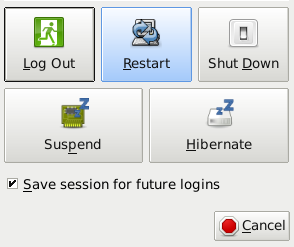
    As of recent, all XFCE desktop builds such as Manjaro, Fedora, Debian, Mint, etc., contain a feature that, when turned on, will immediately clear and wipe all data from the current user session and render it permanently gone. This feature can be activated in settings and you will be prompted if you want to save this session for future logins on your shut down screen.

    Most Linux Distros can be configured to automatically wipe the Bash History on session end, and this will also remove most spyware, malware and shell connections to then return to the original OS version it started with. In case you need to update software or save some files you trust, you can do this by booting up your device, running a software update, and rebooting it to save the session for any future logins. This will create an updated XFCE reference and run its most recent updated version for all your apps.

    In sessions where you would have been exposed to online threats just end your session with a reboot without saving this session for future logins, and that will destroy all your data, cache, and any history created during your session. Data can be exported to a trusted point or cloud as long as you always install new software after a safe restart to a trusted session.

    When it comes to phones, running DeGoogled Android can seem like the ultimate privacy solution, however, this will only solve Google tracking woes, and they can become impractical as most of the apps you would be using would rely on Google Play services to run. With some dependency patches, apps will most likely be able to run without Google Play services and instead, rely on other services like Amazon, Huawei or any other companies that have created and released an independent app store.

    The e/ project is the most popular among the DeGoogled options that provide current Android versions with the stock Android apps and zero bloatware. However, e/ still runs an Android version that is severely susceptible to spyware attacks much like the one that affected Pegasus or an independent shell hack attack.

    And lastly, since PostMarketOS was released, there is a real Linux distribution available for phones and more than 200 devices are supported by this time. It is easy to set up and to use on your phone as the installation process requires configuring your device to accept custom ROM images. It can be flashed to nearly any device with the TWRP recovery and the TWRP setup for all devices is highly documented.

    Using PostMarketOS is currently suitable for more tech-savvy users and users that have more experience with Linux in general. In terms of privacy, PostMarketOS can be configured to wipe all user and session data on each reboot. You can also run your favorite Android Apps inside the Anbox Virtual Machine, thus making it extremely difficult for spyware that you are attacked with, in your android VM to roll over to your actual OS on the device.

    There are a ton of devices popping up on the market that come with Linux installed off the shelf. My favorite are the Pine64 community projects called the Pinebook Pro, a $200 laptop that is powered by an old smartphone chip on a Raspberry Pi-like board, and its handheld sibling the PinePhone. These devices offer subpar performance but their main perks are privacy rather than performance.

    The Librem 5 is another smartphone that comes with a Linux distro out of the box and its most important feature is the privacy bolstered with the hardware kill switches for network, camera, mic, radio, GPS etc.

    System76 also sells rebranded Clevo Laptops and Desktop units that have a custom Linux distro on them that encourages gaming.

    Privacy protects our information we do not want to be shared publicly such as health or personal finances. Privacy helps protect our physical safety in cases where social media breached real-time location data privacy. Personal data is used to make very important decisions in our lives.

  • Is Camping a good idea for Digital Nomads?

    Is Camping a good idea for Digital Nomads?

    While Digital Nomads often travel frequently and are usually living in a new place before they have the chance to fully settle in, camping can make this experience easier. When you are camping you will likely realize that you only need the bare essentials, as all of your home comforts are not available to you anymore. There are alternative ways of gaining access to things like internet connection and hot showers.

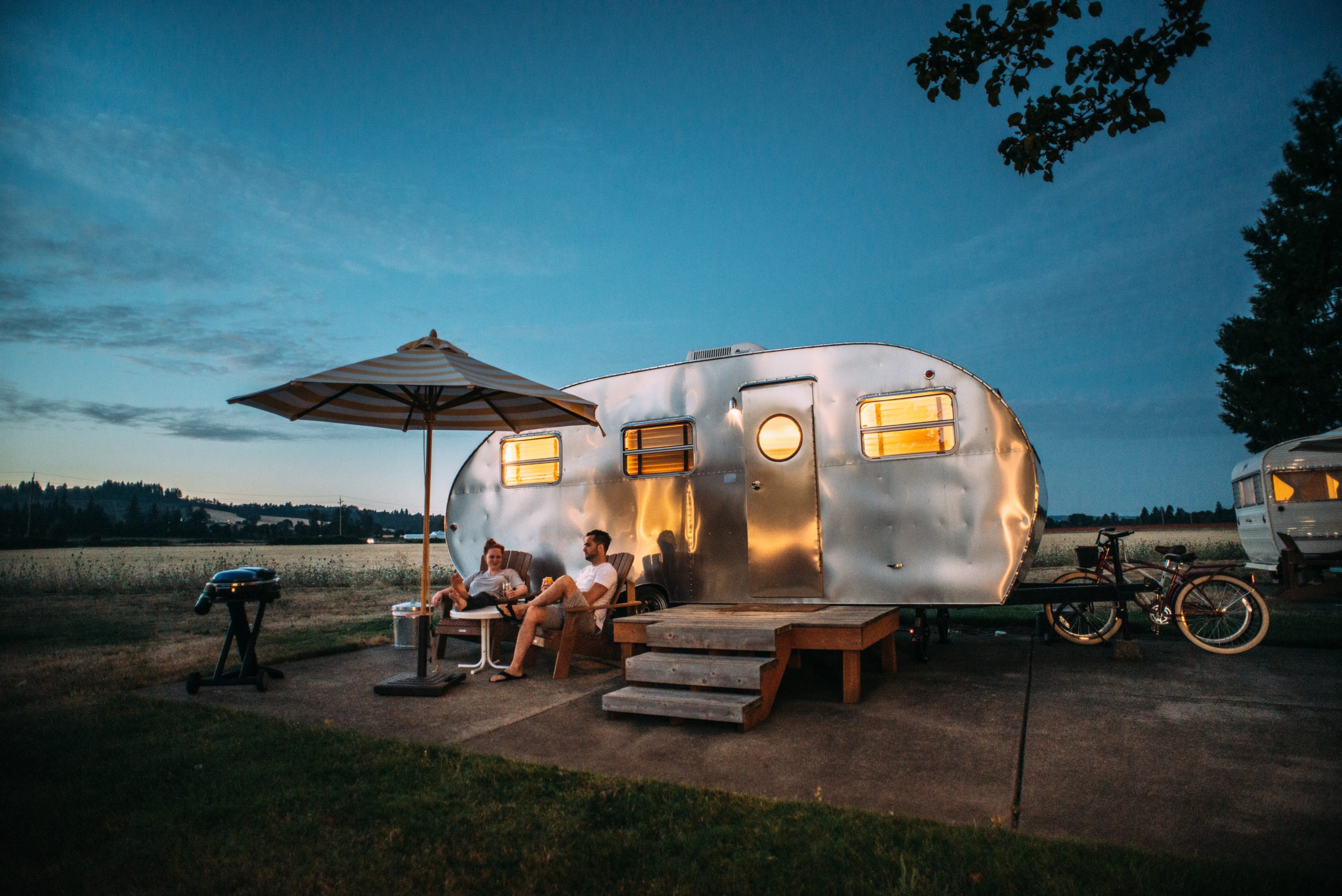
    Whether you decide to camp in a campsite or at your own will in the wilderness, you will find that other than the warm months of summer, you won’t be seeing any holidaymakers or families doing the same thing as you. Camping instead of renting out several living spaces is much more cost-friendly and easier to accommodate to your set dates. Many campsites have Google fiber, are pet friendly, and are accessible to just about anybody.

    This will require that you gain some comfort with being outdoors and in touch with nature, as you will be living in it for the time being. Some campsites do have shared showers and bathrooms, which depending on your perspective are good or bad. Social distancing has never been as easy as when you are living on a campsite and should be quite simple for you to keep your space to yourself.

    To live this lifestyle you will need camping equipment, such as a tent, sleeping bags, blankets, portable lights, a backpack that can carry all your essentials, and cooking equipment suited for camping. You will need any type of technology you take with you to have a long-lasting battery life as this will mean fewer stops to charge them.

    Camping can also have its downsides such as not being sheltered from the bad weather, back or neck pain due to sleeping in bad positions, not having your own kitchen or bathroom, relying on solar chargers or internet cafes for electricity, or having nature sounds in the background of your conference calls. You could also work from a hammock or from a beach lounger, this is a very comfortable way to work but also one that is bad for your posture.

    A mobile hotspot and portable power are vital things to have with you if you are a Digital Nomad thinking of camping full time. A mobile hotspot will give you internet whenever and wherever you need it, and having your own portable power system can last you as long as you need it to so you don’t have to work against the clock.

  • What would it cost if you become a Digital Nomad in Andalucia

    What would it cost if you become a Digital Nomad in Andalucia

    If you are thinking of moving to Andalucia but you are not sure if you can afford it or if you will be able to cover all your expenses, here is a list of 8 places to live in Andalucia and the average cost of living there.

    Seville.

    Seville is a place filled with culture and history and although it is a big city, it maintains the unique charms of a small town. The average price you should expect to pay for a meal is €9, basic utilities such as electricity, heating, cooling system, water and garbage can cost you €120 on average per month, and
    internet of 60 Mbps or more will cost €35 on average per month.

    When it comes to rent, it depends on what you are looking for. 1 bedroom apartments in the centre cost around €663 a month, and 1 bedroom apartments outside of the centre cost around €490 a month. 3 bedroom apartments in the centre cost around €1,054 a month, and 3 bedroom apartments outside of the centre cost around €675 a month.

    Monthly salaries are expected to be around €1,270 after tax.

    Cadiz.

    Cadiz is known for its beaches, white sands and turquoise waters. It is a good summer holiday destination for locals and visitors.

    The average price you should expect to pay for a meal is €8.75, basic utilities such as electricity, heating, cooling system, water and garbage can cost you €95 on average per month, and internet of 60 Mbps or more will cost €36 on average a month.

    When it comes to rent, it depends on what you are looking for. 1 bedroom apartments in the centre cost around €500 a month, and 1 bedroom apartments outside of the centre cost around €462 a month. 3 bedroom apartments in the centre cost around €787 a month, and 3 bedroom apartments outside of the centre cost around €662 a month.

    Monthly salaries are expected to be around €1,066 after tax.

    Malaga.

    Malaga is a historical city that is widely recognised for its architecture and nearby mountains.

    The average price you should expect to pay for a meal is €10, basic utilities such as electricity, heating, cooling system, water and garbage can cost you €111 on average per month, and internet of 60 Mbps or more will cost €40 on average a month.

    When it comes to rent, it depends on what you are looking for. 1 bedroom apartments in the centre cost around €673 a month, and 1 bedroom apartments outside of the centre cost around €528 a month. 3 bedroom apartments in the centre cost around €1,203 a month, and 3 bedroom apartments outside of the centre cost around €840 a month.

    Monthly salaries are expected to be around €1,297 after tax.

    Granada.

    A popular holiday destination due to its snow-capped mountains to its warm Mediterranean waters.

    The average price you should expect to pay for a meal is €9.50, basic utilities such as electricity, heating, cooling system, water and garbage can cost you €114 on average per month, and internet of 60 Mbps or more will cost €33 on average a month.

    When it comes to rent, it depends on what you are looking for. 1 bedroom apartments in the centre cost around €520 a month, and 1 bedroom apartments outside of the centre cost around €375 a month. 3 bedroom apartments in the centre cost around €772 a month, and 3 bedroom apartments outside of the centre cost around €565 a month.

    Monthly salaries are expected to be around €1,235 after tax.

    Jaen.

    Often referred to as ‘the gateway of Andalucia’, Jaen is the home to an abundance of national parks and farms. It is also the centre of olive growing in Andalucia, meaning the trees of this region account for 50% of Spain’s annual olive oil production.

    The average price you should expect to pay for a meal is €9.50, basic utilities such as electricity, heating, cooling system, water and garbage can cost you €93 on average per month, and internet of 60 Mbps or more will cost €45 on average a month.

    When it comes to rent, it depends on what you are looking for. 1 bedroom apartments in the centre cost around €392 a month, and 1 bedroom apartments outside of the centre cost around €260 a month. 3 bedroom apartments in the centre cost around €633 a month, and 3 bedroom apartments outside of the centre cost around €506 a month.

    Monthly salaries are expected to be around €1,233 after tax.

    Almeria.

    Almeria is known for its picturesque coastline, its crystal clear waters and beaches that proudly own a blue flag status for their excellence.

    The average price you should expect to pay for a meal is €10, basic utilities such as electricity, heating, cooling system, water and garbage can cost you €108 on average per month, and internet of 60 Mbps or more will cost €43 on average a month.

    When it comes to rent, it depends on what you are looking for. 1 bedroom apartments in the centre cost around €480 a month, and 1 bedroom apartments outside of the centre cost around €410 a month. 3 bedroom apartments in the centre cost around €760 a month, and 3 bedroom apartments outside of the centre cost around €607 a month.

    Monthly salaries are expected to be around €1,357 after tax.

    Cordoba.

    The province of Cordoba houses one of the most important types of Moorish architecture in the entirety of the Islamic West, the Mesquita de Cordoba is enclosed within the city’s ancient and historic walls.

    The average price you should expect to pay for a meal is €8, basic utilities such as electricity, heating, cooling system, water and garbage can cost you €113 on average per month, and internet of 60 Mbps or more will cost €39 on average a month.

    When it comes to rent, it depends on what you are looking for. 1 bedroom apartments in the centre cost around €512 a month, and 1 bedroom apartments outside of the centre cost around €362 a month. 3 bedroom apartments in the centre cost around €825 a month, and 3 bedroom apartments outside of the centre cost around €562 a month.

    Monthly salaries are expected to be around €1,087 after tax.

    Huelva.

    The province of Huelva is located on the Western side of Andalucia and bordered by Portugal. Huelva is made up of diverse landscapes, from long coastlines with untapped beaches to national parks made up of trees and saltwater lakes.

    The average price you should expect to pay for a meal is €9, basic utilities such as electricity, heating, cooling system, water and garbage can cost you €111 on average per month, and internet of 60 Mbps or more will cost €39 on average a month.

    When it comes to rent, it depends on what you are looking for. 1 bedroom apartments in the centre cost around €533 a month, and 1 bedroom apartments outside of the centre cost around €408 a month. 3 bedroom apartments in the centre cost around €766 a month, and 3 bedroom apartments outside of the centre cost around €525 a month.

    Monthly salaries are expected to be around €950 after tax.

    If you think that you want a slower pace to life, warm weather year-round and a life by the beach, then these places in Andalucia will definitely live up to those expectations.

  • Will Spain Become the Next Hotspot for Digital Nomads?

    Will Spain Become the Next Hotspot for Digital Nomads?

    Digital Nomads are remote workers that use telecommunication technologies to make a living and live in a nomadic manner. They usually work from foreign countries in public libraries, coffee shops, recreational vehicles, or co-working spaces, relying on devices with wireless internet capabilities such as smart phones or mobile hotspots so they can work wherever they wish to. The reason this is so appealing to many is because of the location and financial independence. Here are the top places in Spain to visit if you are or wish to become a Digital Nomad.

    1. Madrid

    Madrid being the capital and right in the middle of the country, makes for an excellent location to be in. Here is why madrid is such a popular choice:

    Madrid is the home to many different types of cuisine and amazing restaurants, yet it is still easy to find a meal for €10 or less. As dinner starts at around 10pm, bar-hopping doesn’t happen until about midnight and can go on until the early hours of the morning.

    It is easy to find a furnished apartment in Madrid, with a 1 bedroom studio in the centre costing an average of €732 a month. The best reported neighbourhood in Madrid is Arganzuela and the internet speed is 28Mbps.

    The local English fluency can be described as basic, the best way to obtain medical insurance is with Safetywing, and the recommended co-working space is Utopic_US.

    For a nomad, you can expect the living cost in Madrid to be around €2,313 a month, including €150 a month for co-working.

    2. Barcelona

    Barcelona is known for its art and historical background, but it is also popular among nomads worldwide.

    This city caters to most tourists and residents when it comes to cuisine preference, with the average meal costing €9.98. You can find a 1 bedroom studio in the centre for around €799 a month, the internet speed is 32 Mbps, and the English fluency is considered basic as the dominant language in Barcelona is Catalan.

    Medical Insurance is networked by Safetywing and the recommended co-working space is Betahaus.

    For a nomad, you can expect the living cost in Barcelona to be around €2,631 a month, including €192 a month for co-working.

    3. Valencia

    Named after the Comunidad Valenciana, Valencia is known for its staple dishes such as Paella and its annual carriage fair called Carrozas or Fallas.

    You can expect to pay about €9 for a meal anywhere in the city and €492 a month for a 1 bedroom studio. The internet speed is 30Mbps, medical insurance is networked by Safetywing and the recommended co-working space is Wayco.

    The dominant language in Valencia is ‘Valenciano’, yet Spanish is also spoken everywhere, and the English fluency can be defined as basic.

    For a nomad, you can expect the living cost in Valencia to be around €2,184 a month, including €196 a month for co-working.

    4. Alicante

    While Alicante is also a province, I will be talking about the city of Alicante. Home to the Universitat D’Alacant, you can easily find yourself a typical Spanish meal for €9 and a 1 bedroom studio in the centre for €462 a month.

    Internet speed is 28Mbps, medical insurance is networked by Safetywing and English fluency is basic.

    For a nomad, you can expect the living cost in Alicante to be around €2,128, including €150 a month for co-working.

    5. Malaga

    In the southern city of Malaga you can expect to pay on average €8 for a meal and €500 a month for a 1 bedroom studio.

    Internet speed is 26Mbps, medical insurance is networked by Safetywing and the English fluency is basic. The recommended co-working space is Nido.

    For a nomad, you can expect the living cost in Malaga to be around €2,064 a month, including €157 a month for co-working.

    6. Seville

    The city of Seville is known for its ‘Flamenco’ music and its deep family values tied to the gypsy community. Here you can expect to pay €10 on average for a meal and €560 a month for a 1 bedroom studio.

    Internet speed is 26Mbps, medical insurance is networked by Safetywing and the English fluency is mediocre. The recommended co-working space is workIN company.

    For a nomad, you can expect the living cost in Seville to be around €2,016 a month, including €180 a month for co-working.

    7. Tenerife

    Tenerife is the largest of Spain’s Canary Islands, and their average meal price is €7. You can find a 1 bedroom studio for €505 a month with the internet speed ranging at 26Mbps.

    Medical insurance is networked by Safetywing, the English fluency is quite good and the recommended co-working space is Wolfhouse.

    For a nomad, you can expect the living cost in Tenerife to be around €1,866 a month, including €124 a month for co-working.

    8. Granada

    Granada is home to the famous monument ‘L’Alhambra’ and has historic ties to ancient Rome. You can dine out for around €10 each, and find a 1 bedroom studio for €500 a month.

    Internet speed is 24Mbps, medical insurance is networked by Safetywing, English fluency is good and the recommended co-working space is Cocoroco.

    For a nomad, you can expect the living cost in Granada to be around €2,276 a month, including €300 a month for co-working.

    If financial and location independence are what you want in a job and you have high knowledge in the field of telecommunication technology, then being a digital nomad could be for you!

  • Longevity… Available for All?

    Longevity… Available for All?

    Can we all live longer in the future?

    There are about a hundred theories of aging, but all of them express two opposing positions, in one way or another. The first says that aging is a programmed, inevitable process. The second states that aging is preventable, and we all could “live forever”. Looking back at the history of the mankind, one could tell that, most likely, the aging process is somewhat predetermined. To the date, we have not seen people living forever. At some point, our biological adaptation system stops correcting errors and repairing breakdowns that occur in cells as the life goes on. So, aging is a result of errors that happens to our cells [1]. Yet in the era of total digitalization and genetic engineering old age stops looking so fatal. The process of rejuvenation can be looked at as cleansing the body of old cells. What happens when the immune system becomes less effective and fails to enforce a programmed apoptosis to old cells that stop dividing? Okay, clearly this is bad when the cleansing stops, but it sounds like something that people can deal with. Let’s see what technologies are on offer.

    One of popular theories of aging focuses on senescent cells that are growth-arrested cells that cause inflammation and play a causal role in aging. Senescent cells demonstrate the senescence-associated secretory phenotype, producing a mix of molecules that trigger chronic inflammation and tissue dysfunction. Addressing this issue, a number of novel senolytics biotech companies focus on various means of selectively destroying the senescent cells that accumulate with age. This is the logic behind  technology provided by Unity Biotechnology (USA), among a handful of other companies in the sector [2]. They developed a method to selectively eliminate senescent cells using senolytic drugs. According to the researchers, this technique prevents age-related diseases and literally turns back the clock as tissues return to their healthy state.

    They are using advances in molecular biology to increase life expectancy, and more specifically, the period of time when a person is healthy. So far, Unity Biotechnology tested its drug on people with osteoarthritis. However, the company’s experts are confident that senolytics can improve the condition of the heart, lungs, eyes, and even restore some cognitive functions. In general, to prevent or correct all those things that we used to perceive as processes that inevitably accompany aging. According to independent experts, the Aging theory, based on the accumulation of senescent cells, and the development of senolytic drugs hold a certain promise.

    Peter Diamandis, founder of the X-Prize Foundation and co-founder of Singularity University [3], is confident that in just 30-50 years, a centenarian will feel 60, and people will live up to 150 years. His X-Prize Foundation supports breakthrough technologies that are aimed at improving the lives of the entire humankind. Their research received multiple awards in several categories, including those related to solving of the aging problem. In addition to the Foundation and Singularity University, Diamandis founded Human Longevity Inc. As part of the “Health Nucleus” program, physicians fully examine the patient’s genome and perform full-body MRI scan. Using machine learning, experts analyze all the data received and provide their understanding of the patient body’s processes. According to the researchers, this allows to detect health problems at an early stage.

    However, other theory and its adepts suggest that Diamandis’ forecasts are too optimistic. According to calculations, by the end of the 21st century, the average human life expectancy on the planet will be around 90-100 years. This prognosis assumes that genetics is one of the key factors underlying longevity [4]. According to prolonged records, the longer a person lives, the greater the genetic background of her longevity. If somebody lives to be 90-95 years old, as a rule, it is not accidental. So, there is heredity and some kind of genetic basis, and the outliers are rare.

    Scientists have indeed discovered over 500 genes that are associated with lifespan. In the future, researchers will be able to synthesize one or more of these genes and integrate them into the human genome using, for example, CRISPR / Cas9 technology. However, while theoretically such a project is feasible, at the same time, even the present “longevity gene” may not be activated, or there can be a gene for the age of the associated disease, which can “turn on”. Finding ways to influence gene expression is another promising area for researchers.

    According to Peter Diamandis, in the near future, procedures using stem cells will be carried out everywhere. In the first place, they are necessary for the treatment of degenerative and autoimmune diseases. However, in the future, whole organs will be grown from stem cells. The futurologist suggests taking these cells from the placenta, which is discarded after childbirth in 99.9% of cases. He insists that stem cells from a single placenta can be enough for hundreds or even thousands of people.

    The idea of using stem cells is not new, as well as the idea of rejuvenation that goes back several thousand years. In 2016, the founder of a start-up Ambrosia Jesse Karmazin offered wealthy businessmen – mainly from the Silicon Valley – to transfuse the plasma of the young people’s plasma transfusion. Each procedure cost $ 8 thousand. However, in the spring of 2019, the US Food and Drug Administration announced that the technology has no clinically proven benefits. A few hours later, Ambrosia spokesman announced that the company will be dissolved, but in 2019 it was reported that they were back in business [5].

    New start-ups appear on the market almost every week, developing innovative methods of fighting aging. For example, the Cellularity project has raised about $ 250 million in investment to research the effects of stem cells on rejuvenation. British investor Jim Mellon promised that the medical developments of his startup Juvenescence will help everyone overcome the 120-year milestone [6]. According to him, this will be possible thanks to drugs that prevent many age-related diseases – neurodegenerative, heart, joints, etc. Even the demise of Ambrosia has not pull the plug on the research into the effects of young blood for geriatric patients – for example, a clinical trial is underway at Stanford University (USA), in which scientists are trying to find out if injections of child plasma can help patients with Alzheimer’s disease.

    According to Statista, by 2026 the global market for anti-aging products reach $88 billion [7]. Peter Diamandis argues that extending active life expectancy even by 20-30 years will have a tremendous impact on this market. It is already developing at an unprecedented speed, constantly offering the consumer new developments. For example, the supercomputer IBM Watson uses deep machine learning and neural networks to find ways to treat cancer and other diseases, including age-related ones. And digital models of human organs in virtual projection fully convey the appearance of a real organ. This helps surgeons hone new skills for them, consolidate the accuracy and complexity of the procedure, and minimize the likelihood of error…

    …This list of advancements and achievements can go on and on, but will these technologies be available to all, or just to a privileged class? In other words, how much will it cost? The costs of human genome transcription are in the region of $1000, yet not covered by any health insurance policies or National Health services, so you can expect to pay at least that amount. And the rest is still a mystery, but the price tag on the controversial Ambrosia’s treatment ($8000) seems like a good guess. Which makes it unlikely to include wide masses.

    Regarding the timeline – the pioneering companies, like X-Prize Foundation, provide a rough estimate of 30-50 years. In the end, those who are genetically pre-disposed to longer life span will most likely benefit from these technologies – because they will live to see it. And the descendants of “short-livers” if they still will be interested.


    References:

    1. J. Tower, Programmed cell death in aging, Ageing Res Rev. 2015 Sep; 23(Pt A): 90–100. https://www.ncbi.nlm.nih.gov/pmc/articles/PMC4480161/

    2. Rearson, A Review of Senolytics Biotech Companies, Fightaging.org, December 22nd, 2020,

    https://www.fightaging.org/archives/2020/12/a-review-of-senolytics-biotech-companies/

    3. S. Buhr, With $250 million, Peter Diamandis’ new startup is all about taking stem cells from placentas, Techcrunch.com, February 2018, https://techcrunch.com/2018/02/15/peter-diamandis-new-startup-is-all-about-taking-stem-cells-from-placentas-so-we-can-live-forever

    4. K. Christensen, T.E. Johnson, & J.W. Vaupel, The quest for genetic determinants of human longevity: challenges and insights, Nat Rev Genet. 2006 Jun; 7(6): 436–448. https://www.ncbi.nlm.nih.gov/pmc/articles/PMC2726954/

    5. E. Mullin, EXCLUSIVE: Ambrosia, the Young Blood Transfusion Startup, Is Quietly Back in Business, onezero. Onezero.com, Nov 8, 2019, https://onezero.medium.com/exclusive-ambrosia-the-young-blood-transfusion-startup-is-quietly-back-in-business-ee2b7494b417

    6. Rearson, A Rate of Living Approach to the Concept of Programmed Aging, Fightaging.org, January 5th, 2020, https://www.fightaging.org/archives/2020/01/fight-aging-newsletter-january-6th-2020/

    7. Statista, Size of the anti-aging market worldwide from 2020 to 2026,

    https://www.statista.com/statistics/509679/value-of-the-global-anti-aging-market/