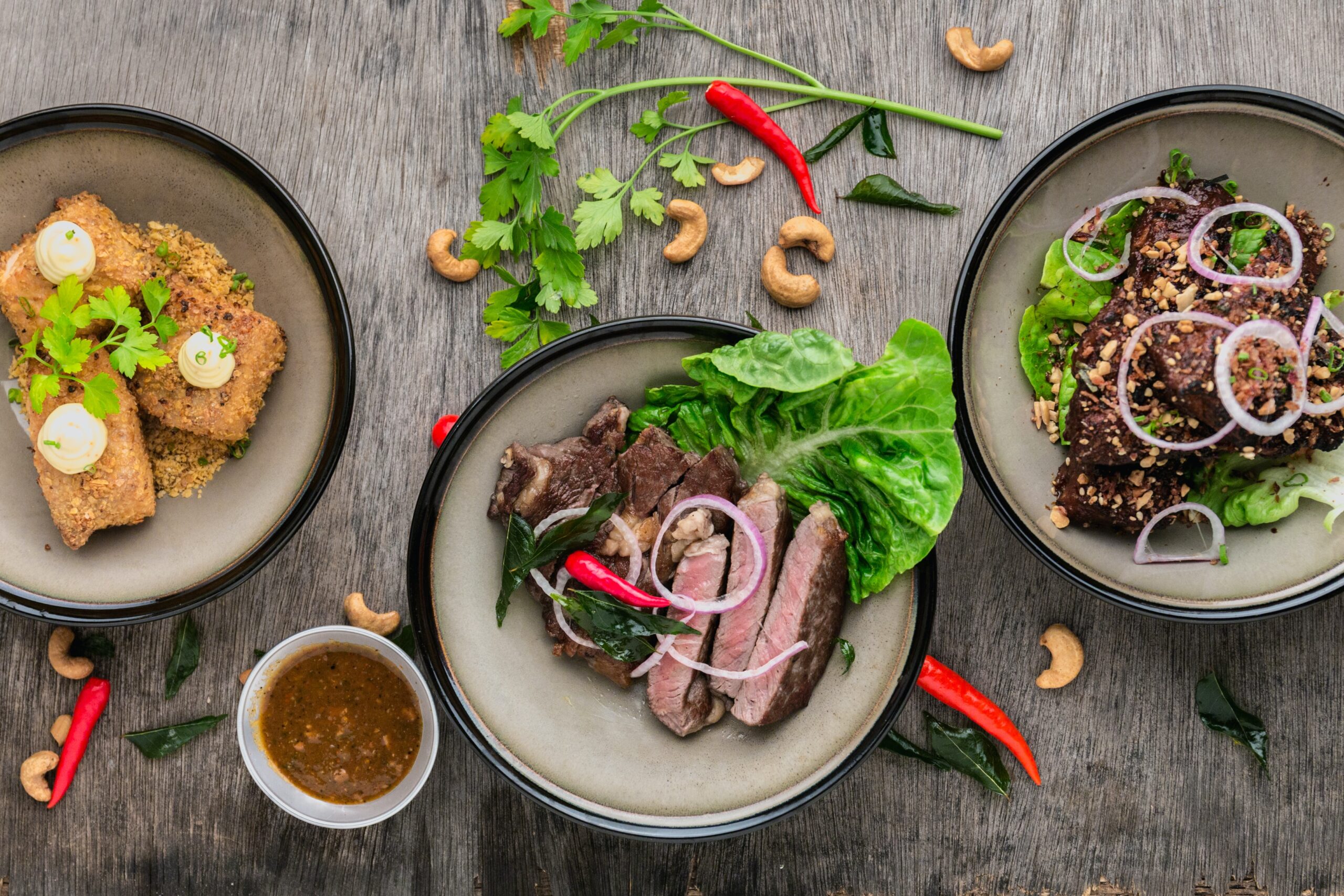
The debate between one meal a day (OMAD) and three meals a day (TMD) is an ongoing topic among health and fitness enthusiasts. Both diets have their fair share of advantages and disadvantages. In this article, we will discuss the pros and cons of each diet, so you can decide which one is best for you.
One Meal A Day (OMAD) Diet
The one meal a day diet is exactly as it sounds – you eat only one meal a day. This meal can be consumed at any time of the day, but most people prefer to eat it in the evening. Here are some of the pros and cons of the OMAD diet:
Pros:
Easy to follow – since you only have to worry about one meal a day, it’s much easier to stick to this diet compared to other diets that require multiple meals and snacks throughout the day.
Reduces hunger – by eating one meal a day, you will experience a significant reduction in hunger since you will be consuming all your calories in one sitting.
Saves time – since you only have to worry about one meal, you will have more free time to do other things.
Weight loss – the OMAD diet is an effective way to lose weight, as you will be consuming fewer calories overall.
Cons:
Nutritional deficiencies – it can be difficult to get all the necessary nutrients and vitamins in just one meal.
Binge eating – since you only have one meal to look forward to, there is a chance that you may binge eat, which can be harmful to your health.
Low energy levels – some people may experience low energy levels and fatigue since they are consuming all their calories in one meal.
Three Meals A Day (TMD) Diet
The three meals a day diet is the most common diet that people follow. It involves eating three meals a day, usually breakfast, lunch, and dinner. Here are some of the pros and cons of the TMD diet:
Pros:
Balanced nutrition – eating three meals a day ensures that you get all the necessary nutrients and vitamins that your body needs.
Better digestion – by eating smaller meals more frequently, you can improve your digestion and avoid bloating.
More energy – by eating smaller meals throughout the day, you can maintain your energy levels and avoid feeling tired or sluggish.
Cons:
Overeating – since you have three meals to look forward to, there is a chance that you may overeat, which can be harmful to your health.
Time-consuming – preparing three meals a day can be time-consuming and may not be practical for people with busy schedules.
Temptation to snack – by eating multiple meals throughout the day, you may be tempted to snack in between meals, which can lead to weight gain.
In conclusion, both the OMAD and TMD diets have their advantages and disadvantages. It’s important to consider your lifestyle and personal preferences before deciding which diet to follow. The OMAD diet is great for people who want to save time and reduce hunger, but it may not be practical for everyone. The TMD diet is a great option for people who want to maintain balanced nutrition and avoid overeating, but it can be time-consuming to prepare three meals a day. Ultimately, it’s up to you to decide which diet works best for your lifestyle and health goals.
Chlorella is a genus of about thirteen species of single-celled green algae belonging to the division Chlorophyta. Chlorella is a type of algae that packs a big nutrient punch, as it’s a good source of several vitamins, minerals and antioxidants. In fact, emerging research shows that it could help shuttle toxins out of your body and improve cholesterol and blood sugar levels, among other health benefits.
When it comes to algae, most people only know about the benefits of Spirulina as a digestion supplement, yet Chlorella is often used in areas like heavy metal detoxification.
Unlike Spirulina, which contains two separate pigments, Chlorella only contains one pigment, and that’s Chlorophyll and Chlorella has the highest concentration of it in the world.
Chlorophyll is a fat-based pigment and Spirulina is a water-based pigment, meaning Chlorophyll can take charge in healing your gut, your liver and the cell walls around the mitochondria, easing the process for nutrients to enter and toxins to leave your cells when they’re not entirely healthy.
While Chlorella is rich in Chlorophyll, only 10% of it makes its way into your stomach and the rest of it finds its way through your liver, gut and colon, meaning that it is absorbing toxins from all the way down in your system.
They even used to supply liquid Chlorophyll to the injured during World War One because the healing process was as fast as the one of a blood transfusion. This is because the chemical composition of Chlorophyll is highly similar to those in your hemoglobin, the only difference being that Chlorophyll contains a magnesium atom in the middle which is an iron atom that carries the oxygen in your blood cells.
Chlorella has the ability to pull out just about any toxins from your body, such as heavy metals, mercury, lead radiation, alcohol and lactic acid due to its ability to detect what is supposed to be there and what is not. While activated charcoal has often been a popular choice when pulling out toxins, it also pulls out all the minerals that your body could benefit from keeping. Chlorella, however, comes with many minerals such as magnesium, potassium, phosphorus and calcium.
It also has the highest concentration of RNA DNA, which is important because as you get older, your RNA DNA tends to get damaged, due to it containing a growth factor that speeds up the growth of your cells.
This interview with one of the world’s leading experts in algae provides a more in depth perspective on the Super Powers of this little known algae.
Try Chlorella along with Spirulina today and thrive on the health benefits of the ultimate nature remedies.
There are about a hundred theories of aging, but all of them express two opposing positions, in one way or another. The first says that aging is a programmed, inevitable process. The second states that aging is preventable, and we all could “live forever”. Looking back at the history of the mankind, one could tell that, most likely, the aging process is somewhat predetermined. To the date, we have not seen people living forever. At some point, our biological adaptation system stops correcting errors and repairing breakdowns that occur in cells as the life goes on. So, aging is a result of errors that happens to our cells [1]. Yet in the era of total digitalization and genetic engineering old age stops looking so fatal. The process of rejuvenation can be looked at as cleansing the body of old cells. What happens when the immune system becomes less effective and fails to enforce a programmed apoptosis to old cells that stop dividing? Okay, clearly this is bad when the cleansing stops, but it sounds like something that people can deal with. Let’s see what technologies are on offer.
One of popular theories of aging focuses on senescent cells that are growth-arrested cells that cause inflammation and play a causal role in aging. Senescent cells demonstrate the senescence-associated secretory phenotype, producing a mix of molecules that trigger chronic inflammation and tissue dysfunction. Addressing this issue, a number of novel senolytics biotech companies focus on various means of selectively destroying the senescent cells that accumulate with age. This is the logic behind technology provided by Unity Biotechnology (USA), among a handful of other companies in the sector [2]. They developed a method to selectively eliminate senescent cells using senolytic drugs. According to the researchers, this technique prevents age-related diseases and literally turns back the clock as tissues return to their healthy state.
They are using advances in molecular biology to increase life expectancy, and more specifically, the period of time when a person is healthy. So far, Unity Biotechnology tested its drug on people with osteoarthritis. However, the company’s experts are confident that senolytics can improve the condition of the heart, lungs, eyes, and even restore some cognitive functions. In general, to prevent or correct all those things that we used to perceive as processes that inevitably accompany aging. According to independent experts, the Aging theory, based on the accumulation of senescent cells, and the development of senolytic drugs hold a certain promise.
Peter Diamandis, founder of the X-Prize Foundation and co-founder of Singularity University [3], is confident that in just 30-50 years, a centenarian will feel 60, and people will live up to 150 years. His X-Prize Foundation supports breakthrough technologies that are aimed at improving the lives of the entire humankind. Their research received multiple awards in several categories, including those related to solving of the aging problem. In addition to the Foundation and Singularity University, Diamandis founded Human Longevity Inc. As part of the “Health Nucleus” program, physicians fully examine the patient’s genome and perform full-body MRI scan. Using machine learning, experts analyze all the data received and provide their understanding of the patient body’s processes. According to the researchers, this allows to detect health problems at an early stage.
However, other theory and its adepts suggest that Diamandis’ forecasts are too optimistic. According to calculations, by the end of the 21st century, the average human life expectancy on the planet will be around 90-100 years. This prognosis assumes that genetics is one of the key factors underlying longevity [4]. According to prolonged records, the longer a person lives, the greater the genetic background of her longevity. If somebody lives to be 90-95 years old, as a rule, it is not accidental. So, there is heredity and some kind of genetic basis, and the outliers are rare.
Scientists have indeed discovered over 500 genes that are associated with lifespan. In the future, researchers will be able to synthesize one or more of these genes and integrate them into the human genome using, for example, CRISPR / Cas9 technology. However, while theoretically such a project is feasible, at the same time, even the present “longevity gene” may not be activated, or there can be a gene for the age of the associated disease, which can “turn on”. Finding ways to influence gene expression is another promising area for researchers.
According to Peter Diamandis, in the near future, procedures using stem cells will be carried out everywhere. In the first place, they are necessary for the treatment of degenerative and autoimmune diseases. However, in the future, whole organs will be grown from stem cells. The futurologist suggests taking these cells from the placenta, which is discarded after childbirth in 99.9% of cases. He insists that stem cells from a single placenta can be enough for hundreds or even thousands of people.
The idea of using stem cells is not new, as well as the idea of rejuvenation that goes back several thousand years. In 2016, the founder of a start-up Ambrosia Jesse Karmazin offered wealthy businessmen – mainly from the Silicon Valley – to transfuse the plasma of the young people’s plasma transfusion. Each procedure cost $ 8 thousand. However, in the spring of 2019, the US Food and Drug Administration announced that the technology has no clinically proven benefits. A few hours later, Ambrosia spokesman announced that the company will be dissolved, but in 2019 it was reported that they were back in business [5].
New start-ups appear on the market almost every week, developing innovative methods of fighting aging. For example, the Cellularity project has raised about $ 250 million in investment to research the effects of stem cells on rejuvenation. British investor Jim Mellon promised that the medical developments of his startup Juvenescence will help everyone overcome the 120-year milestone [6]. According to him, this will be possible thanks to drugs that prevent many age-related diseases – neurodegenerative, heart, joints, etc. Even the demise of Ambrosia has not pull the plug on the research into the effects of young blood for geriatric patients – for example, a clinical trial is underway at Stanford University (USA), in which scientists are trying to find out if injections of child plasma can help patients with Alzheimer’s disease.
According to Statista, by 2026 the global market for anti-aging products reach $88 billion [7]. Peter Diamandis argues that extending active life expectancy even by 20-30 years will have a tremendous impact on this market. It is already developing at an unprecedented speed, constantly offering the consumer new developments. For example, the supercomputer IBM Watson uses deep machine learning and neural networks to find ways to treat cancer and other diseases, including age-related ones. And digital models of human organs in virtual projection fully convey the appearance of a real organ. This helps surgeons hone new skills for them, consolidate the accuracy and complexity of the procedure, and minimize the likelihood of error…
…This list of advancements and achievements can go on and on, but will these technologies be available to all, or just to a privileged class? In other words, how much will it cost? The costs of human genome transcription are in the region of $1000, yet not covered by any health insurance policies or National Health services, so you can expect to pay at least that amount. And the rest is still a mystery, but the price tag on the controversial Ambrosia’s treatment ($8000) seems like a good guess. Which makes it unlikely to include wide masses.
Regarding the timeline – the pioneering companies, like X-Prize Foundation, provide a rough estimate of 30-50 years. In the end, those who are genetically pre-disposed to longer life span will most likely benefit from these technologies – because they will live to see it. And the descendants of “short-livers” if they still will be interested.
4. K. Christensen, T.E. Johnson, & J.W. Vaupel, The quest for genetic determinants of human longevity: challenges and insights, Nat Rev Genet. 2006 Jun; 7(6): 436–448. https://www.ncbi.nlm.nih.gov/pmc/articles/PMC2726954/
When we think of the future, we always have the tendency to consider what will improve in our lives and the world. However, when you think about it, there are many things that we take for granted today that are not likely to improve in the future. Today we’re going to share with you ten things that are better today than they’ll be in the future.
1. Cost of Living
As a result of the recent pandemic, it’s almost certain that taxes around the world will continue to increase. Our cost of living rises year after year, and this is one area that’s highly unlikely to be better in the future. Make the most of the lower cost of living and invest well now to set yourself up for the years ahead.
2. The Weather
Over the past decade, we’ve all become aware of the impact of climate change on our world. As the air temperature rises, expect more rainfall around the world, which may also be more intense. Changes in wind patterns may result in more natural disasters and damage to the world around us.
3. Privacy
As we all spend more and more of our lives online today, whether that’s for personal or work reasons, concerns surrounding privacy are continuing to increase. Expect data to be more readily available in the future, so be careful with your digital reputation starting now.
4. The Natural Environment
Working hand-in-hand with the weather and climate change, it’s likely that our natural environment will change dramatically in the upcoming years. Expect beautiful destinations in the world to no longer exist and overcrowding to destroy some of the more deserted travel destinations.
5. Cheaper Outsourcing
If you use outsourcing within your business currently, this is likely to increase in price in the future. Individuals around the world are noticing the benefits of working online and freelancing, which begins to push up the price of outsourcing.
6. Opportunities to Live Overseas Cheaply
Whether you already travel overseas regularly or are hoping to take advantage of working from home in the future, now is the time to travel. With more people working remotely, this will begin to push the cost of living and renting an apartment in popular digital nomad locations such as Medellin and Tbilisi much higher in upcoming years.
7. Work-life Balance
The last year has been a struggle for many of us as far as work-life balance. With the increasing reliance on technology for our jobs, this is likely to only get worse. Companies are expecting employees to be plugged in 24 hours a day, which will take its toll on our mental and physical health.
8. Investing Opportunities
People are slowly beginning to understand the benefits of investing, which is increasing the number of advertisements for this around the world. Investing is likely to become far more competitive and less lucrative in the future due to the increase in its popularity.
9. Ease of Relocating
Relocating today, whether within your home country or further abroad, can be reasonably simple, depending on your situation. With challenges such as Brexit and the tightening of immigration laws around the world, this freedom of movement is likely to be reduced in the future.
10. Launching a New Business
With so many individuals finding themselves unemployed last year, people have taken this free time to launch new businesses. Depending on the industry you are planning to launch into, now is the best time to consider your next business venture. With hundreds of businesses launching each day, it’s only becoming more challenging to stand out from your competitors.
We hope these ten things that are better today than they will be in the future have given you something to think about. What do you think is better today than it will be tomorrow? It’s certainly an interesting topic to consider and one that can help us make the most of the present-day and appreciate everything we have at this moment in time.
The entire world is ready for the coronavirus to be over. After spending more than a year in isolation and financial hardship, people want to live their lives again. One of the things that everyone wants to do the most is travel.
The airlines and hotels have already reopened. However, it still doesn’t feel like things are back to normal. There are still mask-wearing requirements in almost every public setting in the world. And when you travel to another state or country, you’re still required to remain in quarantine for an X number of days.
What will travel be like after all the restrictions get lifted? Will the travel industry recover? We predict they will! Below are the top 6 groups that will be radically better for travel after the coronavirus.
1) Location Independent Workers
Traditional freelancers and artists have been stuck at home for the past year with nothing to do and no way to earn a living. That is one of the downfalls of being a location independent worker in the middle of a pandemic.
The good news is that location independent workers will soon travel again for jobs and inspiration. The post-coronavirus world will have an influx of independent workers getting on airplanes and travelling to other cities and countries to thrive in their self-made professions.
2) Digital Nomads
Most digital nomads have been able to survive the pandemic because they make their living on the computer. However, all their communications with clients have been through telephone or video conference calls. No one has met in person since March 2020.
Digital nomads already spend enough time on the computer alone. They are starved for physical human contact and interactions. That is why you’ll start to see more digital nomads travelling to different cities and meeting with clients in person. Even if in-person meetups are unnecessary, the digital nomads will insist for the sake of being around people.
3) Tourism
The coronavirus destroyed the tourism industry in 2020. When airlines and hotels began to reopen, people were still hesitant to travel. Their worries of the coronavirus spread persisted. But that is bound to change because of the vaccine distribution efforts already underway. Once enough people get vaccinated, they’ll have more confidence to travel again.
International tourism should pick up significantly over the next year. All the stakeholders associated with the travel and tourism industries will do much better in the coming years, including the cruise industry. Major cruise lines are already selling out their cruise packages for the summer and fall seasons. Reservations at hotels throughout the country are getting booked well in advance.
The tourism resurgence will create and restore tourism jobs. People will stop their financial dependency on the government and go back to earning money for themselves. If people earn the kind of money they were making before the pandemic, it will motivate them to travel and take trips more.
4) Business Travel
Business travel has been non-existent during the coronavirus. Pretty much every professional person has relied on Zoom or Cisco WebEx video calls to conduct and attend virtual business meetings. But there is only so much that can be discussed and presented through a video chatting platform.
Company executives and managers are anxious to attend in-person business meetings again. Most company leaders don’t like to make deals or final decisions without looking at their employees or clients in the eyes directly. So, they will be travelling quite a bit on first-class commercial airplanes or private jets to have these in-person meetings.
5) Holidaymakers
By the end of 2021, holidaymakers will reunite with their families. They will fly or drive cross country to be with them after a year of separation. Some families will even go on vacations to Hawaii, Greece, Italy, and other exotic destinations they’ve dreamt about for a long time now.
It doesn’t matter if it’s the holiday season or not. People will use whatever vacation time they have left at their jobs to create holiday time for themselves and their families.
6) Nationwide In-Person Meetings
Hotels and conference centres had refused to host business meetings because of the social distancing restrictions. Once those restrictions get lifted, nationwide in-person meetings will come back in a big way.
It was always normal for major company representatives to travel to different states for meetings and presentations. A lift on the travel restrictions means that nationwide in-person meetings will grow exponentially.
Final Words
The future looks very bright for travel in a post-coronavirus world. Businesses can thrive, and families can spend more time together. More people will be employed, which means they’ll have more money to travel.
The only downside is that travel insurance costs will rise. When the pandemic first struck in March 2020, many travellers got stranded on cruise ships and unfamiliar towns and cities. Those without travel insurance policies lost out on the money they invested in their travel itineraries at the time.
Travel insurance companies still received thousands of claims from people with travel insurance policies. For this reason, you can expect travel insurance costs to rise in 2021 and the years to come. Travel companies want to prepare in case another pandemic ever strikes their industry again.
Medicine is the craft, research, and experience of caring for a patient and handling their illness or disease’s diagnosis, prognosis, prevention, recovery, and palliation. Healthcare has now reached the next period of exponential advances, considering the fact that we are just two decades into the twenty-first century. Individual genetic vulnerabilities to chronic and lethal illnesses will now be detected using precision medicine technology, possibly eliminating illness decades later.
Precision medicine, digital therapeutics, 3D printing, immunotherapy, gene and stem cell therapies, and artificial intelligence are among the new technologies and treatments that have arrived or are on their way. People are living longer and happier lives thanks to modern medicine. Researchers, on the other hand, intend to take wellness changes even further. The future of medicine is promising, thanks to developments in genome editing, technologies to cure blindness, and attempts to address high medication prices.
Modern medicine has greatly improved people’s health. Researchers now want to take this a step further. People are living longer and happier lives than their forefathers and mothers. But, as any medical researcher can testify, dreams are even bigger. With too much money to be made, disease prevention is becoming increasingly important in medicine. Intervention to protect people from long-term illness may start as soon as the baby is born. And, although a deterioration in health in later life of be common, the line between stable ageing and disease is still a point of contention.
Efforts to gain more leverage over rogue immune systems, as well as to create technical alternatives to paralysis, are showing early signs of success.
The future in medicine may be very promising indeed if obstacles to obtaining the latest therapies available can be resolved.
(Note: For anyone who is worrying about what to do regarding Coronavirus in the United States, I urge you to visit: https://www.cdc.gov/coronavirus/2019-ncov/index.html). If you are outside the US, feel free to consult your country’s Coronavirus guidelines. If you have Coronavirus, please consult your doctor for advice. I do not offer any sort of medical advice/legal; information posted here is purely opinion and not representative of my team or JavaScriptLA and sponsors. That all out of the way, back to the blog post:
What does coding have to do with Coronavirus? I guess I’ll explain my thoughts.
First off, just writing more so to blog on the current events that are happening right now. Despite the fact that this group is more so about JavaScript and programming, I think as a community leader, it’s also important to blog on major event that impacts everyone part of this group.
I am like you all, just watching the situation unfold. I don’t know necessarily how all this will play out, but I think it’s best everyone try to remain as calm and vigilant as possible.
Just like in programming, when you find an error — you are expected to think out all the steps logically that produced it, and then try to go through each step until you find the path that went wrong and ultimately correct it. I believe that same kind of thinking will help you survive this pandemic.
You can solve problems best in computer programming by being calm and collected. It’s definitely easy to get frustrated at the computer when things go wrong and curse the machine for making your life miserable. But to me, getting mad and cursing don’t really help — ultimately after your entire tirade, the problem is still there, still waiting for you to come to your senses and solve it. As I’ve mentioned before (when I was learning to program in my previous post), through experience, problems don’t care about your feelings.
Have you ever played any survival type video game? Have you noticed that the main character is usually calm and collected? No matter how gory the situation gets, the main character MUST go on. I was playing Call of Duty World War II the other day, and the first scene is a re-enactment of D-Day. You and your comrades in battle are on your way to fight the Germans in the Battle of Normandy, only to suddenly have half your team killed before even reaching shore. As you look at your friends now dead, some of them limbless, your commander instructs you that you MUST follow the mission and get to the wall, so you can help the others take down the barriers to fight the Germans.
In seeing that re-enactment, I thought, wow, if that was me– how would I react? Especially if I was with all my friends and saw them die one by one? It’s so impressive that these people who fought these wars carried on, and WON the war.
War is hell for sure, and I’m not advocating it at all. I’m not even suggesting that we have one nor try to start preparing for one. But that said, it’s VERY naive to think you can just be at peace at all times. You must train yourself to be a rationale thinker at the very least, no matter how crazy you feel emotionally in your head.
So that leads me to my next point of discussion, which is to use your brain as best as possible. Though people are panicking around you and clearing out grocery stores, you must look at even that as a potential “bug”.
If you saw your computer having a kernel panic, how would you react to it? Most of you would just restart the machine. However, if you look closer sometimes you can read the error that caused the kernel panic in the diagnostic report; and find that it was a singular program causing the bad behavior. If you stop that program, the computer resumes to normal. Maybe it’s not that simple, perhaps it’s something worse; but the process remains the same, you’d just look through all your logs until you find the offending bug and then stop it.
Applying this to people clearing out grocery stores, stop and think. What happens if you add to the panic? Well, lol, you’re going to cause others to also panic around you. Suppose you also start clearing out grocery stores and then post pictures to social media. Others will see that and start doing what you did, and hence you have people standing in a line outside Costco that stretches 1/4 of a mile long (JUST TO GET IN).
When are stores that sell TP, hand sanitizers, etc going to limit the number of those items purchased per person? Or is that happening already? These hoarder types are making things MUCH worse. Please think of others and be kind during this trying time.
What if you choose not to panic buy, but only buy what you need?What if you choose not to post to social media? Well you are one less person adding to the hysteria, and perhaps your circle of friends on social media will feel bored there aren’t enough pandemic posts, log off and go back to living their lives regularly.
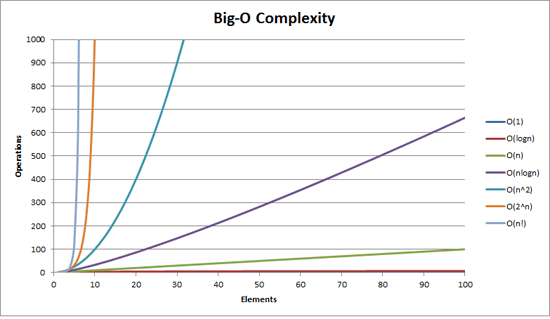
Just like in an algorithm, things can be exponential, factorial, linear, constant, etc depending on how we “program” (set) our lives. If you act in ways that affect your surroundings in a way that causes exponential danger, you ARE THE BUG. Stop yourself, and think.
Programs can be factorial, exponential, linear, logarithmic, constant, etc. (Stack Overflow)
It also helps to think rationally about the information you consume on the internet (as well in real life). Suppose you see a video of people dying in the streets, with blood coming out of their lungs? Suppose you see crows flying everywhere in the sky, looking like a plot out of a bad Hollywood B horror movie? Suppose some guy on your favorite Youtube channel told you that you need to start buying more guns and supplies, and be ready to take down your neighbors lest they might try to kill you. How would you react? Do you react with terror? If you did, how would that affect your “world” around you?
Are you starting to get the picture here? Does this all make sense?
My point is — you ARE very much in control of your own LIFE program (despite what others might tell you or want you to believe — fear is a great way to sell; so recognize that). To me, as a coder especially, you are gifted with tools and a way of thinking that works already for the computer world and would work GREAT for your real world when applied. Use your developer tools to help you debug your life better; and you will live better. Adjust the way you consume information too; just like a computer needs a good program, you need good information to help you make better decisions. If you don’t have it, start finding ways to have it in your life. Then help others as well.
But, Vijay, you’re not panicking enough! The virus is coming and already killed 1000s of people!
Again, where? Who? What can you do about it? Think?
Suppose you are right in your panic, and I should be more riled up. Everyone is dying around you, and I notice my neighbors are also coughing up blood. Do we die too? Perhaps nothing can save us.
***** END SPOILER ****
Okay, if you read this far, I’m assuming you saw the clip and / or don’t care about spoilers.
So yeah, my point is that you have to remain vigilant even in the face of death. You can’t just give up and die. What will you do if you have family? What kind of legacy will you leave for them? Would it be better to die or use your brain in a way that can save others? Again, imagine what would our society be like today if people who fought in wars just gave up?
My point here is that just because a situation is bad doesn’t mean it’s the end of the world. Again, think logically, rationally, and of course ethically. You still have time– how much time do you have before you die? Unknown, no matter if a virus exists or not.
So do something with your time now — to me I see this pandemic as a chance to really THINK properly about your life and how you want to spend it. Will you contribute something of value?
Plenty of people are without food/water right now. How can you use your brain to help them? How can you you use your coding skills? Can you hack to help? Can you contribute to an open source project to help others? What if you are still a junior, and barely know how to code “Hello World”? Can you still help? Sure — maybe help someone else more senior by taking on the coding that feels monotonous to them — aka CSS/HTML.
Help your family member learn math/algorithms so they can act in ways that don’t exponentially make the world around them WORSE. Even if you are a junior, you can still control how you digest information coming in from the web / media around you. You can still help find BETTER information for those who need it. You don’t need to know JavaScript to do that.
You can also exercise compassion towards others. Together as a society, UNITED, we can overcome a lot more than every man, woman, child for themselves. So use that sort of thinking to help you and your own family solve much more complicated problems. If we all start acting selfish, we will only cause more problems that lead to more exponential like disasters. In fact, part of what you are seeing now in the media is exacerbated by media and bad actors who want to profit. Why doesn’t anyone report good news? Because — it doesn’t sell. If you exercise compassion, things get boring and people go back to living their very normal lives without fear. Isn’t that a great thing? Don’t you want to have normalcy in your life, so you can focus on things that matter instead — like enjoying programming, hanging out with family/friends, having fun, going and visiting cool places?
Doesn’t it suck that airports around the world have closed down, and people are less trusting of each other? Doesn’t it suck that we can’t go outside and enjoy the good things we used to a few months back without concern? Would decisions you make from now forward be to better society or will you just keep making decisions that harm yourself and others?
Hmm Vijay, if I start helping others — would that benefit me? Would my peers/family members respect me more, perhaps remember that I helped them out in times of a crisis? I think you know the answer.
Would that old lady in the Costco line feel a little more safe/trustful of people if I helped her also have toilet paper instead of hoarding it for myself?
My dad and I pulled into Costco and we saw a little old lady trying to put her groceries up in a truck, and my dad stopped to help her😍☺
If I made some kind of program/video that helped people learn how to better take care of themselves while isolated, would that help society?
Check out this website, made by Avi Schiffman (a high schooler) that gives live updates on Coronavirus and how people can protect themselves. Pretty cool. What could you also contribute?
“You are the change you want to see in the world” — Ghandi.
Program the change you want to see in your world :). We’ll be here with you doing exactly that, even if Coronavirus slows down our meets in person, we’ll still be online.