No, not just the theme parks, or the movies, or the iconic characters. This endlessly fascinating human being took stock of society in the 50’s and 60’s, noticing the exodus from the cities into the suburbs and thought: we can do better.
What he came up with was EPCOT ― a design for better living. The Experimental Prototype Community of Tomorrow was Walt’s response to the disintegration of modern cities, as those who could afford it fled to the outlying suburbs. As futurist R. Buckminster Fuller put it, Walt wanted to ‘…build a new model that makes the existing model obsolete.’
It’s this model that forms the foundation of the Grant Town Experimental Community’s ideas for a better way in which our society can live. GTEC’s Christian Moran, also a Walt Disney historian, presented these ideas and more when he spoke about the community’s vision at the Grant Town Summit in 2019. ‘We live in interesting times,’ he said, smiling as he noted that some people find this to be ‘a curse’. Automation and Artificial Intelligence (AI) are radically disrupting our way of living, such as by having the potential to increase mass unemployment to 50% by 2045.
However, as Christian pointed out, the purpose of Automation and AI is to ‘reduce human labor’. And so our society finds itself at a crossroads, where we can continue as we are, with a polarized society, particularly economically. Or, we could reconsider this situation as ‘a new threshold for humanity.’
Was Christian talking about utopia? Yes, but not a concept of unreachable perfection. Rather, a city where poverty doesn’t exist, giving people the opportunity to self-actualize and reach their full potential.
Christian referenced the 1970’s vision of R. Buckminster Fuller to further expand on his 21st century approach. Fuller asked: why not make a world where everyone can make it? We have the technological, natural and educational resources to feed, clothe, house, educate and fulfill every human on the planet. Why not build a city of the future that does just that?
This is what Walt Disney was trying to do in his final project. His community design featured a focal central point with hotels and retail, surrounded by offices, high density apartments, green spaces and outlying single dwelling homes.
If you want to learn more about the concept of the proposed town of the future, please check out this video presentation by Mel McGowan, Chief Creative Officer of Storyland Studios and Lead Architect for Grant Town’s G.T.E.C. Project.
Additionally, you can check out Christian’s demo of the Grant Town city of the future, a community that uses emerging technologies to simulate life several decades from now, as well as a place where every person has the opportunity to self-actualize and create the life they want for themselves.
Online privacy, also known as internet privacy or digital privacy, refers to how much of your personal, financial and browsing information remains private when you’re online.
Online security is not a subject to take for granted in this tech-savvy 21st century. Everyone is busy downloading or uploading data on the internet, exposing themselves to various cybercriminal attacks. By clicking on any suspicious link or visiting a disguised site, you could lose a chunk of data you have worked all your career life to generate.
As businesses remain vigilant about cybersecurity issues, people are finding interest in the many ways they can safeguard their data while operating on the digital space. With that in mind, this article can help you stay anonymous online while keeping your data secure.
This has become a growing worry, with browsing history and personal data all potentially at risk when online. Staying one step ahead, people usually set up a virtual private network (VPN) that gives you online privacy and anonymity by creating a private network from a public internet connection. VPNs mask your internet protocol (IP) address so your online actions are virtually untraceable.
But one thing people do not realize is that a VPN won’t protect you from any type of spyware or malicious data people might come in contact with during their interactions online. Most of the spyware attacks are actual reverse shell connections, where a malicious piece of data executes a command that will connect your device to the attacker.
More on how reverse shell connection works in this video.
If you want to stay ahead of spyware and surveillance technology, you should consider some reliable reverse shell reversing options. Practically, there are 2 common ways people are using to stay safe from spyware attacks.
One idea is to set up a Virtual Machine on your device, which pretty much means that you’ll be setting up a complete OS that will run on top of your operating system, that will run in a virtual sandbox and restore to its defaults for each new session.
This can be also done on any PC running Linux if you decide to install one of the many privacy-focused distributions like ParrotOS, Kali, MOFO Linux, Tails, Qubes OS or others. These distributions have a built-in feature often referred to as Amnesia, which means that your device always starts from the same clean state and everything you do disappears automatically when you shut down the device.
But that means it’s somewhat difficult to install and run any software on these distributions, as you have to be skilled enough to include your personal files and software in the installation so it won’t get deleted when you shut down your device.
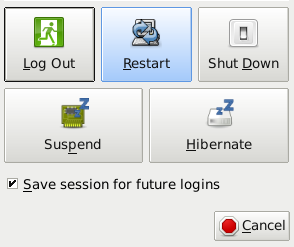
As of recent, all XFCE desktop builds such as Manjaro, Fedora, Debian, Mint, etc., contain a feature that, when turned on, will immediately clear and wipe all data from the current user session and render it permanently gone. This feature can be activated in settings and you will be prompted if you want to save this session for future logins on your shut down screen.
Most Linux Distros can be configured to automatically wipe the Bash History on session end, and this will also remove most spyware, malware and shell connections to then return to the original OS version it started with. In case you need to update software or save some files you trust, you can do this by booting up your device, running a software update, and rebooting it to save the session for any future logins. This will create an updated XFCE reference and run its most recent updated version for all your apps.
In sessions where you would have been exposed to online threats just end your session with a reboot without saving this session for future logins, and that will destroy all your data, cache, and any history created during your session. Data can be exported to a trusted point or cloud as long as you always install new software after a safe restart to a trusted session.
When it comes to phones, running DeGoogled Android can seem like the ultimate privacy solution, however, this will only solve Google tracking woes, and they can become impractical as most of the apps you would be using would rely on Google Play services to run. With some dependency patches, apps will most likely be able to run without Google Play services and instead, rely on other services like Amazon, Huawei or any other companies that have created and released an independent app store.
The e/ project is the most popular among the DeGoogled options that provide current Android versions with the stock Android apps and zero bloatware. However, e/ still runs an Android version that is severely susceptible to spyware attacks much like the one that affected Pegasus or an independent shell hack attack.
And lastly, since PostMarketOS was released, there is a real Linux distribution available for phones and more than 200 devices are supported by this time. It is easy to set up and to use on your phone as the installation process requires configuring your device to accept custom ROM images. It can be flashed to nearly any device with the TWRP recovery and the TWRP setup for all devices is highly documented.
Using PostMarketOS is currently suitable for more tech-savvy users and users that have more experience with Linux in general. In terms of privacy, PostMarketOS can be configured to wipe all user and session data on each reboot. You can also run your favorite Android Apps inside the Anbox Virtual Machine, thus making it extremely difficult for spyware that you are attacked with, in your android VM to roll over to your actual OS on the device.
There are a ton of devices popping up on the market that come with Linux installed off the shelf. My favorite are the Pine64 community projects called the Pinebook Pro, a $200 laptop that is powered by an old smartphone chip on a Raspberry Pi-like board, and its handheld sibling the PinePhone. These devices offer subpar performance but their main perks are privacy rather than performance.
The Librem 5 is another smartphone that comes with a Linux distro out of the box and its most important feature is the privacy bolstered with the hardware kill switches for network, camera, mic, radio, GPS etc.
System76 also sells rebranded Clevo Laptops and Desktop units that have a custom Linux distro on them that encourages gaming.
Privacy protects our information we do not want to be shared publicly such as health or personal finances. Privacy helps protect our physical safety in cases where social media breached real-time location data privacy. Personal data is used to make very important decisions in our lives.
We are rapidly heading towards a digital-first world, and this exciting time of robots, artificial intelligence, and remote work is about to change the way we live entirely. Let’s take a look at 10 incredible things about to improve life in the next 10 years.
5 Ways Robots Will Improve Quality Of Life
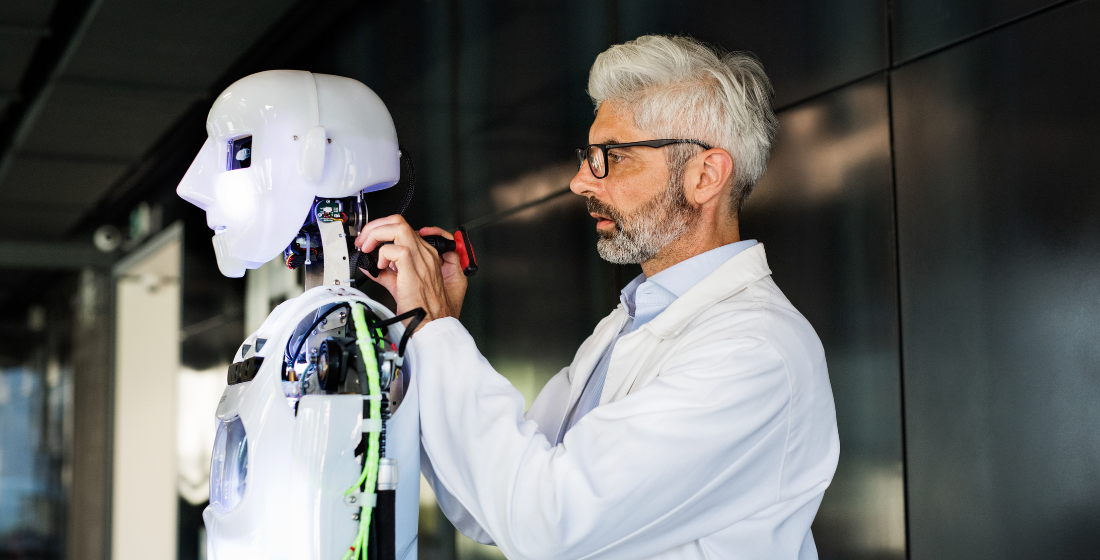
1: Healthcare is undergoing remarkable development thanks to robots. Removing human error from complex and risky operations, robotic arms provide a higher quality of healthcare for those most vulnerable in society. As technology improves and develops over time, we may see robots taking over many minor operations too, and perhaps moving into dentistry.
2: Not only are robots, artificial intelligence, and automation improving the healthcare industry worldwide, but robotics are also being designed to care for an aging population around the world. Providing companionship, our new digital-first world will roll out robots into care homes to ease stress, anxiety, and loneliness.
3: Another way our lives will be improved in the next 10 years is through the introduction of self-driving vehicles. Robots on the road will significantly reduce the number of road traffic accidents by removing drink driving incidents, collisions due to distracted drivers, and crashes caused by medical emergencies behind the wheel, just to name a few.
4: Robots will also be taking on risky jobs that humans currently do, such as working in nuclear power plants, search and rescue and bomb disposal. So, step aside when it comes to high-risk work environments and let robots help safeguard mankind.
5: Humans are naturally creative, but when daily chores and work fill up our time, creativity is put on the back burner. Robots will soon be gifting us all valuable time by optimizing daily tasks and allowing us to develop our imagination and have more time to be creative.
5 Ways Daily Life Will Be Different
1: If the global pandemic has taught us anything, it’s how accepting many industries now are of remote work. In order to evolve and take advantage of talent around the world, remote work must become our new norm. Thanks to technology and high-speed internet, remote work is here to stay!
2: In a digital-first world, there will no longer be a need to go to the supermarket and pick up groceries. Your fridge will store your groceries’ database and provide an accurate grocery list when you need to restock. It will then send an order request to your supermarket of choice, and an autonomous vehicle will deliver your goods. The technology is already available to make this a reality; we just need to implement it within our homes.
3: Thanks to the internet, education is limitless, with a vast amount of educational content widely available online for free. In the next 10 years, education, especially higher education, will likely be taught entirely online, allowing people to travel and study simultaneously. This will also complement a rise in remote work!
4: Digital currencies are set to replace coins and notes, reducing the need to carry cash in the next couple of years. In fact, China has already made the switch to digital currency by introducing the cyber yuan, which tracks spending in real-time. It’s expected that more countries will follow suit over the next 10 years.
5: Diet is set to change significantly over the next decade, as more people move towards a plant-based diet or become 100% vegan. With more time on our hands, thanks to technology improving daily life, more people will spend time improving their health and diet, including growing their own food and foraging rather than visiting the supermarket and living a more sustainable, eco-friendly lifestyle.
Genomics refers to the study of the human genome, therapeutics refers to the treatment of diseases that is based on the administration of medicines that aim at reducing these diseases or preventing them from occurring altogether while longevity refers to the lifespan a person has before their demise.
There is a correlation between the three with concepts regarding the human genome being used to produce drugs that target various stages of the genetic cycle and ensuring that life is prolonged amongst people suffering from fatal diseases. In the past, genomic studies have been used in research projects that enabled the discovery of drugs and synthetic manufacture of some such as insulin that has enabled the treatment of people suffering from diabetes mellitus (Mandal, 2019). Synthetic insulin has been crucial in prolonging the lives of diabetics and bettering their health conditions.
This paper pays close attention to genomics, its use in therapeutics, and its influence on longevity in the future. We strongly believe that the fast adoption of Genomics and accessibility to testings will make genomics testing the new normal in the future to clinical disease diagnosis and prognosis.
In the recent past, human beings have begun viewing aging as a disease (Diam, 2020). They have shifted from the past view of this phenomenon as an inevitable natural condition that cannot be evaded.
There have been significant efforts by genomic scientists to understand this phenomenon and perhaps enable them to reverse it. Huge support has emerged for proponents of such ideas who have received enormous financial and resource funding to enable them to carry out their work efficiently (Green et al., 2020).
Scientists advocating for this view have carried out gene sequencing studies to understand the role of genes and human DNA in the aging process. These scientists recon that should they find the genes involved in aging, they can develop medicines that harbor the actions of these genes, ensuring that the body continues to thrive, evading the destruction phenomenon of aging that climaxes at death (TMF, 2020).
A breakthrough is surely on the horizon for these scientists. In a few years, scientists will discover the genes responsible for aging. They will develop appropriate sequencing measures that will enable them to manufacture drugs that arrest the aging genes. Arresting the actions of the genes responsible for aging will ensure this phenomenon is kept at bay and people do not age, preventing death. Longevity in life will also be achieved.
The current state of relating genomics to longevity looks promising. Glycan tests are becoming ever more available, accessible and accurate. These tests can play a vital part in determining people’s biological age over their chronological age.
The impact of various diseases on the human body genes has been given proposed as a reason for aging. These diseases significantly harm the human genome interfering with various genes.
The affected genes act as triggers for the cells to slow down the replication process. Decreased replacement of worn-out cells as a result of decreased genetic stimulation leads to saturation of the body with old cells(Franck, 2019). The phenomenon of aging is therefore well and truly underway.
Genomics aims at providing preventive medicines that target the genes that are responsible for slowing down cell replication after infection. Others seek to provide prevention medicines that prevent almost all diseases from occurring in the first place, rendering the planet disease-free. This initiative is bound to ensure the rate of cell replication remains constant throughout life (Chinese Academy of Sciences, 2021). Such efforts are bound to contribute to longevity. With the triggers to reduced cell division reduced and the switches eliminated, longevity is bound to be achieved and the human is bound to live longer.
This will ensure that humans have more control over the lives they lead and how their lives come to a halt. This is only possible if genomics continues advancing at the current or faster rate.
Diseases such as cancer have been the hallmark of global medicine for a while now. Cancer is caused by the rapid and uncontrollable division of abnormal cells of the body. These compete with the normal cells for oxygen and nutrients. When the normal cells are starved of the requirements, they become weak and die. This is how cancer leads to death. Cancer also has a high mortality rate wiping out huge chunks of the global population (Baer, 2020).
Cancers occur due to a glitch in the cell division cycle. This is potentially an error in the instructing of the body. This error occurs in the genomic sectors of the body. Genomics targets to identify the glitches that occur in the genes during each cancer and come up with specific medicine that deals with that error in the genome. In a few years, genomics will be capable of producing drugs for each cancer that tackle the errors occurring in the cell division machinery (Modern Healthcare, 2019).
These drugs will aid with the eradication of these cancers in their entirety. Elimination will boost lifespan and ensure longevity, aiding in the achievement of this human vision.
In conclusion, the genome project is the future of healthcare and medicine worldwide. There have been tremendous steps made in ensuring that the genome is understood adequately and appropriate inventions made along that line.
The ones mentioned are sufficient examples of what human ingenuity coupled with immaculate resilience has been able to achieve. There is a need for more focus to be lent to the study of genes in detail and the development of drugs from these studies to tackle various diseases.
This support should be in the form of sufficient budgetary allocation by various institutions. Resources should also be set aside in the form of personnel and infrastructure to enable the achievement of this noble initiative. There is also a need to ensure that people are availed with this information to ensure their optimist and participation.
Green, E. D., Gunter, C., Biesecker, L. G., Di Francesco, V., Easter, C. L., Feingold, E. A., Felsenfeld, A. L., Kaufman, D. J., Ostrander, E. A., Pavan, W. J., Phillippy, A. M., Wise, A. L., Dayal, J. G., Kish, B. J., Mandich, A., Wellington, C. R., Wetterstrand, K. A., Bates, S. A., Leja, D., & Vasquez, S. (2020). Strategic vision for improving human health at The Forefront of Genomics. Nature, 586(7831), 683–692. https://doi.org/10.1038/s41586-020-2817-4
Hi all, time for another blog post! I am working my way to make blogs a more regular thing for myself.
So today I want to share my story with you all, as well as what it feels like to be a developer in 2020 (after almost 10 years of programming).
I’ve been programming since 2011. I started off doing websites on WordPress, so my earliest days of learning to code were mainly spent inside a Barnes N Noble (or Borders back then), thumbing through pages of PHP. At that time, I really felt like I was reading an alien language, and there weren’t any sophisticated YouTube or Udemy tutorials to help me out. So learning just took a long and drawn out amount of time. I spent a lot of my days in cafe lounges next to bookshops reading and practicing out examples for hours upon hours. I freelanced mostly to just get by (but being single I also didn’t have huge expenses — I literally just needed a couch to sleep on and a computer, and I could use a shoe-string budget to eat daily). I saw many people doing programming at that time getting paid serious money; many of who were self taught, so I figured if I just kept the focus, the money would follow for me too.
Around that time also, I found out about meetups — and I thought they were really cool, so I decided to try posting some for JavaScript on Meetup.com. I wasn’t sure who would “meetup” with me, but I guess that’s the fun using the website, right?
The first few meetups went well, but even from the beginning I sort of felt like there were a lot of people who were just as confused about learning JavaScript as I was. If I advertised for a meetup on a specific topic, it was pretty much on me to lead the discussion — or it would go nowhere.
I remember a time where I was reading quite a lot about JavaScript Regular Expressions, and I went full blown “college presentation” style that day I gave the meetup. To my surprise, many people liked the presentation and thought I should give more talks. So I did, and my confidence began to rise. Still, I knew I was still just a confused programmer and to make this group worth my while, I needed support from more senior level programmers.
During those beginning days — if I wanted a talented speaker to come drop by our group to give a JavaScript talk; I’d often hear that I’d have to “fly them out and pay them”. I also remember asking some of my childhood friends who went on to work at companies like Google / Amazon and they’d just show disinterest. One “friend” told me that I’d have to pay him $100/hour since he doesn’t do anything for free anymore, and even though we were friends, he didn’t want to hang out with people so “basic”, it would bring him down.
I also got ignored quite a lot by people I’d reach out to, despite writing really great introductory letters. I remember going to other meetups around the area, then trying to talk to the developers there, and they’d get annoyed that someone like “me” had been let in. It was not fun– I felt like other meetups in the area just weren’t as fun to attend. I was “an impostor” to these senior developers, but a leader of the “blind” to my fellow confused meetup pals. So I just continued to do “JavaScriptLA” instead of join some other meetup and be someone lost in a crowd. To me, this was more educational than sitting in an auditorium with a lot of other developers sizing each other up.
So I continued to keep reading and then presenting/leading each month for JavaScriptLA. It cost me nothing and it was fun. I was always afraid someone would call me out on my lack of knowledge on the subject matter and then chew me out publicly (like a visiting senior developer), but that never happened. The worst response I’d ever get was “Hey I think that’s wrong”, and then I’d ask them to add to the discussion. So I was able to avoid “being the teacher” and instead just the “facilitator”.
Thus, meetups carried on and over time I started getting more people showing up — word of mouth for the group really helped, and I also posted more frequently about the group on social media. I also started getting better at JavaScript and finding work was easier as a freelancer.
—
However, I was still severely lacking in my knowledge of JavaScript. For all that work doing meetups, you’d think I’d have eventually turned expert right? NOPE, not at all. I was still blind leading blind.
I’d feel it the most when I’d go to an interview for a job and get destroyed by the interviewer. It felt so awkward to be the guy who runs a JavaScript meetup only to not be answer some JavaScript interview questions. This made me depressed for a while, so I vowed to just practice very, very hard at interview questions. Over time I made and curated a list of all the most common interview questions I’d get, and would review them frequently.
Finally I did get a job. I was so happy with myself, because I was finally had a full time job. I felt rich and so for a while I enjoyed that feeling. I went out to some of the best restaurants in LA, I paid for my friends to hang out with me, and I also pumped a lot of cash into the Meetup group. I decided to hire an assistant to help me out with the group so I could focus more on the learning part rather than handling outreach. I was able to finally focus on other aspects of my life too, including getting in better shape and enjoy dating. Life was great– until I lost my job a year after.
I was let go because the company was losing money. It was out of their control, and that often happens with startups. They told me that I had done great while with them, but they just couldn’t afford to keep me on. So I had to scramble fast to look for something else. Initially I thought I’d bounce back, since I was “better” at interviewing and I had strong experience under my belt.
But I wasn’t able to get a job easily. It was JUST as tough as it had been a year previously; if not tougher. Even though I thought I knew a lot about JavaScript, at that time, the JavaScript ecosystem was EXPLODING in complexity. Things I had studied yesterday were now just the baseline. At interviews, I’d get asked if I knew about Grunt, Bower, Gulp, Webpack, Angular, Yeoman, all sorts of brand new technologies I hadn’t used the year before at my job — at that time the minimum to get hired was just knowing JQuery and WordPress (which I had been doing). So I did my best to study and try to learn those technologies so I could talk about them during interviews.
Eventually I did get another job, and I passed the interview. But I got fired a month later, because my boss kept micro managing me and demanding I make the websites work on all browsers including IE8. I hate IE8. It was so frustrating.
Hence, I got depressed again– and thought I should just quit being a developer. Thoughts raced through my mind that I was a nobody, a fraud, an amateur at best– just leading a group when I didn’t deserve to. Those developers in Silicon Valley were right to snub their nose at me and sneer “why are you here, who let you in?”
The “rich life” I once had was gone– and I was back to being broke/strapping by on freelance funds. I felt so humiliated.
Through all that though, one thing remained constant. The bills. And also my grief. And my parents’ constant criticism. No one cared about my problems, I still had to endure each of these things daily. I had to find a way to pay the bills, and it was a struggle. My parents would remind me that I was not an engineer, and thus I was struggling to no avail, I should just find another career path.
I remember watching Breaking Bad through my depression, feeling really sorry for myself like Walter White (who was facing cancer), and I guess while watching that show I thought to myself– do I just want to go out like a wimp and die? Do I just want to be in this endless pain and off myself like Aaron taking heroin in that show? (I know this post suddenly turned so dark).
I suppose though, after watching Walter fight back with all his life and win so much made think about myself; was I just going to succumb to my own “cancer” (the cancer being the one in my mind that says I’m a bad developer/an amateur), or is it more fun to just use my brain like Walter and see how far I can go? Maybe I’ll still die in the end, but at least with some feeling that I actually lived my life rather than being dead now.
—-
So I decided to just get back up and work at my career. I knew I still sucked, but the thing that kept me going was that I’d tell myself, “I have my whole life to figure this out. My life stops when I stop.”
Moving forward from that time, it took me another year of freelancing and studying before I got a job again full time. (Actually maybe it took me 8 months in retrospect). I was “rich” again, but this time I didn’t blow my money. I just kept it in case of emergency again.
The thing that helped this time was that I had studied SO SO much, even if new stuff was coming out, I could learn it in the span of a few weeks. I also made it a point to study every day after I worked, so I’d always be prepared if I lost my job. I studied so much I was even hired by a school to teach for its students some basic JavaScript, which by that time was no problem for me anymore.
This helped me stay on at my job, because I was almost fired 3 different times — the senior management kept thinking they could outsource the work I did for cheaper; as well as get sold by some big firm telling them our work sucked and they could do better; as well as just being really difficult people to work with demanding a lot of crunch hours; throughout it all, they realized that I had the skill and will to succeed. That helped me outlast being outsourced, as well as getting work done on time and more successfully than supposed “consultants and A level developers” they brought in. Many of the senior managers were ultimately fired instead.
I left that company eventually to get a much better and less stressful job where I was truly given the space to just do my job (and not have to battle politics). The best part about it was I left my previous job with my honor in tact and the CEO of that company still interested in working with me some day again. That was so cool. But yah, the new job was more fun and exciting.
Fast forward to 3 more years, I was finally able to get married, have a child and still have success with my career as a JavaScript developer. Life became even more difficult and challenging, but I guess somewhere through all those pain points, I was able to keep myself going no matter how hard it became.
The Meetup group, JavaScriptLA also continued to get better and better every year. Around 2015, I had to stop doing presentations and move out of LA for my new job in the OC. So I decided to form a chapter for OC and teach out in that area. Youtube was also a thing, so I began teaching and recording meetups to that as well. We grew pretty fast thanks to new interest in JavaScript budding all around by new emerging students of the language. Because of the flourishing interest and because the group had so many successful meets in the past, it was now easy to get other speakers to come and present for the group (finally!). Making friends with senior level developers was much easier now, and when I spoke with them over the phone or via email to talk about the Meetup group– they’d also get a sense I knew exactly what they were talking about too, which made them like me and the group even more). So in a sense, I was able to get the group to run on “autopilot”, which helped me out greatly while learning to become a dad as well as continue to work hard at my job.
—-
I’d like to say life is “a bed of rose petals” now, but it’s still difficult. I guess that’s my point with this blog post. The life of a developer is NOT easy. I don’t think it will ever be easy, and I really doubt I’ll ever be able to go back to that life again where I was “RICH” and loaded with cash; where I’ll finally be able to focus on other aspects of my life and not ever have to worry about “learning programming” again.
Instead, I think the path of a developer is always going to become somewhat more complex year after year, and you have to respect that aspect. Even if you do end up getting richer, stay humble, stay frugal, add safety in as much as possible — because just like a program you might build, things could crash– expect bugs along all parts of the way. I say this with experience. The faster you can rebuild, the better off you’ll be in the future.
Today, there’s even more to learn, and it somewhat seems exponential or even factorial with the amount of stuff coming out every month.
Here’s the list of things our group wants to know about this year alone for 2020:
That’s quite A LOT of stuff to traverse, and if you think about each item on that list being a “node” in a “graph”, you’ll realize that each of those nodes has its own set of dependencies as well! Eventually you get into this huge huge rabbit hole of learning and learning; still you’ll find you’ve not even finished the graph traversal, there’s still more to figure out.
And then you realize, hey– maybe I can’t do it all! And you’d be right! Mathematically right! You just don’t have the time.
But do you give up? Do you just say hey, I can’t do it? No, not at all.
As the more experienced and wiser person, I’d tell you — do your own personal best. It’s not about learning EVERYTHING UNDER THE SUN.
I’d love to tell you after all those years being a JavaScript expert is what gets you paid the big bucks. But it’s not. It counts for something, and helps you survive being cut from jobs; but it’s not enough. You have to also just love the process.
It is hard, it is complex, and it’ll always be that way. But love that. To me, that’s what gets you paid the big bucks; when you can just dive into complex subject matter despite it being tough and just plow through it with a smile on your face.
That’s sorta where I am now. My work and running the group and being a parent as well as writing this blog and learning YouTube/filming/editing/managing money (all the aspects of running a group thrown at me) are hard. But I just enjoy it, hence it’s more power to me, and I’m loving this life.
The thing I see consistently as a pattern is that stuff is “hard” at first, but eventually you are smart enough to figure out how to minimize it to something less difficult; and perhaps through your own “recursion” or “iteration”, you eventually make a REALLY difficult thing eventually easy with time. So trust in your own “while loop”. You can do it. I can do it. Life’s great. And ignore anyone who snubs you/sneers at you, thinks you don’t belong– the truth is, they probably are going through the same “hazing” environment as you (and thus probably taking it out on you). Honestly, it’s just as hard for them as it is for you. To me a true “A level Sr. Developer” is someone who can enjoy all the parts of the coding process, even the lesser parts, with as much joy as the harder parts”. So if you come across some developer giving you grief, smile and nod, perhaps cut them some slack and move on with your own work. You’re too busy to be bogged down, just keep going.
Here’s to your success in 2020, and as always feel free to reach out to me with any questions about programming/JavaScripting.
A cool recommendation is the free tool by Toptal called “Freelance Developer Hourly Rate Explorer.” This freelance calculator caters to 30 different skill sets and could be used to get a better idea on how much you can earn as a freelancer.
Next time, let’s dive into some topics! After writing all this, I feel like I remember why I even wanted to do this group with even more clarity, and so I’m back with full force! See you all at the next meetup!