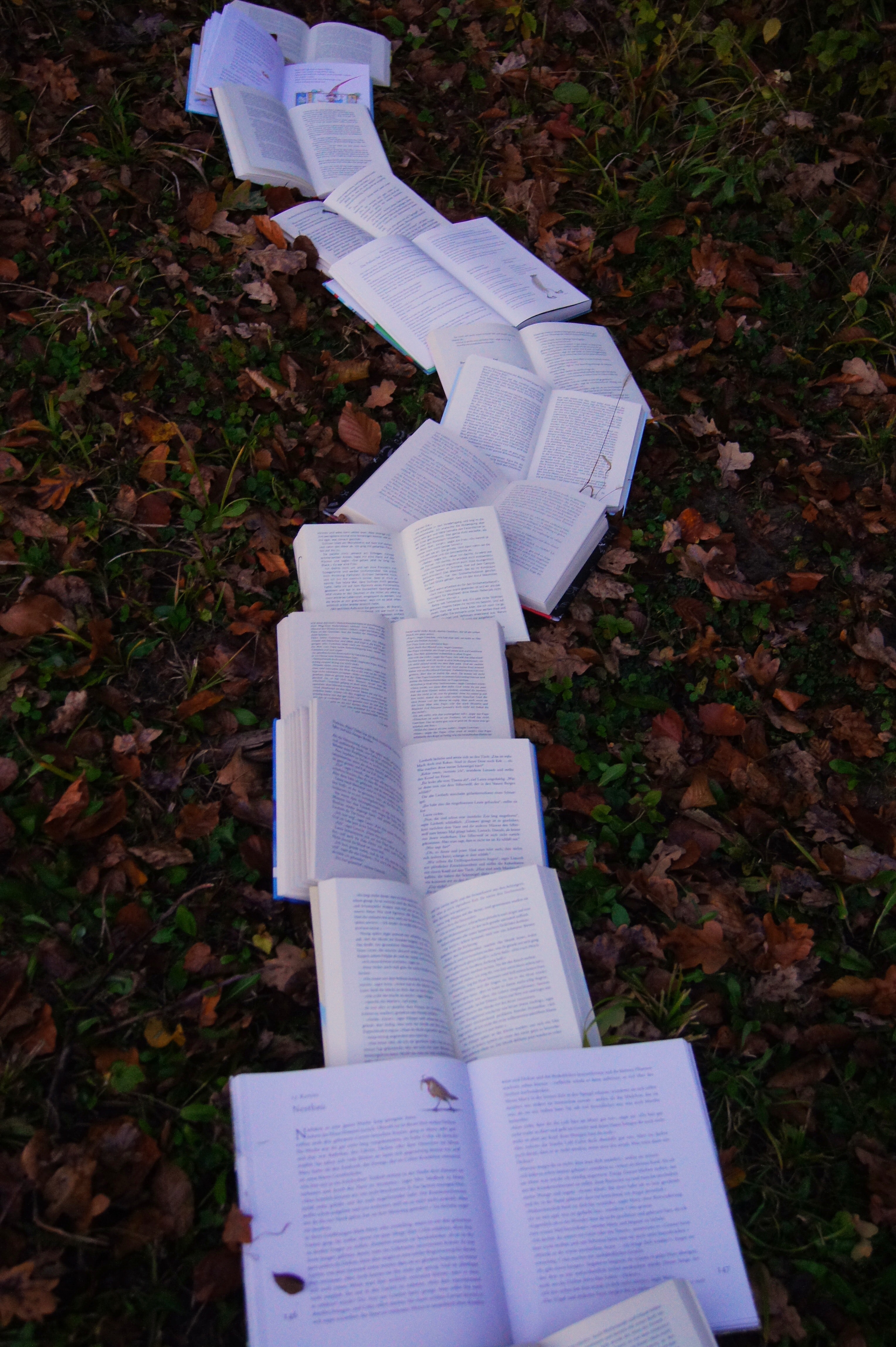
A common conception that involves books is that, if it’s good, it can take you to another time or place. Whether the story is set in the past, present, or future, authors of fiction create their own societies, laws, technologies, and social and political circumstances. Given the number of books that have been written throughout history, it is inevitable that some of them contain events or inventions that didn’t exist at the time the author wrote the book. Here are some examples of books that actually predicted the future:
The Parable Series:
Although the writer Octavia E. Butler passed away before she could complete the third book in the trilogy, she created a dystopian universe in Parable of the Sower (1993) and Parable of the Talents (1998) that contained the uprising of a populist demagogue. When published, the books were well received, but it is more recently that they have gathered another type of attention due to the distinct similarities between the society created by Butler and the one we live in today, such as global warming, powerful corporations, and social inequality. Yet, the strangest prediction came in Parable of the Talents, that featured a conservative preacher who runs for president using the slogan ‘Make America Great Again’.
1984:
The dystopian novel written by George Orwell anticipated so many aspects of the future that it has become one of the most talked about books when it comes to circumstances in which technology makes any attempt to control features of society. The term ‘Big Brother’ that refers to the abuse of government power, involving surveillance specifically, came from the book. There are two specific examples from the book that come too close to current technological aspects that we possess today are firstly the ‘telescreen’, which is basically a large television put to use to track people’s personal lives and one that is able to identify anybody simply based on facial expressions and heart rate. Secondly, the ‘Versificator’ is a machine that can produce music or literature in a very similar way that current artificial intelligence technology does today.
The Machine Stops:
In this 1909 book written by E.M Forster, the writer created a future where society live and work solely from their own rooms, withholding all forms of communication with each other through electronic devices. The characters from the book can be seen creating and sustaining their ‘friendships’ completely through electronic communications, which eventually leads them to become somewhat phobic about leaving their rooms or meeting people face-to-face. Specially in 2020, most of the world’s population was forced to adapt to working from their homes and only communicating with their loved ones through electronic means.
Fahrenheit 451:
Although when the book was published in 1953, television was already America’s go to source for entertainment. Most of what was shown on television at the time consisted of mysteries, scripted comedies, news programs, and game shows, however, in the book Bradbury includes the idea of what we now know as ‘Reality TV’. Adding that it is more interesting to see how humans would react to technology more than the technology itself. He predicted how society would become more and more reliant on their television, even more so when compared to their home lives and their personal relationships.
A Song for a New Day:
Sarah Pinsker’s book was published in September, 2019–and it was even written two maybe three years beforehand–and it takes place in a society that has to learn to live with a large number of domestic terrorism and a dangerous global pandemic. This causes the government to outlaw any gatherings beyond a certain amount of people and how this affected the livelihood of people who relied on social gatherings to make money.
The Wreck of the Titan:
This book was written by Morgan Robertson and was originally published with the title ‘Futility’ in 1898. The story is based on an enormous ship containing thousands of passengers, that are eventually killed when the ship, named The Titan, hits an iceberg and sinks in the freezing waters of the Atlantic Ocean. The Titan was said to be the ‘largest ship of its time’ and was also described as being low on lifeboats–just like the Titanic was.
It is difficult to know whether these books served as inspiration for some of the events that later unfolded in our society or if these are just major coincidences that will forever make us question the world we live in today.