Author: Lauryn Hulston

  • What Type of Intelligent Are You?

    What Type of Intelligent Are You?

    When it comes to intelligence, there is no right or wrong way to be. Although the word intelligence is associated with maths, science, IQ tests and complicated algorithms, that doesn’t mean to say that if maths and science aren’t your vocation that you aren’t intelligent. There are 9 known types of intelligence, and here you can find out which category you belong in or identify yourself with.

    1. Naturalistic Intelligence

    Some people can connect easily with animals or feel at home in nature. Naturalistic intelligence applies to people who are sensible in the natural world and enjoy being outdoors, exploring and caring for the environment.

    2. Musical Intelligence

    Often from a young age, some people are naturally drawn to music. Musically intelligent people are able to decipher any type of sound, pitch, tone, rhythm and noise that others would not usually be aware of.

    3. Logical-Mathematical Intelligence

    Out of all the other types of intelligence, logical-mathematical intelligence is the one that we most associate with general intelligence. People with this type of intelligence are able to easily recognise patterns and work through anything in a logical manner. They usually enjoy working their minds with games that involve strategy or solving puzzles, for example.

    4. Existential Intelligence

    While most of us go about our day to day as it comes, people with existential intelligence will often question their occurrences more deeply. They often ask questions such as ‘Why are we here?’ or ‘What is the point to our existence?’. Those with this type of intelligence are highly philosophical thinkers and will use their capacity searching for answers to deeply thought out questions. Existential intelligence can also be known as moral or spiritual intelligence.

    5. Interpersonal Intelligence

    Interpersonal intelligence can be found most commonly in leaders, social workers, politicians or psychologists. People with this type of intelligence can easily read verbal and non-verbal cues and can determine the temperament and mood of those around them.

    6. Linguistic Intelligence

    Linguistic intelligence is the one that is most commonly used and shared between humans. It entails our ability to think in words and translate that into speech in order to be understood. People with this type of intelligence can easily express their feelings and thoughts into words so that others can understand them, they are usually drawn to reading or writing as activities or vocations.

    7. Bodily-Kinesthetic Intelligence

    Those with high bodily-kinesthetic intelligence possess an excellent sense of timing as well as mind-body coordination. This makes it easy for them to convey feelings and ideas using their bodies, and as a result, they often end up in roles such as dance, sports or medicine.

    8. Intra-personal Intelligence

    Understanding your thoughts, feelings and emotions and using these understandings in everyday life is what defines intra-personal intelligence. This refers to the understanding of oneself and the human condition as a whole, they can also be known as ‘self-smart’ individuals, however, despite having this deep understanding of their own emotions, they are usually quite shy. Spiritual leaders, philosophers, writers and psychologists are usually highly intra-personal intelligence.

    9. Spatial Intelligence

    Spatial intelligence is defined by the ability to visualise the world in 3D. People with a high level of this intelligence are often creative and have a vivid imagination, artistic ability and excellent spatial reasoning. Usually referred to as ‘picture smart’ and found in professions such as design, map reading and architecture.

    While some of these can seem like a representation of certain skills and talents and not intelligence per se, this knowledge is still highly useful to teachers and caretakers who value a more integrated outlook on child development. Understanding the different types of intelligence provides you with numerous ways in which you can use your potential and capacity for personal growth.


  • Eco-friendly Living

    Eco-friendly Living

    Whether you want a more eco-friendly lifestyle to help the environment or to save money, every step you take that is eco-friendly helps the world.

    Power Off

    Reducing your carbon footprint is important when it comes to energy conservation, leaving everything on standby even when you’re not using it uses energy and that boosts up the cost of your energy bill.

    Eco-friendly technology

    One step ahead from turning off your gadgets is making sure that what you have is as energy-efficient as possible. This way, when the product is on you will be using less energy, and this will reduce your energy output.

    Renewables

    Switching your current energy supplier for one that is 100% renewable is eco-friendly and it benefits your home. All the energy that you use with a 100% renewable tariff is almost zero carbon.

    Less meat consumption

    Cutting down on the amount of meat you eat can have a huge impact on being more eco-friendly. Lowering your intake on red meat can reduce your carbon footprint significantly.

    Recycle

    Recycling is one of the most common eco-friendly steps and anything can be recycled, from batteries to boxes to cars. Before throwing anything out, take a minute to decide if it can be recycled instead.

    Cut out plastic

    Not using plastic isn’t as difficult as it seems. The options that are available to you without using plastic are varied and you should always try and avoid using it, unless using it is highly necessary.

    Don’t waste it, fix it

    Fixing something is more environmentally friendly than throwing it away. Although throwing it away is easier and cheaper, fixing it and turning it into something else will benefit you and the environment in the long run.

    Use the microwave

    Microwaves are surprisingly more energy efficient than the average oven. There are many recipes that can be found online or in cookbooks that only require you use a microwave.

    Respecting and helping the environment is in fact of benefit to us, and living a more eco-friendly lifestyle can be easier than you may think.

  • Books That Predicted the Future for Us

    Books That Predicted the Future for Us

    A common conception that involves books is that, if it’s good, it can take you to another time or place. Whether the story is set in the past, present, or future, authors of fiction create their own societies, laws, technologies, and social and political circumstances. Given the number of books that have been written throughout history, it is inevitable that some of them contain events or inventions that didn’t exist at the time the author wrote the book. Here are some examples of books that actually predicted the future:

    The Parable Series:

    Although the writer Octavia E. Butler passed away before she could complete the third book in the trilogy, she created a dystopian universe in Parable of the Sower (1993) and Parable of the Talents (1998) that contained the uprising of a populist demagogue. When published, the books were well received, but it is more recently that they have gathered another type of attention due to the distinct similarities between the society created by Butler and the one we live in today, such as global warming, powerful corporations, and social inequality. Yet, the strangest prediction came in Parable of the Talents, that featured a conservative preacher who runs for president using the slogan ‘Make America Great Again’.

    1984:

    The dystopian novel written by George Orwell anticipated so many aspects of the future that it has become one of the most talked about books when it comes to circumstances in which technology makes any attempt to control features of society. The term ‘Big Brother’ that refers to the abuse of government power, involving surveillance specifically, came from the book. There are two specific examples from the book that come too close to current technological aspects that we possess today are firstly the ‘telescreen’, which is basically a large television put to use to track people’s personal lives and one that is able to identify anybody simply based on facial expressions and heart rate. Secondly, the ‘Versificator’ is a machine that can produce music or literature in a very similar way that current artificial intelligence technology does today.

    The Machine Stops:

    In this 1909 book written by E.M Forster, the writer created a future where society live and work solely from their own rooms, withholding all forms of communication with each other through electronic devices. The characters from the book can be seen creating and sustaining their ‘friendships’ completely through electronic communications, which eventually leads them to become somewhat phobic about leaving their rooms or meeting people face-to-face. Specially in 2020, most of the world’s population was forced to adapt to working from their homes and only communicating with their loved ones through electronic means.

    Fahrenheit 451:

    Although when the book was published in 1953, television was already America’s go to source for entertainment. Most of what was shown on television at the time consisted of mysteries, scripted comedies, news programs, and game shows, however, in the book Bradbury includes the idea of what we now know as ‘Reality TV’. Adding that it is more interesting to see how humans would react to technology more than the technology itself. He predicted how society would become more and more reliant on their television, even more so when compared to their home lives and their personal relationships.

    A Song for a New Day:

    Sarah Pinsker’s book was published in September, 2019–and it was even written two maybe three years beforehand–and it takes place in a society that has to learn to live with a large number of domestic terrorism and a dangerous global pandemic. This causes the government to outlaw any gatherings beyond a certain amount of people and how this affected the livelihood of people who relied on social gatherings to make money.

    The Wreck of the Titan:

    This book was written by Morgan Robertson and was originally published with the title ‘Futility’ in 1898. The story is based on an enormous ship containing thousands of passengers, that are eventually killed when the ship, named The Titan, hits an iceberg and sinks in the freezing waters of the Atlantic Ocean. The Titan was said to be the ‘largest ship of its time’ and was also described as being low on lifeboats–just like the Titanic was.

    It is difficult to know whether these books served as inspiration for some of the events that later unfolded in our society or if these are just major coincidences that will forever make us question the world we live in today.

  • 5 Business Plans That Are Worth the Money

    5 Business Plans That Are Worth the Money

    Running a business is usually quite a demanding job and you need the right tools to be able to get things done quickly and efficiently. While there are many business tools available to every entrepreneur, some are free to access and some require payment.
    New entrepreneurs will prefer using free tools as they begin their business journey but recurring seasoned business owners will know the benefits that come from using paid services. Here are some of the most recommended business tools:

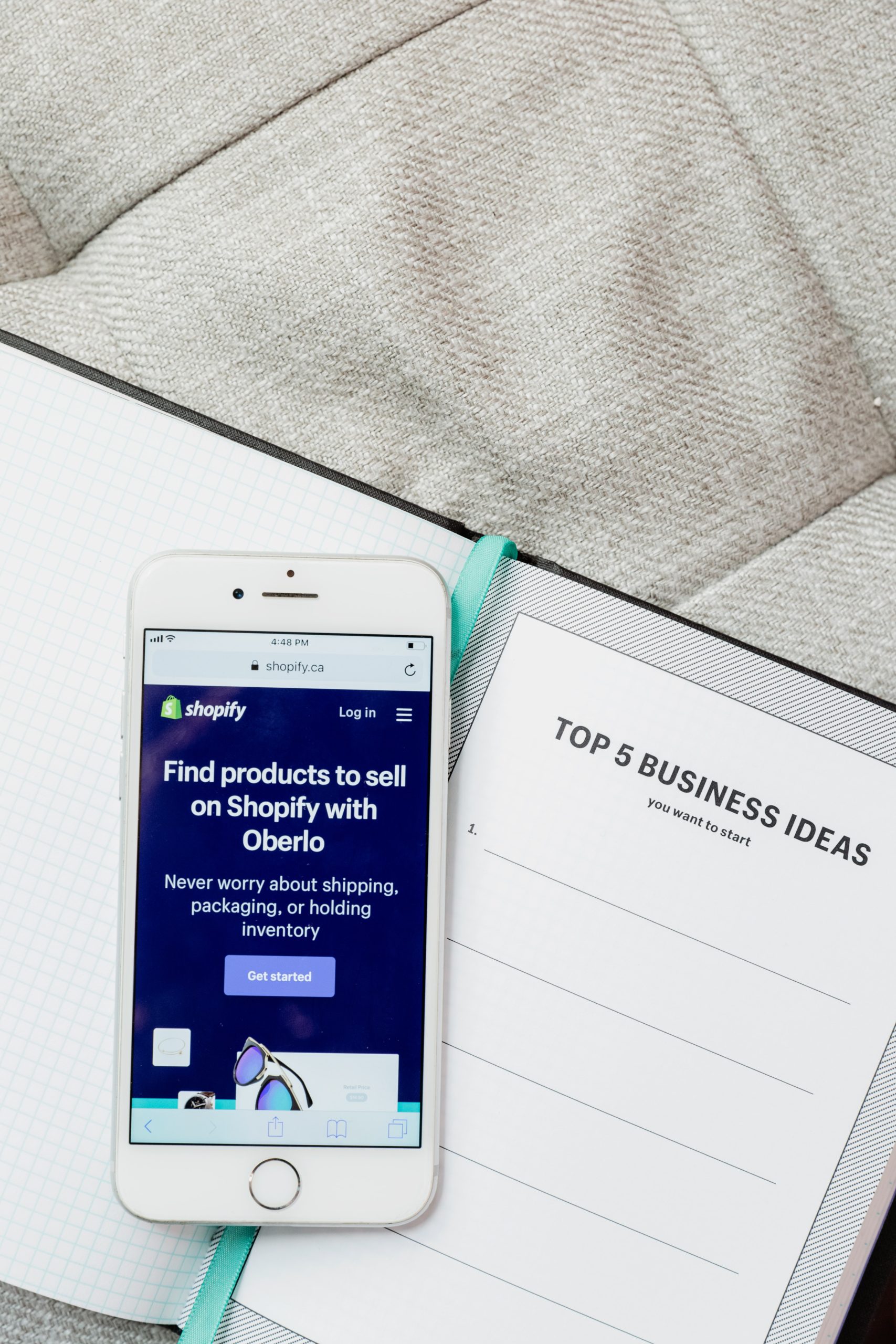
    1. Shopify.

    Shopify is a great stepping stone for you to sell products online. It includes everything a business would need to start selling their products and it is all presented in an easy to use manner.

    This Business Tool includes more than 100 store templates, fast and secure connections, and assists you with anything you need to create and then manage your online store. You can also download it from the AppStore which will allow you to purchase any type of software from external developers.

    Shopify’s basis plan starts at $29 a month, there is a Lite Plan which costs $9 a month but offers a simple Buy-Button than can be added to any other websites.

    Shopify Plans
    Basic Plan: $29 per month
    Shopify: $79 per month
    Advanced Shopify: $299 per month

    2. ScheduleOnce

    If your business is about providing direct services to your customers, having an automatic scheduling plan for your appointments with your clients can give you time and space to tackle other things.

    ScheduleOnce provides a system aimed at small businesses. It starts at just $5 per month and includes any and all integrations to the user’s www.google.com calendar.

    This means customers can make an appointment with pending approval or in automatic mode. They can provide you with SMS notifications, website integration and report features. ScheduleOnce is a very useful business tool for entrepreneurs that use Google frequently.

    ScheduleOnce Plans
    Plus Plan: $5 per user per month
    Premium Plan: $9 per user per month
    Professional: $19 per user per month
    Enterprise: $49 per user per month

    3. You Need A Budget

    YNAB or You Need A Budget does exactly what is says in the name. YNAB is an application dedicated to personal finance that takes a more conventional approach towards money management.

    It as available as an online service as well as a desktop application, and YNAB will also connect to and sync with your bank accounts. Its aim is to help you live from your savings instead of living from paycheck to paycheck.

    YNAB Plans
    $5 per month or $50 per year
    4. Infusionsoft

    Infusionsoft is a business tool designed for small or medium-sized businesses, it is a customer relationship management (CRM) system.

    It places all functionalities that entrepreneurs would otherwise have to get from different places into a single space. It comes with contact management, ecommerce solutions, follow-up comunication, reports and business intelligence data. It is more suitable for businesses with fewer than 25 employees.

    Apart from the monthly plan costs, it includes a one-time coaching cost of $2,000.

    Infusionsoft Plans
    Essentials: $199 per month
    Deluxe Sales: $299 per month
    Deluxe E-Commerce: $299 per month
    Complete: $379 per month

    5. Google Drive

    Google Drive includes many features and offers the ability to create documents online and collaborate on them with your team.
    With Google Docs, Sheets, Slides and any of your personal files, Google can help you with its expertise when it comes to security and usage on Google Drive.

    Google Drive Plans
    15GB storage: Free
    100GB storage: $1.99 per month
    1TB storage: $9.99 per month

    Although many still opt for free alternatives, these 5 business tools deliver and you are guaranteed to get what you pay for.

  • Healthy Habits You Could Add To Your Life

    Healthy Habits You Could Add To Your Life

    For people that are constantly on the move it can be difficult to find the time to fit a healthy diet and routine into your day to day, here are some habits that don’t take up too much time or effort.

    Use stairs or your furniture as gym equipment.

    If there is an option to take the stairs either at home or at work, do it. If what you’re looking for is a strong cardio workout, walk up and down the stairs repeatedly. Even if you only go up and down once, start somewhere and increase the amount as you feel stronger.
    You can use gallons of water or bottled drinks of any kind as weights and chairs for tricep dip exercises.

    Drink a little extra water every day.

    We all know the health benefits that come with drinking water every day, it helps regulate your temperature, softens joints, protects your spinal cord and releases waste through urination and sweat. Since 50 to 75% of your weight is made up by water, drinking it is vital for your body to working to its fullest potential and staying hydrated.

    Drink Carbonated Water instead of Diet Soda.

    Research tells us that our brain reacts to artificial sweeteners the same way it does to sugary food. Ingesting sodas every day can increase your desire for foods that are high in calories and make you more vulnerable to weight gain. If you reduce your soda and artificial sweetener intake, it will benefit your waistline and your health.

    Walk for 10 minutes.

    Walking, even if it is for 10 minutes, can boost your cardiovascular health. If the cold weather is what is stopping you, wear a sweat-wicking layer, add insulating layers as they will provide warmth and finish it off with a waterproof windbreaker or coat.

    Correct your Posture.

    Having good posture can prevent backaches, fatigue, muscle pain and it can diminish the stress on your ligaments. Reminding yourself to sit up straight or straighten your posture until it becomes a habit will have a positive effect on your health.

    Sleep 30 minutes earlier.

    Many people don’t get a full night’s rest and whether you do or you don’t is the marker of good heart health. Being well rested after sleeping gives you more energy and helps you with healthy eating goals. When you haven’t slept enough it can reduce your body’s hormone production which will suppress your appetite, and this contributes to weight gain. If you suffer from untreated insomnia or sleep apnea you may have a higher risk of heart disease, obesity and high blood pressure.

    Weigh yourself once a week.

    Setting a weekly maintenance or goal for yourself can keep your weight from creeping up on you, write down what you see each week and compare it to your loss goal. When you weigh yourself make sure it is on the same day, at the same time and with the same amount of clothing, as this adds consistency.

    Healthy breakfast to start the day.

    Eating something that is high in fiber and proteins for breakfast should be enough to keep you energised. Starting your day properly can help you eat better throughout the day and help lower your risk of diabetes and improve your heart health.

    Include lettuce in your meals.

    Incorporating lettuce into your meals adds nutrients and water to your diet. Lettuce contains fiber that helps to fill you up with just 20 calories a serving.

    Substitute unhealthy foods creatively.

    Eliminating foods and snacks that are high in calories and low on the health benefit from your diet is a vital step to a healthier life. Low-fat dairy, whole grains, healthy oils such as avocado and olive oil, and natural sweeteners such as fruit rather than high fat or sugary alternatives.

    Maintaining a healthy diet isn’t about depriving yourself from the things you love, rather it is about prioritising what is god for you and what will be of benefit to your body. These steps are not to be taken and applied in a single day, work through these steps patiently until healthier habits become part of your routine.

  • What type of Corporate Culture do you work in?

    What type of Corporate Culture do you work in?

    Having a strong sense of company culture can have a positive effect on staff engagement and performance. Your company culture has a direct impact on the type of candidates you will attract. Also known as organisational culture, it is made up by the values, attitudes and practices that define the organisation. Here are the four main types of company culture:

    • Clan Culture
    • Adhocracy Culture
    • Market Culture
    • Hierarchy Culture

    Below I explain what these types of Company Culture mean which should help you determine which Company Culture environment you are currently working in.

    Clan Culture:

    Clan Culture often focuses on teamwork and mentorship and its primary qualities are discretion, flexibility, integration and internal focus. Focused on the people, and about creating a highly productive work environment. Every individual is valued and communication and their needs are highly important.
    This culture boasts high in rates of staff engagement and because of the highly adaptable environment Clan Culture has, market growth is easy to achieve. It usually perceived as a family-like or tribe-like type of corporate environment, also seen as the most collaborative and the least competitive.

    Adhocracy Culture:

    Adhocracy Culture is focused on taking risks and innovation and its primary qualities are discretion, flexibility, external focus and differentiation. This culture relies on individuality and its employees being creative with the ideas they bring to the table. Due to the external focus that Adhocracy Culture adheres to, innovative ideas must be tied to market growth and company success. The company usually encourages its employees to take risks, and it is all held together by experimentations, emphasising on freedom and individual ingenuity.

    Employees tend to stay motivated as their goal is to break the mold, and with their attention focused on being creative and thinking of new ideas, opportunities of professional development can easily be justified.

    Market Culture:

    Market Culture is focused on growth and competition and its primary qualities are control, stability, external focus and differentiation. This culture prioritises profit. Every little detail is carefully evaluated with each position having an objective that suits the company’s goal. These are organisations that focus on results and profits rather than employee satisfaction. Companies that embrace Market Culture are successful and profitable because there is a clear objective that employees work towards. The competition can be seen between the organisation and its market and also between its employees. This corporate culture is the most capitalistic and aggressive.

    Hierarchy Culture:

    Hierarchy Culture focuses on structure and stability and its primary qualities are control, stability, internal focus and integration. Companies with this type of culture adhere to more traditional corporate structure. There is usually a dress code in place and such a way of doing things that make the organisation stable and risk-free. Having internal organisation as a top priority, companies with Hierarchy Culture know their path ahead planned, known as the most stable, structured of them all.

    Company Culture says a lot about an organisation, their values and what type of people you aim to attract. If you wish to change the culture of your company, your office dynamic will change as you take on new employees, so hire for culture add, not fit.

  • What you need to know about Anxiety

    What you need to know about Anxiety

    Much like any type of mental or physical condition, there are certain symptoms and effects that determine each one. Here are the most common ones that are associated with Anxiety and how to act on them.

    1. Your rational brain:

    Whenever you feel like you are going to be overcome with anxiety, that’s when your amygdala is going to react by sending chemicals to the front lobe of your head, which is made up by your rational brain, and shut it down completely.

    2.Anxiety and the future:

    Anxiety can come in different forms -generalised anxiety, panic attacks, phobias, obsessive compulsive disorder- that are accompanied by different symptoms -worry, somatic symptoms, knots in your stomach, restlessness- and they are usually centred around concerns involving the future.

    3. Rational or Irrational:

    Rational Anxiety comes from real issues -the thought of an upcoming job interview, your partner not answering your calls about picking up your kids- and it is usually deemed as a perfectly normal reaction. Irrational Anxiety is… irrational. It tends to look more like -the interview will go badly, you will never get the job, in fact you will never get any job meaning you will inevitably end up being homeless.

    4. The importance of Anxiety:

    It can be harder to set your priorities when you are suffering from Anxiety. Something as mundane as deciding what to wear to the supermarket can seem as important as your upcoming job interview. This is where it becomes easy to feel overwhelmed, with thoughts like -so much to do, and so little time.

    5. Listening to your Anxiety:

    If you are anxious about attending a social event where you don’t know anybody and your anxious mind is telling you to stay home, listening to those thoughts and acting on them will make you feel more calm. Sometimes it is better to listen to your Anxiety in order for it to go away, but if it becomes a habit this reinforces anxiety circuits that live in your brain.

    6. Limit the things you listen to:

    Although acting on what goes through your mind in the middle of an Anxiety crisis is what makes the anxiousness go away, this will become something that you start to rely on more and more. If you don’t attend the social event, further down the line you won’t be going out at all. Every experience you have with Anxiety will feed into that cycle until your world becomes too small for you to breathe in.

    7. Personality traits feed into Anxiety:

    Many people that are prone to Anxiety can often be critical of themselves, internalise their emotions, become uncomfortable around strong emotions and will go the extra mile in order to avoid conflict. What accompanies Anxiety is a ‘put everybody else’s needs before your own’ coping style.

    8. Anxiety covers other emotions:

    Anxiety can become so strong in some people’s minds that it becomes difficult for them to discern any feelings except Anxiety. Anger, sadness, disappointment, hurt, etc., can all translate into and be seen as Anxiety.

    Anxiety is about having a deep fear of the world and what it contains. Some people fear other people, animals or not having control over their future. Differentiate Rational from Irrational Anxiety, track your anxiousness so you can stop it before it gets out of hand, ask yourself what it is that you are feeling besides Anxiety and establish your own priorities and boundaries. This will enlarge your world rather than diminishing it, and it will build up your self-confidence and self-esteem which will in turn, change your perspective on negative and positive thoughts.

  • How to implement Stoic Philosophy into your life

    How to implement Stoic Philosophy into your life

    In a world where most of our lives are on the internet and social media, the amount of followers, likes and comments we receive means more than it should. Your value is often placed on those numbers and who you are as a person can be reflected in what you have to offer others. Stoicism focuses on the opposite of those things. Stoicism isn’t about trying to gain control over what happens to us, as that is almost impossible, it is about having control over how it affects us. Some people view Stoics as emotionless, but in reality they live by words of acceptance and indifference. Emotions can often get in the way of unexpected events, and Stoicism teaches you to picture the worst and be content with it.

    Although Stoicism came to be in the early 3rd century BC, you can still live by this philosophy and apply it to your day to day life.

    1. Control your feelings. Although most things in life will be out of your control, things like your opinions, dreams and hopes are things that will forever be in your total control. Stoicism is about recognising and focusing on the things you can control, such as how you react to things. Unhappiness stems from the emotional response we choose to have, and not letting external events affect your internal state of mind will give you the power to be happy regardless of your circumstances.

    2. Be your own source of happiness. Seeking happiness from inanimate objects such as cars, a house or clothes will always be short lived. Cars always break down, natural disasters can wipe out an entire city in a matter of minutes and clothes are disregarded the moment they go out of fashion. The only thing that is permanent for you is yourself, so create a life that is worth living for you and only you.

    3. Keep your focus. Modern-day capitalism has created so many options for us when it comes to food, entertainment, or travel that our brains can barely process that much information. When you are presented with so many options and have to make a decision you either pursue multiple things at once or put off the decision entirely. Stoicism emphasises how necessary purposeful action is. Learn the difference between simply reacting to your circumstances and living intentionally.

    4. Learn to appreciate. A common practice among Stoics is ‘voluntary discomfort’. This can be simple things such as sleeping on the floor, eating bland food every day, or taking cold showers, these actions are very likely to increase your feelings of gratitude and make you aware of what you have and teach you to appreciate even the smallest things.

    5. Focus on what’s important. When it comes to work, or a project we often find ourselves judging our work based on the feedback and attention it was given. Instead, we should judge our work based on how much effort went into it. With the right mindset in place, your end goal could be postponed, not dead.

  • How to Improve Your Cooking Skills

    How to Improve Your Cooking Skills

    1. Embrace Salt: Seasoning your food beforehand is something that you will hear from anyone who knows the slightest thing about cooking. Seasoning isn’t just about adding some salt at the beginning or at the end, whatever ingredient you choose to add to your recipe, you should season with it at different times during the cooking process as this will extract more flavor out of your chosen ingredient.

    2. Experiment with new recipes: Whether cookbooks, magazines or food blogs are your preferred method of learning about new recipes, the recipes they contain aren’t always going to appeal to absolutely everyone. Just because the recipe you’re following gives you an exact amount of every ingredient, trust your tastebuds and make the changes that you think will suit your preferences best.

    3. The importance of ingredients: The importance of the ingredients that go into every meal cannot be stressed enough. The quality of the ingredients you use will reflect on the outcome and quality of your meal. If you’re looking to make something that not only tastes good, but actually embodies what you were picturing, shopping for top quality ingredients can make all the difference.

    4. Stay organized: If you take the extra few minutes to actually measure, cut and prepare your ingredients not only will this prevent you from having to cook in a rush which will lead to a sloppier meal, but by being prepared it will make for a much more enjoyable experience.

    5. Switching textures: Whether you prefer crunchy, creamy, soft, hard, firm or chewy foods, varying textures in your food can and will be appreciated by your taste buds. Too much of one type of food is one-dimensional and you will grow bored of it. Compliment any meal with more than one texture, that will make it more interesting and enjoyable.

    6. Presentation matters: Regardless of where you choose to dine, presentation matters. Most people also eat with their eyes and making a meal look appetizing will only make them more eager to taste your food.

    Cooking should be an enjoyable experience during the meal preparation, the cooking itself and once the meal is ready you should feel proud of what you made and enjoy it. All of these tips are easy to do and all they require is some careful thought before you put your stove or your oven on.

  • Physics for Beginners

    Physics for Beginners

    Most people can admit that a large portion of the technology that drives today’s society comes from fundamental discoveries of Physics. It is the science associated with matter, energy, motion and force. Things such as computers, telecommunicators, transistors, microchips, lasers and nuclear powers are among the many layers of Physics that are so pervasive to this day. Here are some important aspects in Physics and their meanings:

    Laws of Motion: Based on Isaac Newton’s laws of motion, there are three laws that define the relationship that lives between the motion of an object and the forces that enable that motion.

    Energy: Energy consists of quantitative property and that property is transferred to an object so it can then perform its task. What is interesting about Energy is that according to the law of conservation of energy, it can be converted in form, but it can not be created nor destroyed.

    Atoms and Molecules: Atomic and Molecular Physics focus on matter-matter and light-matter interactions. An atom is a small particle of any chemical element that may or may not exist independently. Molecules are a group of atoms that are bonded together.

    Particles in Motion: Essentially, particles are objects that are in motion, which means they have kinetic energy. The faster the particle moves, the more kinetic energy it will have. Kinetic energy comes from heat, the faster the particle moves around in a substance, the hotter it will become.

    Electromagnetism: This branch of Physics focuses on the electromagnetic force that happens between electrically charged particles. The electromagnetic force is part of one of the four fundamental forces and includes electromagnetic fields such as electric fields, magnetic fields and light.

    Quantum Mechanics: This theory in Physics is fundamental and focuses on providing a description of any physical property in nature using a scale of atoms and subatomic particles. It gives an explanation of the nature and behavior of matter and energy on an atomic and subatomic level.

    Physics can be appreciated in many different ways and offers a wide variety of types of information. Studies can range from focusing on objects of any size using quantum mechanics to the entire universe using general relativity.