Author: Lauryn Hulston

  • The Benefits of Chlorella

    The Benefits of Chlorella

    Chlorella is a genus of about thirteen species of single-celled green algae belonging to the division Chlorophyta. Chlorella is a type of algae that packs a big nutrient punch, as it’s a good source of several vitamins, minerals and antioxidants. In fact, emerging research shows that it could help shuttle toxins out of your body and improve cholesterol and blood sugar levels, among other health benefits.

    When it comes to algae, most people only know about the benefits of Spirulina as a digestion supplement, yet Chlorella is often used in areas like heavy metal detoxification.

    Unlike Spirulina, which contains two separate pigments, Chlorella only contains one pigment, and that’s Chlorophyll and Chlorella has the highest concentration of it in the world.

    Chlorophyll is a fat-based pigment and Spirulina is a water-based pigment, meaning Chlorophyll can take charge in healing your gut, your liver and the cell walls around the mitochondria, easing the process for nutrients to enter and toxins to leave your cells when they’re not entirely healthy.

    While Chlorella is rich in Chlorophyll, only 10% of it makes its way into your stomach and the rest of it finds its way through your liver, gut and colon, meaning that it is absorbing toxins from all the way down in your system.

    They even used to supply liquid Chlorophyll to the injured during World War One because the healing process was as fast as the one of a blood transfusion.
    This is because the chemical composition of Chlorophyll is highly similar to those in your hemoglobin, the only difference being that Chlorophyll contains a magnesium atom in the middle which is an iron atom that carries the oxygen in your blood cells.

    Chlorella has the ability to pull out just about any toxins from your body, such as heavy metals, mercury, lead radiation, alcohol and lactic acid due to its ability to detect what is supposed to be there and what is not. While activated charcoal has often been a popular choice when pulling out toxins, it also pulls out all the minerals that your body could benefit from keeping. Chlorella, however, comes with many minerals such as magnesium, potassium, phosphorus and calcium.

    It also has the highest concentration of RNA DNA, which is important because as you get older, your RNA DNA tends to get damaged, due to it containing a growth factor that speeds up the growth of your cells.

    This interview with one of the world’s leading experts in algae provides a more in depth perspective on the Super Powers of this little known algae.

    Try Chlorella along with Spirulina today and thrive on the health benefits of the ultimate nature remedies.

  • Parenting During a Pandemic

    Parenting During a Pandemic

    While parenting can be challenging enough, during a pandemic it definitely has its more complicated sides to it. It used to be all about kids playing outside and trying to keep them away from technology so they could appreciate the same things we did as kids.

    But as lockdown became an endless staycation for most of us, it began to have an effect on kids that needed that mental stimulation to keep them entertained and blissfully unaware of the times they’re living in.
    Explaining the meaning of a life threatening virus breaking loose on the world and forcing us to isolate ourselves in our homes to a child can be difficult enough as it is, but keeping that child entertained and safe is going to be your main concern.

    Unless you work from home, focus all your energy on your child’s education. Even though your child will still be expected to continue with their studies and learning habits, you and your child could benefit from this time as a bonding experience and as a learning experience. Put your child’s mind into perspective and make them appreciate what they have.

    Not only that, the pandemic has changed the process of carrying the baby and visiting the necessary medical services. While before you could be accompanied by family and friends even at the actual birth, it is now down to one person who gets to witness the process of your baby evolving.

    The pandemic could have had an effect on young children who got used to being with their parents and at home and now lack the necessary social skills to cultivate friendships on their own terms.

    Parenting was hard before the pandemic, this is simply our ‘new normal’.

  • Types of Meta Learning

    Types of Meta Learning

    Any meta learning system should include the following elements.

    • The system in place must be combined with a subsystem.
    • Experience can be gathered by exploiting meta intelligence from previous learning sessions or different domains.
    • The learning habits must be dynamically selected.
    • Here are some common approaches.
    • Using (cyclic) networks with external or internal memory.
    • Learning effective distance metrics.
    • Explicitly optimising model parameters for fast learning.

    Model-Based

    Model-Based meta learning systems update their parameters with speed, with only a couple of training techniques. This point can be reached by its own internal structure or by being controlled by different meta learner systems.

    Memory-Augmented Neural Networks

    Any Memory-Augmented Neural Network, otherwise known as MANN are known for their ability to process new information rapidly and thus being able to become accustomed to any new task after a small number of examples.

    Meta Networks

    Meta Networks learn meta level intelligence that covers a wide range of tasks and shifts in their inductive biases through fast parameterization for speedy generalization.

    Metric Based

    Metric Based meta learning mostly comes down to an idea similar to nearest neighbors algorithms, its weight is generated through a kernel function. The intelligence it aims to obtain is that of metric or distance function over objects. The idea of a good metric is problem-dependent, and there should be an established relationship between its inputs in the work space which will facilitate the problem solving.

    Convolutional Siamese Neural Network

    Siamese Neural Network can be constructed of two of the same networks whose output is trained and joined. The aim is to learn how they compliment each other between their input data samples. The networks are the same, have the same weight and the same network parameters.

    Matching Networks

    These networks learn networks that conducts small labeled support sets and any unlabelled copy or example, which eliminates the need to fine-tune or adapt to any new class types.

    Relation Network

    This network is solely trained from scratch. During the meta learning phase, this network learns to learn deep distance metric and then compares small numbers of images through episodes that are designed to simulate a fast moving setting.

    Prototypical Networks

    Prototypical networks learn how metric space, depending on its classification, can perform after computing the distances to prototype in representations of each class. This imitates a similar yet simpler inductive bias that produces more satisfied results through limited data regime.

    Optimisation Based

    This type of meta learning’s aim is to adjust the optimization algorithm so that the model can excel at learning when provided with very few examples.

    LSTM Meta Learner

    LSTM based meta learner attempts to pinpoint the exact optimization algorithm that is used to teach other learner neural network classifiers in the fast shot regime. This allows the network to learn the appropriate parameter updates specifically designed for the time when a certain set of updates will be made.

    Temporal Discreteness.

    MAML, which is short for Model-Agnostic Meta-Learning is more of a general type of optimization algorithm, which is compatible with any type of system that gains its knowledge from gradient descent.

  • The Effects of Being Single During a Pandemic

    The Effects of Being Single During a Pandemic

    Many stories have been written regarding single people and how they have dealt with the pandemic and being isolated in their homes, by themselves. The effects come from both ends of the spectrum, varying from some people describing it as being ‘dreadful’, to others thriving from this time and have used it to simply ‘be with themselves’.

    It all comes down to what type of person you are, whether you crave human company and affection or not. While there is still an essence of social pressure to ‘find your other half’, the notion of a sad unpartnered soul has been mostly left behind. Single people are no longer denied social amenities such as a packed social calendar, an active sex life or owning a home of their own. The time you don’t invest in ‘building your future with somebody’ can be spent on doing whatever it is that you wish to do.

    However, the pandemic cut out that sense of freedom. Social gatherings became a thing of the past, seeing somebody without a face mask felt like disobeying the law and even the fear of contracting the virus itself made us all much more self aware of who we get close to. The pandemic amped up the things that are lonely and stressful about being single and erased the fun parts.

    This is where our reliance on social media plays its part, you can meet people without actually meeting them. Although it can be an untrustworthy place, it was the only way to stimulate the need for human interaction in the middle of a worldwide pandemic.

    People that were isolated in their home with their partners or families could appreciate the ‘social’ narrative that something like eating dinner together could have, while single people didn’t get to enjoy the slightest taste of human interaction unless if was through a screen. This amped up the levels of creativity for many people, which eventually faded as humans crave to share their achievements with other humans.

    These circumstances would also have sparked some mixed feelings. Many people reported via social media that they felt out of their comfort zone with not knowing what the future had in store for them. While other simply enjoyed their time home, adding that ‘they spent their isolation with the family and enjoyed it’.

    The pandemic itself had different impacts on different people, some saw it as an opportunity to better themselves, while others simply couldn’t wait for it to end and to return to their previous lives.

  • Learning How to Learn

    Learning How to Learn

    Meta-learning, mostly known as a ‘branch of metacognition’ or ‘machine learning’ is focused on one’s learning process. It aims to fill the gap between the learning process of a person to that of a machine by using the science of systematically observing how machine learning approaches perform under a wide range of learning tasks. It then learns from the results to ultimately learn new tasks faster than previously thought possible.

    The outcome is expected to be an excellent meta-learning model with the ability to adapt and fit well when confronted with new tasks and new environments that were not presented during their training.

    The prime reason meta-learning is also known as learning to learn is because the learning sessions commonly take place in the machine’s testing phase with reduced exposure to any new type of task parameters.

    When it comes to advantages, here are some examples.

    Less data is required to train the machines.

    This means that the methods used help create a more versatile framework that can transfer information from one context to an entirely different one. This reduces the amount of data you would need in the new context to solve any problems you may endure.

    Speed.

    Meta-learning has ways and methods that help the creation of custom made models which can then perform better at a higher speed.

    Scalable.

    Meta-learning models help to increase the level of scalability that AI applications have by using automatic processes and improving algorithms.

    The models can be agile and adaptable when confronted with environmental changes such as Reinforcement learning.

  • Privacy. A Guide for living a Spyware Free Life

    Privacy. A Guide for living a Spyware Free Life

    Online privacy, also known as internet privacy or digital privacy, refers to how much of your personal, financial and browsing information remains private when you’re online.

    Online security is not a subject to take for granted in this tech-savvy 21st century. Everyone is busy downloading or uploading data on the internet, exposing themselves to various cybercriminal attacks. By clicking on any suspicious link or visiting a disguised site, you could lose a chunk of data you have worked all your career life to generate.

    As businesses remain vigilant about cybersecurity issues, people are finding interest in the many ways they can safeguard their data while operating on the digital space. With that in mind, this article can help you stay anonymous online while keeping your data secure.

    This has become a growing worry, with browsing history and personal data all potentially at risk when online. Staying one step ahead, people usually set up a virtual private network (VPN) that gives you online privacy and anonymity by creating a private network from a public internet connection. VPNs mask your internet protocol (IP) address so your online actions are virtually untraceable.

    But one thing people do not realize is that a VPN won’t protect you from any type of spyware or malicious data people might come in contact with during their interactions online. Most of the spyware attacks are actual reverse shell connections, where a malicious piece of data executes a command that will connect your device to the attacker.

    More on how reverse shell connection works in this video.

    If you want to stay ahead of spyware and surveillance technology, you should consider some reliable reverse shell reversing options. Practically, there are 2 common ways people are using to stay safe from spyware attacks.

    One idea is to set up a Virtual Machine on your device, which pretty much means that you’ll be setting up a complete OS that will run on top of your operating system, that will run in a virtual sandbox and restore to its defaults for each new session.

    This can be also done on any PC running Linux if you decide to install one of the many privacy-focused distributions like ParrotOS, Kali, MOFO Linux, Tails, Qubes OS or others. These distributions have a built-in feature often referred to as Amnesia, which means that your device always starts from the same clean state and everything you do disappears automatically when you shut down the device.

    But that means it’s somewhat difficult to install and run any software on these distributions, as you have to be skilled enough to include your personal files and software in the installation so it won’t get deleted when you shut down your device.

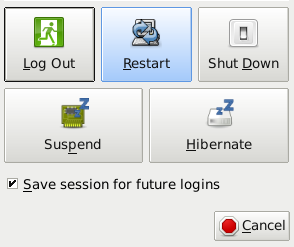
    As of recent, all XFCE desktop builds such as Manjaro, Fedora, Debian, Mint, etc., contain a feature that, when turned on, will immediately clear and wipe all data from the current user session and render it permanently gone. This feature can be activated in settings and you will be prompted if you want to save this session for future logins on your shut down screen.

    Most Linux Distros can be configured to automatically wipe the Bash History on session end, and this will also remove most spyware, malware and shell connections to then return to the original OS version it started with. In case you need to update software or save some files you trust, you can do this by booting up your device, running a software update, and rebooting it to save the session for any future logins. This will create an updated XFCE reference and run its most recent updated version for all your apps.

    In sessions where you would have been exposed to online threats just end your session with a reboot without saving this session for future logins, and that will destroy all your data, cache, and any history created during your session. Data can be exported to a trusted point or cloud as long as you always install new software after a safe restart to a trusted session.

    When it comes to phones, running DeGoogled Android can seem like the ultimate privacy solution, however, this will only solve Google tracking woes, and they can become impractical as most of the apps you would be using would rely on Google Play services to run. With some dependency patches, apps will most likely be able to run without Google Play services and instead, rely on other services like Amazon, Huawei or any other companies that have created and released an independent app store.

    The e/ project is the most popular among the DeGoogled options that provide current Android versions with the stock Android apps and zero bloatware. However, e/ still runs an Android version that is severely susceptible to spyware attacks much like the one that affected Pegasus or an independent shell hack attack.

    And lastly, since PostMarketOS was released, there is a real Linux distribution available for phones and more than 200 devices are supported by this time. It is easy to set up and to use on your phone as the installation process requires configuring your device to accept custom ROM images. It can be flashed to nearly any device with the TWRP recovery and the TWRP setup for all devices is highly documented.

    Using PostMarketOS is currently suitable for more tech-savvy users and users that have more experience with Linux in general. In terms of privacy, PostMarketOS can be configured to wipe all user and session data on each reboot. You can also run your favorite Android Apps inside the Anbox Virtual Machine, thus making it extremely difficult for spyware that you are attacked with, in your android VM to roll over to your actual OS on the device.

    There are a ton of devices popping up on the market that come with Linux installed off the shelf. My favorite are the Pine64 community projects called the Pinebook Pro, a $200 laptop that is powered by an old smartphone chip on a Raspberry Pi-like board, and its handheld sibling the PinePhone. These devices offer subpar performance but their main perks are privacy rather than performance.

    The Librem 5 is another smartphone that comes with a Linux distro out of the box and its most important feature is the privacy bolstered with the hardware kill switches for network, camera, mic, radio, GPS etc.

    System76 also sells rebranded Clevo Laptops and Desktop units that have a custom Linux distro on them that encourages gaming.

    Privacy protects our information we do not want to be shared publicly such as health or personal finances. Privacy helps protect our physical safety in cases where social media breached real-time location data privacy. Personal data is used to make very important decisions in our lives.

  • Biohacking, what you need to know and how it works

    Biohacking, what you need to know and how it works

    Biohacking can be described as do-it-yourself biology and it consists of making small diet or lifestyle changes to slowly improve your health and well-being. The most common biohacks can lead to quick weight loss or increased brain function.

    Here is how biohacking works and how you can do it safely.

    While biohacking can come in many forms, but the three most popular types are nutrigenomics, grinder, and DIY biology.

    Nutrigenomics

    This type of biohack focuses on how what you eat ultimately reacts to your genes. Although controversial, Nutrigenomics is based on the idea that your body’s genetic being can be drawn upon and improved from examining how different nutrients impact your health over time. They also take note of how these nutrients impact your feelings, thoughts and behaviours.

    Grinder

    Grinder is a subculture within biohacking that considers every aspect of the human body hackable.

    Grinders wish to ‘improve’ their bodies using a combination of technological gadgets, chemical-induced injections, implants, and everything and anything they can gain access to in order to make their bodies function the way they want them to.

    DIY Biology

    DIY biology can be defined as the type of biohacking that is guided by people with education and experience in any of the related scientific fields.

    These types of biohackers share their opinions and tips to nonexperts conduct their own self-examination outside of any surveilled experimental environment such as labs or medical centers.

    How Nutrigenomics works

    Nutrigenomics can alter your biology in many ways such as
    lowering your risk of disease that you are genetically predisposed to
    helping you reach physical, mental, or emotional goals like losing weight or alleviating your depression symptoms
    helping you improve any bodily function like blood pressure or stomach bacteria
    Food does have an effect on your genes, however not everybody responds to changes in diets or habits in the same way.

    How DIY biology and grinder biohacking work

    While there are many examples of DIY biology and grinder-based experiments that have achieved their intended outcome, with any experiment or modification within the human body there can be severe or fatal consequences.
    Without training, DIY biohacking or grinder experiments can be dangerous and even be against the law. In 2017, the UC Davis Law Review stated that any exposure to harmful biological agents not only causes numerous health problems but also breaks international bioterrorism laws.

    In 2018, a grinder experiment took place where a number of people who follow this subculture inserted RFID chips into their bodies to gain access within hospitals or apply sound-increased magnets in their ears in order to have ‘built-in’ earphones.

    While these methods may sound interesting and safe enough, implanting foreign objects into your body can potentially expose you to numerous inflammatory responses that can then lead to long-term infections.

    Is biohacking safe?

    Some types of biohacking can be considered safe, taking supplements or making changes to your diet is considered safe. Some types of body modifications such as RFID implants can be considered safe if they are being overlooked by a medical professional.

    On the other hand, other biohacking methodologies are on the border of being unsafe or illegal. DIY biology and grinder can often centre themselves around experiments that are not seen as safe or ethical in any research facility.

    Experimenting on people, even on yourself is still considered a taboo subject mainly in biology due to the accidental negative outcomes that can occur.

  • Is Camping a good idea for Digital Nomads?

    Is Camping a good idea for Digital Nomads?

    While Digital Nomads often travel frequently and are usually living in a new place before they have the chance to fully settle in, camping can make this experience easier. When you are camping you will likely realize that you only need the bare essentials, as all of your home comforts are not available to you anymore. There are alternative ways of gaining access to things like internet connection and hot showers.

    Whether you decide to camp in a campsite or at your own will in the wilderness, you will find that other than the warm months of summer, you won’t be seeing any holidaymakers or families doing the same thing as you. Camping instead of renting out several living spaces is much more cost-friendly and easier to accommodate to your set dates. Many campsites have Google fiber, are pet friendly, and are accessible to just about anybody.

    This will require that you gain some comfort with being outdoors and in touch with nature, as you will be living in it for the time being. Some campsites do have shared showers and bathrooms, which depending on your perspective are good or bad. Social distancing has never been as easy as when you are living on a campsite and should be quite simple for you to keep your space to yourself.

    To live this lifestyle you will need camping equipment, such as a tent, sleeping bags, blankets, portable lights, a backpack that can carry all your essentials, and cooking equipment suited for camping. You will need any type of technology you take with you to have a long-lasting battery life as this will mean fewer stops to charge them.

    Camping can also have its downsides such as not being sheltered from the bad weather, back or neck pain due to sleeping in bad positions, not having your own kitchen or bathroom, relying on solar chargers or internet cafes for electricity, or having nature sounds in the background of your conference calls. You could also work from a hammock or from a beach lounger, this is a very comfortable way to work but also one that is bad for your posture.

    A mobile hotspot and portable power are vital things to have with you if you are a Digital Nomad thinking of camping full time. A mobile hotspot will give you internet whenever and wherever you need it, and having your own portable power system can last you as long as you need it to so you don’t have to work against the clock.

  • What would it cost if you become a Digital Nomad in Andalucia

    What would it cost if you become a Digital Nomad in Andalucia

    If you are thinking of moving to Andalucia but you are not sure if you can afford it or if you will be able to cover all your expenses, here is a list of 8 places to live in Andalucia and the average cost of living there.

    Seville.

    Seville is a place filled with culture and history and although it is a big city, it maintains the unique charms of a small town. The average price you should expect to pay for a meal is €9, basic utilities such as electricity, heating, cooling system, water and garbage can cost you €120 on average per month, and
    internet of 60 Mbps or more will cost €35 on average per month.

    When it comes to rent, it depends on what you are looking for. 1 bedroom apartments in the centre cost around €663 a month, and 1 bedroom apartments outside of the centre cost around €490 a month. 3 bedroom apartments in the centre cost around €1,054 a month, and 3 bedroom apartments outside of the centre cost around €675 a month.

    Monthly salaries are expected to be around €1,270 after tax.

    Cadiz.

    Cadiz is known for its beaches, white sands and turquoise waters. It is a good summer holiday destination for locals and visitors.

    The average price you should expect to pay for a meal is €8.75, basic utilities such as electricity, heating, cooling system, water and garbage can cost you €95 on average per month, and internet of 60 Mbps or more will cost €36 on average a month.

    When it comes to rent, it depends on what you are looking for. 1 bedroom apartments in the centre cost around €500 a month, and 1 bedroom apartments outside of the centre cost around €462 a month. 3 bedroom apartments in the centre cost around €787 a month, and 3 bedroom apartments outside of the centre cost around €662 a month.

    Monthly salaries are expected to be around €1,066 after tax.

    Malaga.

    Malaga is a historical city that is widely recognised for its architecture and nearby mountains.

    The average price you should expect to pay for a meal is €10, basic utilities such as electricity, heating, cooling system, water and garbage can cost you €111 on average per month, and internet of 60 Mbps or more will cost €40 on average a month.

    When it comes to rent, it depends on what you are looking for. 1 bedroom apartments in the centre cost around €673 a month, and 1 bedroom apartments outside of the centre cost around €528 a month. 3 bedroom apartments in the centre cost around €1,203 a month, and 3 bedroom apartments outside of the centre cost around €840 a month.

    Monthly salaries are expected to be around €1,297 after tax.

    Granada.

    A popular holiday destination due to its snow-capped mountains to its warm Mediterranean waters.

    The average price you should expect to pay for a meal is €9.50, basic utilities such as electricity, heating, cooling system, water and garbage can cost you €114 on average per month, and internet of 60 Mbps or more will cost €33 on average a month.

    When it comes to rent, it depends on what you are looking for. 1 bedroom apartments in the centre cost around €520 a month, and 1 bedroom apartments outside of the centre cost around €375 a month. 3 bedroom apartments in the centre cost around €772 a month, and 3 bedroom apartments outside of the centre cost around €565 a month.

    Monthly salaries are expected to be around €1,235 after tax.

    Jaen.

    Often referred to as ‘the gateway of Andalucia’, Jaen is the home to an abundance of national parks and farms. It is also the centre of olive growing in Andalucia, meaning the trees of this region account for 50% of Spain’s annual olive oil production.

    The average price you should expect to pay for a meal is €9.50, basic utilities such as electricity, heating, cooling system, water and garbage can cost you €93 on average per month, and internet of 60 Mbps or more will cost €45 on average a month.

    When it comes to rent, it depends on what you are looking for. 1 bedroom apartments in the centre cost around €392 a month, and 1 bedroom apartments outside of the centre cost around €260 a month. 3 bedroom apartments in the centre cost around €633 a month, and 3 bedroom apartments outside of the centre cost around €506 a month.

    Monthly salaries are expected to be around €1,233 after tax.

    Almeria.

    Almeria is known for its picturesque coastline, its crystal clear waters and beaches that proudly own a blue flag status for their excellence.

    The average price you should expect to pay for a meal is €10, basic utilities such as electricity, heating, cooling system, water and garbage can cost you €108 on average per month, and internet of 60 Mbps or more will cost €43 on average a month.

    When it comes to rent, it depends on what you are looking for. 1 bedroom apartments in the centre cost around €480 a month, and 1 bedroom apartments outside of the centre cost around €410 a month. 3 bedroom apartments in the centre cost around €760 a month, and 3 bedroom apartments outside of the centre cost around €607 a month.

    Monthly salaries are expected to be around €1,357 after tax.

    Cordoba.

    The province of Cordoba houses one of the most important types of Moorish architecture in the entirety of the Islamic West, the Mesquita de Cordoba is enclosed within the city’s ancient and historic walls.

    The average price you should expect to pay for a meal is €8, basic utilities such as electricity, heating, cooling system, water and garbage can cost you €113 on average per month, and internet of 60 Mbps or more will cost €39 on average a month.

    When it comes to rent, it depends on what you are looking for. 1 bedroom apartments in the centre cost around €512 a month, and 1 bedroom apartments outside of the centre cost around €362 a month. 3 bedroom apartments in the centre cost around €825 a month, and 3 bedroom apartments outside of the centre cost around €562 a month.

    Monthly salaries are expected to be around €1,087 after tax.

    Huelva.

    The province of Huelva is located on the Western side of Andalucia and bordered by Portugal. Huelva is made up of diverse landscapes, from long coastlines with untapped beaches to national parks made up of trees and saltwater lakes.

    The average price you should expect to pay for a meal is €9, basic utilities such as electricity, heating, cooling system, water and garbage can cost you €111 on average per month, and internet of 60 Mbps or more will cost €39 on average a month.

    When it comes to rent, it depends on what you are looking for. 1 bedroom apartments in the centre cost around €533 a month, and 1 bedroom apartments outside of the centre cost around €408 a month. 3 bedroom apartments in the centre cost around €766 a month, and 3 bedroom apartments outside of the centre cost around €525 a month.

    Monthly salaries are expected to be around €950 after tax.

    If you think that you want a slower pace to life, warm weather year-round and a life by the beach, then these places in Andalucia will definitely live up to those expectations.


  • Will Spain Become the Next Hotspot for Digital Nomads?

    Will Spain Become the Next Hotspot for Digital Nomads?

    Digital Nomads are remote workers that use telecommunication technologies to make a living and live in a nomadic manner. They usually work from foreign countries in public libraries, coffee shops, recreational vehicles, or co-working spaces, relying on devices with wireless internet capabilities such as smart phones or mobile hotspots so they can work wherever they wish to. The reason this is so appealing to many is because of the location and financial independence. Here are the top places in Spain to visit if you are or wish to become a Digital Nomad.

    1. Madrid

    Madrid being the capital and right in the middle of the country, makes for an excellent location to be in. Here is why madrid is such a popular choice:

    Madrid is the home to many different types of cuisine and amazing restaurants, yet it is still easy to find a meal for €10 or less. As dinner starts at around 10pm, bar-hopping doesn’t happen until about midnight and can go on until the early hours of the morning.

    It is easy to find a furnished apartment in Madrid, with a 1 bedroom studio in the centre costing an average of €732 a month. The best reported neighbourhood in Madrid is Arganzuela and the internet speed is 28Mbps.

    The local English fluency can be described as basic, the best way to obtain medical insurance is with Safetywing, and the recommended co-working space is Utopic_US.

    For a nomad, you can expect the living cost in Madrid to be around €2,313 a month, including €150 a month for co-working.

    2. Barcelona

    Barcelona is known for its art and historical background, but it is also popular among nomads worldwide.

    This city caters to most tourists and residents when it comes to cuisine preference, with the average meal costing €9.98. You can find a 1 bedroom studio in the centre for around €799 a month, the internet speed is 32 Mbps, and the English fluency is considered basic as the dominant language in Barcelona is Catalan.

    Medical Insurance is networked by Safetywing and the recommended co-working space is Betahaus.

    For a nomad, you can expect the living cost in Barcelona to be around €2,631 a month, including €192 a month for co-working.

    3. Valencia

    Named after the Comunidad Valenciana, Valencia is known for its staple dishes such as Paella and its annual carriage fair called Carrozas or Fallas.

    You can expect to pay about €9 for a meal anywhere in the city and €492 a month for a 1 bedroom studio. The internet speed is 30Mbps, medical insurance is networked by Safetywing and the recommended co-working space is Wayco.

    The dominant language in Valencia is ‘Valenciano’, yet Spanish is also spoken everywhere, and the English fluency can be defined as basic.

    For a nomad, you can expect the living cost in Valencia to be around €2,184 a month, including €196 a month for co-working.

    4. Alicante

    While Alicante is also a province, I will be talking about the city of Alicante. Home to the Universitat D’Alacant, you can easily find yourself a typical Spanish meal for €9 and a 1 bedroom studio in the centre for €462 a month.

    Internet speed is 28Mbps, medical insurance is networked by Safetywing and English fluency is basic.

    For a nomad, you can expect the living cost in Alicante to be around €2,128, including €150 a month for co-working.

    5. Malaga

    In the southern city of Malaga you can expect to pay on average €8 for a meal and €500 a month for a 1 bedroom studio.

    Internet speed is 26Mbps, medical insurance is networked by Safetywing and the English fluency is basic. The recommended co-working space is Nido.

    For a nomad, you can expect the living cost in Malaga to be around €2,064 a month, including €157 a month for co-working.

    6. Seville

    The city of Seville is known for its ‘Flamenco’ music and its deep family values tied to the gypsy community. Here you can expect to pay €10 on average for a meal and €560 a month for a 1 bedroom studio.

    Internet speed is 26Mbps, medical insurance is networked by Safetywing and the English fluency is mediocre. The recommended co-working space is workIN company.

    For a nomad, you can expect the living cost in Seville to be around €2,016 a month, including €180 a month for co-working.

    7. Tenerife

    Tenerife is the largest of Spain’s Canary Islands, and their average meal price is €7. You can find a 1 bedroom studio for €505 a month with the internet speed ranging at 26Mbps.

    Medical insurance is networked by Safetywing, the English fluency is quite good and the recommended co-working space is Wolfhouse.

    For a nomad, you can expect the living cost in Tenerife to be around €1,866 a month, including €124 a month for co-working.

    8. Granada

    Granada is home to the famous monument ‘L’Alhambra’ and has historic ties to ancient Rome. You can dine out for around €10 each, and find a 1 bedroom studio for €500 a month.

    Internet speed is 24Mbps, medical insurance is networked by Safetywing, English fluency is good and the recommended co-working space is Cocoroco.

    For a nomad, you can expect the living cost in Granada to be around €2,276 a month, including €300 a month for co-working.

    If financial and location independence are what you want in a job and you have high knowledge in the field of telecommunication technology, then being a digital nomad could be for you!